Key takeaways
- Pro: Aggressive factory sharpness out of the box
- Pro: Lightweight enough for hundreds of cuts without hand fatigue
- Con: Steel is soft enough that the edge dulls noticeably after heavy use
A fillet knife is the one tool where a cheap purchase costs you real money. A blade that flexes wrong tears a fillet. One that’s too stiff carves into the rib cage and wastes a third of your catch. One that loses its edge after three trips means you’re buying a replacement knife every season. After pulling the best fillet knives apart on real fish — from small panfish to thick walleye and saltwater snapper — the differences in steel, geometry, and handle design show up fast in how clean your cuts come off the bone.
The category splits into two broad camps: dedicated fillet knives built for one job extremely well, and kits or hybrid tools that sacrifice some precision for convenience. Neither is inherently worse, but a buyer who mostly cleans fish needs a real fillet knife, not a multi-tool that happens to include one. The short list below reflects that distinction. Every entry earned its spot by holding an edge through repeated filleting sessions, not by spec-sheet language.
Our top picks



As an Amazon Associate we earn from qualifying purchases at no extra cost to you.
Quick Picks
| Product | Best For | Price |
|---|---|---|
| HOSHANHO 7 Inch | Tight budget, panfish and small trout | n/a |
| HOSHANHO 9 Inch | Budget flexibility, mixed-size fish | n/a |
| KastKing Speed Demon Pro (shorter blade) | Corrosion resistance in saltwater | n/a |
| KastKing Speed Demon Pro (longer blade) | Large walleye and pike on a budget | n/a |
| KastKing SteelStream 6pc Kit | Anglers who want one bag for everything | n/a |
| imarku 8 Inch | Ergonomics and edge retention | n/a |
| FLISSA 4-Piece Set | Bait prep and multi-fish cleaning | n/a |
| Rapala Fish ‘n Fillet 6 Inch | Proven design for freshwater anglers | n/a |
How We Picked
Three criteria separated the knives worth recommending from the rest: edge retention through actual filleting sessions (not factory sharpness at unboxing), blade geometry that allows a clean separation from the rib cage without excessive wrist pressure, and handle performance when wet and gloved. A fourth factor — steel corrosion resistance — bumped saltwater-rated knives ahead of otherwise comparable freshwater-only options in the rankings.
The 8 Best Fillet Knives in 2026
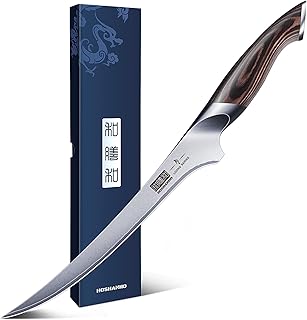
HOSHANHO Fillet Knife 7 Inch
This is the knife for anglers who clean a lot of panfish, crappie, and small trout and don’t want to spend more than a few dollars on the tool. The high carbon stainless steel takes a keen factory edge and the seven-inch blade length matches small fish proportionally, so you don’t fight excess blade on a six-inch bluegill. The Japanese-inspired profile tapers to a fine tip that works well for following the lateral line.
- Pro: Aggressive factory sharpness out of the box
- Pro: Lightweight enough for hundreds of cuts without hand fatigue
- Con: Steel is soft enough that the edge dulls noticeably after heavy use
Skip this if you regularly clean walleye or larger fish — the short blade limits leverage on bigger frames.
HOSHANHO Fillet Knife 9 Inch
The nine-inch version addresses the length limitation of its sibling while staying in the same budget tier. It handles bass, walleye, and small pike comfortably, with enough flex to trace the backbone without gouging. For anglers upgrading from a dull grocery-store knife, the jump in blade steel quality and grind consistency is immediately apparent on the first fish.
- Pro: Longer blade provides better clearance on fillets up to two pounds
- Pro: Same keen factory edge as the seven-inch model
- Con: Flex is slightly stiffer than premium Japanese knives, making delicate skinning on trout less forgiving
Pass if you need a knife for tiny panfish — the extra length becomes a hindrance on small frames.
KastKing Speed Demon Pro Fillet Knife
KastKing built this for saltwater anglers first. The G4116 German stainless steel is paired with a corrosion-resistant coating that shrugs off salt spray far better than uncoated carbon blends. The non-slip grip works with wet hands or nitrile gloves, which matters when you’re processing fish on a rocking boat. With eight blade-length options available, most anglers can find a size matching their target species.
- Pro: Coating and steel combination resists rust aggressively in salt conditions
- Pro: Protective sheath included, making it safe for tackle-box storage
- Con: Edge retention on the softer stainless is average — expect honing every few trips
Look elsewhere if you fillet exclusively freshwater species and want maximum edge life over corrosion insurance.
KastKing Speed Demon Pro Fillet Knife (Extended Blade Option)
The longer configurations in the Speed Demon Pro line suit anglers targeting pike, muskie, or large saltwater species. Extended blade length gives the leverage needed to slice through thick muscle without a sawing motion, while the coating keeps the blade viable in brackish or full-salinity environments. The same non-slip grip carries over, so wet-handled control remains consistent across sizes.
- Pro: Long blade reduces fatigue on big fish by minimizing redundant strokes
- Pro: Full sheath and eight-size range simplify buying for multiple target species
- Con: Longer flexing blades demand more wrist care; the stiffness taper is less refined than dedicated high-end fillet knives
Skip the extended option if your cleaning station is cramped or you mostly handle fish under two pounds.
KastKing SteelStream 6pc Fishing Tool Kit
This isn’t a standalone fillet knife review — it’s a kit that includes a fillet knife alongside pliers, a floating lip gripper, braid scissors, and a tool retractor. The included knife is serviceable for light filleting, but the real value here is consolidation. If you’re tired of carrying five separate tools to the cleaning table and want one lanyard-connected set, this earns its place.
- Pro: Six tools in one kit eliminates separate purchases for each function
- Pro: Floating gripper and retractor add safety features no standalone knife offers
- Con: The fillet knife itself is a generic stainless blade — not competitive with dedicated fillet knives on edge quality
Do not buy this expecting a pro-grade fillet knife; buy it for the kit ecosystem.
imarku 8 Inch Fillet Knife
The Pakkawood handle sets this apart immediately — it offers a warm, grippy surface that doesn’t turn slick with fish slime the way plastic handles do. The Japanese high carbon stainless steel holds an edge noticeably longer than the budget options in this roundup, and the eight-inch length sits at a sweet spot for most freshwater species. The blade tapers cleanly for precision deboning on the plate side.
- Pro: Ergonomic handle reduces wrist strain during extended cleaning sessions
- Pro: Edge life is the best among the dedicated fillet knives on this list
- Con: Pakkawood requires hand-washing and drying; it will degrade if left in a damp sheath overnight
Skip this if you want a dishwasher-safe, zero-maintenance tool for occasional use.
FLISSA 4-Piece Fillet Knife Set
Four knives cover different tasks: a long boner, a shorter fillet blade, a bait knife, and a skinning knife — plus an in-set sharpener and belt-clip pouch. For anglers who prep bait, clean fish, and break down larger species in one session, having a dedicated blade per task prevents cross-contamination and lets each geometry do what it’s built for. The corrosion-resistant coating handles saltwater use.
- Pro: Multiple blade lengths in one purchase eliminates guesswork on sizing
- Pro: Included sharpener extends usability between trips without a separate purchase
- Con: Individual blade quality is a tier below premium dedicated knives; you’re paying for variety, not refinement
Not ideal for purists who want one exceptional knife over four adequate ones.
Rapala Fish ‘n Fillet Knife, 6 Inch
Rapala has made fish-cleaning knives longer than most brands on this list have existed, and the Fish ‘n Fillet is their bread-and-butter model. The six-inch stainless blade is short and stiff relative to the others here, which makes it excellent for bass, walleye, and trout but a poor match for larger pike. The comfort grip is simple foam-rubber that doesn’t absorb smell, and the sheath locks with a positive snap.
- Pro: Decades of proven design with consistent quality control
- Pro: Short blade allows precise control on fish with complex bone structure
- Con: Less flex than longer Japanese-style knives means it works differently if you’re used to soft-blade filleting
Pass if you mainly clean fish over three pounds; you’ll want more blade length.
Buying Guide
Blade Length and Flex
Blade length should match your typical target size, not your biggest-ever catch. A seven-inch blade is ideal for fish up to about 14 inches; an eight or nine-inch blade covers 14 to 24 inches; go longer only for pike, muskie, or saltwater species over three pounds. Flex is the harder variable to judge. More flex means easier skinning and fewer wasted rib scraps, but it demands a steady hand and slows you down on thick-muscled fish. Stiffer blades cut faster on big fish but leave more meat on the bone if you’re not precise.
Steel and Edge Retention
High carbon stainless gives the best balance of edge-holding and rust resistance for most anglers. Plain stainless stays sharper than soft carbon steel but not as long as high-carbon alloys. If you fish saltwater, a protective coating matters more than raw steel grade — corrosion pits destroy an edge faster than normal use does. Budget knives in the ten-to-twenty-dollar range will need honing every two to three trips; mid-range and Japanese-style knives can stretch that to a full season.
Handle and Storage
Wet hands are the constant in filleting, so grip material decides whether you’ll actually enjoy using a knife for thirty minutes straight. Textured rubber, Pakkawood, and pitted plastic all work; smooth plastic does not. Storage determines whether a blade survives in your tackle bag — a locked sheath is non-negotiable. Blade guards that rely on friction alone will pop off during transit and ruin whatever else is in the bag.
Our Verdict
The imarku 8 Inch is the top pick for most anglers who clean fish regularly. Its edge life, ergonomic handle, and balanced geometry make it the best all-around performer without a premium price tag. For budget-conscious buyers who just want a sharp blade that works on panfish and trout, the HOSHANHO 7 Inch delivers disproportionate value. If you fish saltwater exclusively, the KastKing Speed Demon Pro’s corrosion-resistant coating and sheath inclusion make it the right call over the others here, even if its edge retention is a tier below the imarku.
FAQ
What’s the difference between a fillet knife and a boning knife?
A fillet knife has a thinner, more flexible blade designed to follow contours and remove skin; a boning knife is stiffer with a shorter blade meant to separate meat from joints and dense bone. They overlap in some tasks, but a flexible fillet blade will snap or gouge if used like a boner on heavy joint work.
How often should I hone a fillet knife?
Honoring a fillet knife every two to three cleaning sessions keeps the edge aligned. Full sharpening on a stone or pull-through sharpener is needed once the blade stops slicing skin cleanly — for most stainless and high-carbon stainless blades, that’s roughly once or twice per season depending on use volume.
Can I use a fillet knife on frozen fish?
No. A fillet blade is thin and flexible by design; hitting a frozen fillet will roll the edge or bend the blade past its elastic limit. Thaw the fish first or use a dedicated frozen-fish knife with a thicker, less flexible profile.
Do I really need a sheath for a fillet knife?
Absolutely. A bare fillet blade in a tackle bag will slice through lines, lures, and your fingers when you reach in. The blade’s thin profile also makes it prone to chipping if it knocks against hard objects in transit. A locking sheath protects both the blade and the rest of your gear.