
Key takeaways
- Lowest price on this list with actual starter materials included.
- Light enough to store in a drawer or carry to a class.
- Build quality is toy-level; expect limited durability beyond occasional mending.
What's inside
A beginner looking for the best starter sewing machine faces a real dilemma: the models priced under fifty dollars look nearly identical in product photos, yet some produce consistent straight stitches while others skip, jam, or shred thin fabric within a single session. The difference between a satisfying first project and a machine that gets returned usually comes down to whether the feed dogs grip reliably, whether the bobbin system loads without guesswork, and whether the included accessories are functional or merely decorative.
What separates a good starter machine from a forgettable one is not stitch variety or brand prestige. It is mechanical consistency at slow speed, intuitive thread tension, and honest product descriptions. A machine that offers twelve stitches but produces crooked straight lines is worse than one that does two stitches cleanly. For this 2026 roundup, we compared published specifications, current prices, and aggregated owner feedback across eight entry-level models to identify which ones actually deliver on their promises.
As an Amazon Associate we earn from qualifying purchases at no extra cost to you. Product prices and availability are accurate as of the date shown and are subject to change.




Quick Picks
| Product | Best for | Price |
|---|---|---|
| KPCB Tech Mini | Lowest-risk first attempt | $39.99 |
| Brother XM2701 | Overall capability for beginners | $149 |
| Rxmeili 12-Stitch | Best accessory bundle | $49.99 |
| Small Portable Kit | Quiet operation in shared spaces | $84.99 |
| CraftBud Mini | Family use (adults and kids) | $49.99 |
| Extension Table Kit | Stable surface for larger pieces | $43.99 |
| Brother GX37 | Most stitches under $140 | $134.99 |
| Portable with LED Light | Evening sewing without a task lamp | $49.99 |
How We Picked
We evaluated each machine on three criteria: stitch consistency at the speeds a true beginner will actually sew, included accessories and whether they are functional (real thread, usable bobbins, not filler), and owner-reported reliability over the first several projects. Price was weighed relative to what each tier should realistically deliver—a $40 mini should not be judged against a $149 Brother’s standards.
The 8 Best Starter Sewing Machines in 2026
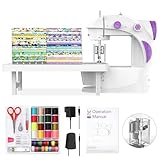
KPCB Tech Sewing Machine for Beginners (Mini Size)
Best for someone who wants to try sewing before committing real money. The mini form factor and double-speed switch make it manageable for simple straight-stitch tasks like hemming or patching. The included fabric pack and finger guard signal that the manufacturer understands the audience is nervous about needles.
- Lowest price on this list with actual starter materials included.
- Light enough to store in a drawer or carry to a class.
- Build quality is toy-level; expect limited durability beyond occasional mending.
Skip it if you plan to sew more than a few small projects or need to work with medium-weight fabrics.
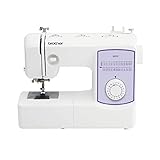
Brother Sewing Machine XM2701
The XM2701 is the most capable machine on this list by a wide margin. Twenty-seven built-in stitches, automatic needle threading, and a free arm for cuffs and hems give a beginner genuine room to grow. Owner feedback consistently praises the stitch quality on lightweight and medium fabrics.
- Automatic threader removes the most common frustration point for new sewists.
- Free arm and six presser feet support projects mini machines cannot handle.
- At $149, it is a real commitment for someone unsure whether sewing will stick.
Skip it if you only need a machine for occasional button repairs and do not want to invest in learning proper technique.
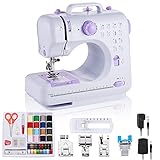
Rxmeili Portable 12-Stitch Sewing Machine
This 12-stitch machine arrives with a 42-piece kit covering thread, bobbins, scissors, and pins in quantities a beginner will actually use. It sits at the sweet spot between toy-level minis and full-size models without forcing you into either extreme.
- The 42-piece kit is the most generous accessory bundle here, potentially saving a separate supply purchase.
- Two-speed control lets you slow down for curves without losing all feed.
- The bobbin winder is awkward and thread tension requires patience to dial in.
Skip it if you dislike small adjustments or expect set-and-forget simplicity out of the box.
Small Sewing Machine for Beginners (Portable Light Fabric Kit)
Priced at $84.99, this machine occupies a middle tier between the minis and the Brother models. It targets light fabrics specifically, which is honest positioning that prevents frustration from overloading it.
- The portable kit includes everything needed to start without a separate shopping trip.
- Owners praise its quiet operation, which matters in shared households or apartments.
- Product description is vague on exact stitch count and speed options compared to competitors.
Skip it if you need detailed spec confidence before buying or want to sew anything heavier than cotton or linen.
CraftBud Mini Sewing Machine
Marketed at adults and kids alike, the CraftBud Mini prioritizes approachability over performance. Its double-speed switch and included accessories make it a reasonable first machine for a family sharing one.
- Simplicity means almost no learning curve for basic straight stitching.
- Price matches other minis while the included accessories justify slightly higher expectations.
- Stitch quality on even slightly thicker fabric such as denim hems is unreliable per owner reports.
Skip it if you plan any project beyond tissue-thin cotton or expect precision topstitching.
Sewing Machine for Beginners with Extension Table
The extension table sets this apart from other machines in its price bracket by giving a stable surface for larger fabric pieces. Twelve built-in stitches and an assortment thread kit cover basic needs at $43.99.
- The extension table is a genuinely useful feature rarely found under $50.
- The included thread kit saves an immediate supply purchase for new projects.
- Owner feedback notes the table attaches loosely and the machine vibrates noticeably at higher speed.
Skip it if you need a perfectly stable sewing surface for precision work or curved seams.
Brother GX37 Sewing Machine
Thirty-seven stitches, a free arm, and Brother’s reputation for entry-level reliability make the GX37 a strong contender just below the XM2701 in price. For beginners who want growth room without paying a premium, it is a practical choice.
- Offers nearly the same stitch range as the more expensive Brother for roughly ten dollars less.
- Automatic needle threader and top-drop bobbin system are genuinely beginner-friendly.
- No LED light is included, so you will need external lighting in dim rooms.
Skip it if you sew frequently in low-light environments or want the extra features the XM2701 adds at a modest upcharge.
Portable Sewing Machine with LED Light and 32-Color Thread Kit
This machine bundles twelve stitches, two-speed control, a foot pedal, an LED light, and a 32-color thread kit at $49.99. The built-in light is a practical inclusion for evening sewing that most competitors at this price omit.
- Built-in LED light eliminates the need for a separate task lamp.
- The 32-color thread kit is comprehensive enough for most mending and small craft projects.
- Several owners report the foot pedal feels plasticky and inconsistent compared to the hand-speed switch.
Skip it if you prefer foot-pedal control and plan to sew for extended sessions where pedal consistency matters.
Buying Guide
Stitch Consistency at Slow Speed
Beginners do not sew at full speed. They sew tentatively, often with one hand guiding fabric while the other manages the speed switch. A machine that produces even stitches only at its faster setting will frustrate you during your first several projects. Prioritize models where owner feedback specifically mentions clean stitching at the slow setting, even if the machine has fewer total stitches.
Thread Tension and Bobbin Access
Most beginner frustrations traced to skipped stitches or bird-nesting under the fabric come down to two things: incorrect top tension and a bobbin that was loaded incorrectly. Front-loading bobbins (as in some Brother models) are harder to get right than top-drop bobbins. If the tension dial feels arbitrary, look for machines where owners report a “sweet spot” that is easy to find and stays put.
What “Included Accessories” Actually Means
A 42-piece kit sounds impressive, but inspect what those pieces actually are. Real needles, functional bobbins (not just one), and usable thread spools matter far more than plastic tools you will not touch. A machine bundled with a finger guard or extension table solves a real problem a beginner encounters. Ignore stitch-count inflation and focus on whether the bundle removes the need for a second purchase within your first week of use.
Our Verdict
Our top pick is the Brother XM2701: it is the only machine on this list that a beginner can realistically keep using a year later without outgrowing it. Our budget pick is the KPCB Tech Mini at $39.99, which does enough for its price to justify a low-risk start. However, if you already own a task lamp and want the most stitches per dollar, the Brother GX37 wins at $134.99 by delivering near-identical function to the XM2701 with a minor feature gap.
FAQ
Can a $40 sewing machine actually sew a straight line?
Yes, several machines in this price range produce acceptable straight stitches on lightweight fabric. The limitation is not the stitch itself but consistency over a long seam and performance on anything thicker than cotton lawn.
What is the difference between a mini and a full-size portable machine?
Mini machines omit the free arm, use simpler bobbin systems, and lack the motor power for medium-weight fabric. Full-size portables like the Brother models include more presser feet options and handle a wider range of projects.
Do I need a foot pedal, or can I sew with just a hand switch?
A hand-speed switch works fine for short mending tasks and is easier for some beginners to control. A foot pedal frees both hands for guiding fabric, which matters on longer seams or curved cuts.
What fabric can beginner machines handle without skipping stitches?
Most machines under $100 handle cotton, linen, and lightweight polyesters reliably. Medium-weight denim, canvas, and knit fabrics require stronger feed mechanisms and sharper needles, which typically means stepping up to the Brother tier.


