Key takeaways
- The listing gives the sink width but omits faucet-hole spacing or a dimensional drawing.
- The product photo shows one faucet while the specification describes three holes, or vice versa.
- The faucet centers match, but the faucet deck is too narrow for the handle or spout base.
- The sink has no stated overflow configuration even though your existing drain and local installation requirements depend on one.
- Reviews mention cracked rims, warped mounting surfaces, or inconsistent cutout dimensions.
- The return policy excludes installed or opened ceramic products.
- The sink weight exceeds what the countertop or vanity cabinet can safely support.
What's inside
- Decide These 3 Things First
- Size: Measure the Bowl, Rim, and Cutout
- Material: Balance Weight, Finish, and Maintenance
- Construction: Confirm Mounting Style and Hole Layout
- Comfort and Performance: Check Splash, Drainage, and Overflow
- Price Tiers: Know What the Extra Money Buys
- Warranty: Read the Conditions, Not Just the Length
- Delivery and Assembly: Plan for the Fragile Parts
- Spec Checklist
- Red Flags
- FAQ
Choosing a bathroom sink is not just a matter of finding a bowl that fits the vanity. The faucet, countertop cutout, drain position, backsplash, and available plumbing all have to work together. The most common mistake is buying the sink first and checking the faucet spacing later. A second is confusing faucet-hole spacing with the sink’s overall width. A 20-inch sink can have one centered hole, three holes at 8-inch centers, or no holes at all.
- Decide These 3 Things First
- Size: Measure the Bowl, Rim, and Cutout
- Material: Balance Weight, Finish, and Maintenance
- Construction: Confirm Mounting Style and Hole Layout
- Comfort and Performance: Check Splash, Drainage, and Overflow
- Price Tiers: Know What the Extra Money Buys
- Warranty: Read the Conditions, Not Just the Length
- Delivery and Assembly: Plan for the Fragile Parts
- Spec Checklist
- Red Flags
- FAQ
If you are searching for “how to choose bathroom sink hole spacing center distance,” start with the faucet specification, not the sink’s outside dimensions. Center distance is measured from the center of one faucet hole to the center of the next. A faucet listed as “8-inch centers” needs two outside holes separated by 8 inches. A “0-inch centers” or single-hole sink has one opening for a single-handle faucet. The guide below explains what matters when comparing models in 2026.
As an Amazon Associate we earn from qualifying purchases at no extra cost to you. Product prices and availability are accurate as of the date shown and are subject to change.


Decide These 3 Things First
- Choose the faucet configuration. Decide between single-hole, centerset, and widespread. Single-hole faucets typically use one opening. Centerset models commonly fit holes from 4 to 8 inches apart, while widespread faucets usually require three holes with outside centers separated by roughly 8 to 16 inches. Always follow the faucet manufacturer’s stated range.
- Measure the installation area. Record the vanity width, countertop depth, backsplash clearance, and existing cutout. Leave at least 2 inches between the sink rim and a side wall when possible, and check that the faucet handle can move without hitting a wall or mirror.
- Match the sink to the plumbing and countertop. Confirm the drain location, overflow requirement, mounting style, and whether the existing countertop is drilled for the new faucet. A drop-in sink can cover an imperfect cutout, but it cannot solve incompatible hole spacing.
Size: Measure the Bowl, Rim, and Cutout
Sink dimensions are usually listed as outside length by outside width, followed by basin depth. A compact round drop-in sink may measure about 19 inches across, while a larger oval model may be approximately 20 1/2 inches long. Those outside measurements are not the same as the usable basin size or the countertop cutout.
For a small powder room, a sink 16 to 20 inches wide and 14 to 18 inches front to back can preserve valuable counter space. A main bathroom vanity often accommodates a sink 20 to 24 inches wide and 16 to 20 inches deep. Measure the vanity cabinet before shopping: a 24-inch vanity does not provide 24 inches of uninterrupted countertop, especially when side rails, faucet clearance, and backsplash space are included.
Basin depth affects both capacity and comfort. A depth of about 5 to 7 inches is common for bathroom sinks. Shallower bowls can be easier for children and reduce splashing from a short faucet, while deeper bowls may better contain hand-washing water. Check the faucet spout reach as well; the stream should land near the drain rather than against the front or rear wall of the basin.
Material: Balance Weight, Finish, and Maintenance
Vitreous china remains a practical choice for most bathroom installations. It has a smooth, glossy surface, resists ordinary staining, and is easy to clean. Many affordable drop-in sinks weigh roughly 15 to 30 pounds, so the countertop and cabinet can usually support them without special reinforcement. The tradeoff is that porcelain-based materials can chip if a heavy object is dropped on the rim.
Fireclay has a substantial, ceramic appearance and is often thicker and heavier than standard vitreous china. It can weigh 30 to 60 pounds or more depending on the size and construction, so verify cabinet and countertop support before ordering. Glass, stone, solid surface, and stainless steel are other options, but each changes the cleaning routine and installation requirements.
Look for a consistent glaze, a flat rim, and clear cleaning instructions. Avoid assuming that a higher price guarantees better durability; material thickness, edge quality, and installation support matter just as much as the finish.
Construction: Confirm Mounting Style and Hole Layout
Drop-in, or self-rimming, sinks sit in a countertop opening with a visible rim supporting the bowl. They are generally the easiest replacement option because the rim covers a small amount of cutout variation. The faucet may mount on the sink deck or directly on the countertop, depending on the model.
Undermount sinks attach below the countertop and require a precisely finished opening. They usually need a countertop material that can support an exposed polished edge, such as stone or solid surface. Vessel sinks sit above the counter and may require a taller faucet plus a separate countertop or wall-mounted faucet.
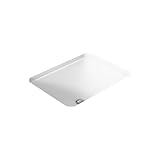
Do not assume every sink includes the same drilling pattern. A single-hole sink is designed for a faucet mounted at 0-inch centers. A three-hole sink may specify 4-inch, 6-inch, or 8-inch centers. For example, the PROFLO PF20178 is listed with three faucet holes at 8-inch centers, while the PROFLO PF191R and PF20171 examples use one faucet hole at 0-inch centers. The KOHLER K-2699-8-0 is an example of an oval self-rimming bowl with 8-inch centers. These configurations are not interchangeable without changing the faucet or countertop.
Comfort and Performance: Check Splash, Drainage, and Overflow
A sink should be comfortable to use with the faucet you already own or plan to buy. Compare spout height, reach, and aerator position. A tall, high-arc faucet over a shallow basin can create more splash, while a short spout may not reach far enough into a wide bowl. As a general starting point, a spout reach of 4 to 6 inches suits many standard bathroom basins, but the sink’s shape can change the ideal target.
Overflow protection is another practical detail. An overflow opening near the upper basin wall helps route water into the drain system if the drain is closed. If your existing sink has an overflow, replacing it with a model without one can require a compatible drain assembly and may not meet local expectations or installation requirements. Match the drain to the sink: many bathroom basins use a 1 1/4-inch drain opening, but verify the product specification rather than relying on a general rule.
Inspect the slope toward the drain and the shape of the basin floor. Nearly flat areas can leave more standing water after use. Deep, narrow bowls may contain splashing but can be less comfortable for washing larger items. Product diagrams are more useful than lifestyle photos when comparing these details.
Price Tiers: Know What the Extra Money Buys
Budget bathroom sinks generally cost about $45 to $90. At this level, expect vitreous china, standard white finishes, drop-in construction, and either one faucet hole or a common 4- or 8-inch pattern. The PROFLO examples listed at $60.75, $62.99, and $65.25 illustrate the typical value range for basic white drop-in sinks.
Midrange sinks usually cost $90 to $200. The additional price may provide a more refined shape, heavier construction, broader size selection, improved glazing, or a better-known finish and fit. The KOHLER K-2699-8-0 example, listed at $91.06, falls near the entry point of this tier.
Premium models commonly run from $200 to $600 or more. That price can reflect fireclay, stone, designer dimensions, custom colors, integrated features, or specialized mounting hardware. Before paying more, make sure the upgrade addresses a real need. A premium finish does not compensate for the wrong faucet centers or an incompatible countertop opening.
Warranty: Read the Conditions, Not Just the Length
Bathroom sink warranties commonly range from 1 year to a limited lifetime warranty. The important details are what the warranty covers and who pays for removal, shipping, or replacement. A warranty may cover manufacturing defects but exclude chips caused by impact, improper installation, commercial use, or harsh cleaners.
Save the invoice, model number, installation instructions, and photographs taken before installation. Inspect the sink as soon as it arrives. Some sellers require damage claims within a short window, and installed products may be harder to return. A longer warranty is useful, but accurate measurements and careful handling prevent more problems than warranty length alone.
Delivery and Assembly: Plan for the Fragile Parts
Ceramic sinks are breakable even when the package looks intact. Check the shipping carton for crushed corners, punctures, or loose movement before signing for delivery when possible. Open and inspect the sink promptly, paying particular attention to the rim, faucet holes, corners, and underside.
Most drop-in sinks do not require complicated assembly, but you may need silicone sealant, mounting clips, a drain, a faucet, supply lines, and a compatible pop-up or lift-rod assembly. Budget approximately $20 to $60 for basic installation supplies, excluding the faucet and labor. Professional installation often costs about $150 to $400, depending on the region, countertop work, plumbing changes, and whether the old sink must be removed.
Keep the sink uninstalled until the faucet, drain, and countertop measurements have been verified. Dry-fit the bowl first, mark the faucet location, and confirm that the backsplash and vanity drawers will not interfere.
Spec Checklist
| Spec | Budget | Mid | Premium |
|---|---|---|---|
| Typical price | $45–$90 | $90–$200 | $200–$600+ |
| Common material | Vitreous china | Thicker china, fireclay, or solid surface | Fireclay, stone, specialty ceramic, or designer solid surface |
| Typical width | 16–21 inches | 18–24 inches | 20–36 inches or custom |
| Faucet layout | Single-hole or 4-/8-inch centers | Single-hole, 4-inch, 8-inch, or widespread | Custom and designer layouts available |
| Basin depth | 5–6 inches | 5–7 inches | 5–8 inches, depending on design |
| Mounting style | Mostly drop-in | Drop-in or undermount | Undermount, vessel, integrated, or custom |
| Approximate product weight | 15–25 pounds | 20–40 pounds | 30–60+ pounds |
Red Flags
- The listing gives the sink width but omits faucet-hole spacing or a dimensional drawing.
- The product photo shows one faucet while the specification describes three holes, or vice versa.
- The faucet centers match, but the faucet deck is too narrow for the handle or spout base.
- The sink has no stated overflow configuration even though your existing drain and local installation requirements depend on one.
- Reviews mention cracked rims, warped mounting surfaces, or inconsistent cutout dimensions.
- The return policy excludes installed or opened ceramic products.
- The sink weight exceeds what the countertop or vanity cabinet can safely support.
FAQ
What does 8-inch centers mean on a bathroom sink?
It means the centers of the two outside faucet holes are 8 inches apart. On a three-hole sink, the center hole is typically positioned halfway between them. Measure from hole center to hole center, not from the outside edges of the holes.
Can I install a single-hole faucet on an 8-inch-center sink?
Usually not without covering the unused holes. You may be able to use a single-handle faucet with a deck plate if the plate is wide enough, but confirm that it covers both extra openings and fits the sink deck. Otherwise, choose a faucet designed for the sink’s existing spacing.
Are bathroom sink faucet holes standardized?
No. Common layouts include one hole at 0 inches, centerset spacing around 4 inches, and widespread layouts around 8 to 16 inches. Manufacturers may also use less common dimensions, so always compare the exact faucet and sink specifications.
Should I buy the sink or faucet first?
If you are replacing both, choose the faucet configuration first and then select a sink drilled for it. If the countertop is already installed, measure its existing holes before purchasing either item. Matching the center distance at the beginning is far easier than modifying a finished countertop later.