Key takeaways
- On a splash-prone counter: Pick washable plastic with a lid that stays put. Store dry daily-use items such as hair accessories or sealed personal-care products.
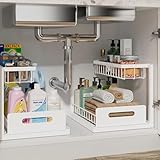
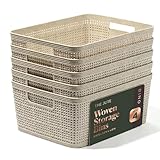
- Inside a vanity cabinet: Use handled plastic bathroom storage bins with lids for backups and grouped supplies. Handles make it easier to pull a container from the back without unloading the shelf.
- For visible, dry essentials: Choose a small glass jar for cotton swabs or rounds, placed away from the sink and out of reach of children who might drop it.
- For a calm, low-splash vanity: A sealed bamboo box can hold wrapped items or spare tissues. Keep it off a wet counter, and dry it promptly if splashed.
- For a shared family bathroom: Favor lightweight, rounded plastic bins with clear labels. Avoid glass at child height, and give each person a separate container to reduce rummaging.
- For a small bathroom: Measure the shelf’s usable depth and height, including plumbing or cabinet hinges. A shallow rectangular bin is often easier to pull out than a deep, oversized box.
What's inside
Bathroom Storage Containers with Lids: Choose by Material, Size, and Contents
For most bathrooms, choose moisture-resistant plastic for everyday storage, glass for dry items you want to see, and sealed bamboo only when its finish and lid keep water out and the container can dry between uses. The right size depends less on the label than on what must fit inside, where the container will sit, and whether you need to lift or stack it.
Compare the materials before choosing
| Material | Humidity resistance | Stacking and access | Best for | Watch out for |
|---|---|---|---|---|
| Plastic | Generally the most practical choice for a damp bathroom; look for a smooth, washable interior. | Lightweight and often made with nesting or stacking rims. Clear walls make contents easy to spot. | Hair ties, cotton pads, spare toiletries, bath toys, and frequently used supplies. | Thin walls can flex under heavy loads; a poorly fitting lid may keep out dust but is not airtight. |
| Glass | Does not absorb moisture, but water can collect under the lid or on the surface. | Stable on a counter, but heavy and breakable. Avoid stacking unless the shape is designed for it. | Dry cotton swabs, cotton rounds, and small items kept away from the sink edge. | Breakage risk, especially in family bathrooms or on narrow shelves. Check whether the lid is washable. |
| Sealed bamboo | Depends on a continuous, intact finish and protected edges; it is less forgiving of repeated splashes than plastic. | Often looks tidy on a vanity, but lids may not seal tightly and natural pieces may not stack securely. | Dry tissues, wrapped products, or occasional-use items stored in a ventilated, low-splash area. | Standing water, worn coating, and damp contents can cause swelling, staining, or odor over time. |
For a steamy bathroom, plastic is usually the low-maintenance pick. Glass is a good choice when visibility and easy cleaning matter more than weight. Bamboo can suit a dry vanity or cabinet, but treat “sealed” as a useful finish—not a guarantee that the container is waterproof. No ordinary lid should be assumed to make damp items safe to store.
As an Amazon Associate we earn from qualifying purchases at no extra cost to you.
Match capacity to what you store
Container sizes are not standardized, and advertised dimensions may refer to the outside. The estimates below use approximate interior dimensions; actual capacity varies by shape. Measure the available shelf first, allowing room to lift the lid and pull the bin forward.
| Approximate inside size | Useful contents | Typical placement |
|---|---|---|
| 4 × 4 × 3 in (10 × 10 × 8 cm) | Hair ties, clips, floss picks, or a handful of cotton rounds | Drawer, vanity tray, or narrow shelf |
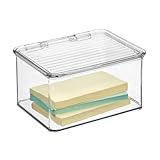
| 6 × 6 × 4 in (15 × 15 × 10 cm) | A small pack of cotton swabs, makeup sponges, or travel-size products | Counter or medicine-cabinet shelf |
| 10 × 7 × 5 in (25 × 18 × 13 cm) | Several hairbrushes, a first-aid assortment, or a few full-size bottles laid down | Vanity cabinet or linen closet |
| 12 × 10 × 6 in (30 × 25 × 15 cm) | Bath toys after drying, spare toilet-paper rolls, or a family’s backup toiletries | Under-sink cabinet or open shelving |
These dimensions are a starting point, not a promise that every item will fit. Measure a tall bottle including its cap, and check the narrowest point of a brush handle or packaged product. For toilet paper, compare the bin’s interior width with the roll diameter; a container that fits one roll may not fit two side by side.
Choose for the bathroom and the contents
- On a splash-prone counter: Pick washable plastic with a lid that stays put. Store dry daily-use items such as hair accessories or sealed personal-care products.
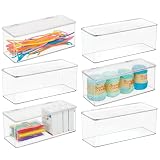
- Inside a vanity cabinet: Use handled plastic bathroom storage bins with lids for backups and grouped supplies. Handles make it easier to pull a container from the back without unloading the shelf.
- For visible, dry essentials: Choose a small glass jar for cotton swabs or rounds, placed away from the sink and out of reach of children who might drop it.
- For a calm, low-splash vanity: A sealed bamboo box can hold wrapped items or spare tissues. Keep it off a wet counter, and dry it promptly if splashed.
- For a shared family bathroom: Favor lightweight, rounded plastic bins with clear labels. Avoid glass at child height, and give each person a separate container to reduce rummaging.
- For a small bathroom: Measure the shelf’s usable depth and height, including plumbing or cabinet hinges. A shallow rectangular bin is often easier to pull out than a deep, oversized box.
Check the lid, fit, and stacking details
A lid can reduce dust and visual clutter, but it does not automatically make a container airtight or leakproof. For bathroom storage, the useful test is whether it closes securely, opens without knocking into a faucet or cabinet frame, and can be cleaned easily. If you are storing anything that must remain dry, place it in a dry container only after the item and container are fully dry.
Before buying a stackable set, check that the base of one container sits inside or securely on the lid below it. A flat lid alone may slide when the stack is bumped. Keep heavy items in the bottom bin, and do not stack containers higher than you can safely reach. In a humid cabinet, leave a little space around bins rather than wedging them tightly against a damp wall; airflow helps surfaces dry.
What not to seal away while damp
Do not close wet bath toys, used washcloths, damp makeup sponges, or recently rinsed accessories inside a lidded container. Trapped moisture can encourage odor and mildew regardless of material. Let items dry fully, or use an open draining caddy for wet gear and reserve lidded bathroom storage containers for dry items.
Medication and cleaning products also need care. Keep medicines in their original packaging and follow the storage instructions on the label; the bathroom may be too humid or warm for some products. Store cleaning supplies in their original, labeled containers, separate from toiletries, and in a secure location if children or pets can access the cabinet.
A quick buying checklist
- Measure the shelf’s width, depth, and usable height, then account for lid clearance.
- Choose plastic for frequent handling and damp zones, glass for dry display storage, or sealed bamboo for protected, low-splash placement.
- Match interior dimensions to the actual products, not just the stated capacity.
- Confirm that the lid fits, the bin is easy to wash, and stacked pieces cannot slide.
- Use lidded containers for dry supplies; let damp items air-dry before storing them.