Key takeaways
- How many outlets can the valve control?
- Can two outlets operate simultaneously, or must the user switch between them?
- What is the maximum flow rate at the home’s pressure?
- Is the valve serviceable through an access panel, or would future repairs require opening tile?
- Does the system include thermostatic protection in addition to electronic temperature control?
The best smart shower systems are the ones whose valve capacity, temperature control, installation requirements, and water-saving features match your bathroom—not simply the system with the most app functions.
For a new bathroom or major remodel, a digitally controlled system from Kohler, Moen, or GROHE offers the most flexible experience. For an existing shower, choose a retrofit-friendly electronic control or a smart showerhead rather than assuming a full digital valve can be installed without opening the wall. The key decision is whether you want precise control at the shower, remote control from a phone, voice commands, or simpler preset buttons that every family member can use.
Our top picks



As an Amazon Associate we earn from qualifying purchases at no extra cost to you. Ratings are shown as listed on Amazon.
Best smart shower systems by bathroom situation
| Situation | Best system type | Why it fits | Main compromise |
|---|---|---|---|
| New construction or full remodel | Multi-outlet digital valve system | Supports a showerhead, hand shower, body sprays, presets, and precise temperature control | Requires careful rough-in planning and electrical work |
| Existing shower with limited wall access | Retrofit electronic control or connected showerhead | Can reduce demolition and preserve existing plumbing | Usually has fewer outlets and less sophisticated water management |
| Children sharing the bathroom | Preset-capable digital valve with a physical control | Repeatable temperature settings reduce accidental hot-water changes | Initial setup takes time, and presets should still be supervised |
| Small apartment bathroom | Single-outlet digital control or smart showerhead | Uses less wall space and avoids unnecessary body-spray plumbing | Less dramatic spray coverage than a multi-outlet installation |
| Accessibility or reduced mobility needs | Digital controls placed near the entry, with a hand shower | Water can be started and adjusted before stepping fully into the spray | Controls, waterproofing, and grab-bar locations must be planned together |
Head-to-head: the leading smart shower approaches
Kohler DTV+ for the most elaborate custom shower
Kohler’s DTV+ platform is designed for bathrooms with several water outlets, such as an overhead shower, hand shower, body sprays, and a bath or steam-related control arrangement depending on the configuration. Its strongest advantage is coordinated control: the user can select outlets, adjust temperature, and save preferred settings through a dedicated interface and compatible connected features.
Choose DTV+ when the shower is being designed from the plumbing outward and you want a premium, highly coordinated installation. It is less attractive for a simple replacement because the digital valve, control locations, power supply, and outlet piping need to be planned as a system. A multi-outlet configuration can also exceed the hot-water capacity of a small tank or instantaneous heater.
Moen Smart Shower for accessible presets and familiar controls
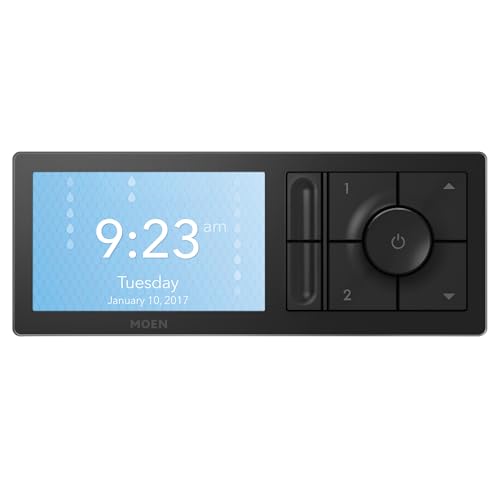
Moen Smart Shower systems emphasize preset temperature and outlet control through a digital interface, with selected configurations supporting the Moen Smart Water Network and voice-enabled operation. A physical controller is especially useful when several people use the bathroom: one person can select a stored setting without opening an app.
Moen is a strong choice when the household wants predictable temperature presets without turning every shower into a phone-based task. Before specifying it, confirm the exact controller, valve, number of outlets, and compatibility with the desired smart-home platform. “Smart shower” is a product family, not one identical kit, so the model-specific electrical and rough-in instructions matter.
GROHE SmartControl for tactile push-button operation
GROHE SmartControl systems use push-and-turn controls to select water outlets and adjust flow. That tactile approach can be preferable to a touchscreen, particularly for wet hands, shared bathrooms, or users who do not want to depend on an app. The system is well suited to a clean, contemporary shower with separate control over an overhead shower and hand shower.
GROHE’s main appeal is direct physical operation rather than a feature-heavy connected ecosystem. Ask whether the exact configuration includes app or voice capability; many SmartControl installations are “digital-feeling” because of their precise buttons and valves without offering the same remote-control functions as a connected platform.
Connected showerheads for a lower-disruption upgrade
A connected showerhead or electronic shower control can be sensible when the existing plumbing works well and the homeowner wants timers, temperature awareness, flow monitoring, or app-based settings. These products generally cost less and create less wall disruption than a concealed multi-outlet valve.
The trade-off is limited control. A showerhead replacement cannot normally create a separate hand-shower outlet, control body sprays, or solve inadequate hot-water pressure. Confirm the product’s required flow rate, connection size, Wi-Fi requirements, and whether it remains usable if the app or internet connection is unavailable.
What to compare before buying
Digital valve capacity and outlet control
The valve is the system’s core. A single-outlet valve may control only one showerhead, while a multi-outlet valve can direct water to several outlets and sometimes run more than one at once. Do not count outlets without checking simultaneous flow. A 2.5-gallon-per-minute overhead shower plus a 2.0-gpm hand shower requires approximately 4.5 gpm before pipe losses. Running body sprays at the same time may require substantially more hot-water delivery than an existing home can provide.
Ask these questions:
- How many outlets can the valve control?
- Can two outlets operate simultaneously, or must the user switch between them?
- What is the maximum flow rate at the home’s pressure?
- Is the valve serviceable through an access panel, or would future repairs require opening tile?
- Does the system include thermostatic protection in addition to electronic temperature control?
Temperature accuracy and safety
Digital temperature settings are useful because they can repeat a comfortable temperature instead of relying on a mechanical handle position. Look for a thermostatic valve, a maximum-temperature limit, and a manual override. A control mounted outside the main spray area can let someone start the shower without standing under cold water, but it should not be treated as a substitute for anti-scald protection.
For children, a preset is helpful, but the maximum temperature should be limited at the valve. For older adults or anyone with reduced sensation, pair the smart controls with a hand shower, slip-resistant flooring, a properly positioned grab bar, and clear physical controls.
App and voice features
App control is most valuable for creating presets, managing multiple users, checking water consumption, and starting the shower before entering. Voice control can be convenient for adjusting temperature or selecting an outlet, but it should be viewed as an additional interface rather than the primary safety mechanism.
Check whether the system needs continuous internet access or only local Wi-Fi, whether each user needs a separate account, and what happens after a router failure. The best systems retain local physical controls and do not make a shower unusable because a cloud service is temporarily unavailable. Also consider privacy: a household may prefer on-device buttons for a bathroom rather than microphones or voice assistants.
Water-saving settings
Water savings come from reducing unnecessary flow time and limiting simultaneous outlets, not from the word “smart” alone. Useful features include a warm-up pause, a shower timer, a flow limit, automatic shutoff, and usage reports. A warm-up mode can send water at low flow until the target temperature is reached, although the exact savings depend on the plumbing layout and the distance from the water heater.
For reference, a 10-minute shower at 2.0 gpm uses about 20 gallons; at 2.5 gpm it uses about 25 gallons. Reducing a daily 10-minute shower by two minutes saves roughly 1,460 gallons per person annually at 2.0 gpm. A system that runs a rainhead, hand shower, and body sprays together can erase those savings quickly.
Electrical and installation requirements
Most concealed smart shower valves require a dedicated low-voltage power supply or manufacturer-specified transformer, while the transformer itself may connect to household line voltage. Exact requirements vary by model. The electrical connection must be installed according to the manufacturer’s instructions and local code, with appropriate protection in a wet-room environment. Do not place an ordinary receptacle inside the shower enclosure simply because a controller needs power.
| Planning item | Useful design allowance | Why it matters |
|---|---|---|
| Control height | About 42–48 inches above the finished floor for many standing-shower installations | Comfortable for many adults and reachable before entering the spray; adjust for household needs |
| Hand-shower slide bar | Commonly installed around 48–72 inches above the finished floor | Allows different users to adjust height; blocking must be installed behind tile |
| Shower entry clearance | Plan for at least a 30-inch clear opening where the layout permits | Improves access for users and makes future maintenance or mobility assistance easier |
| Typical flow planning | 2.0–2.5 gpm per active shower outlet | Helps size the hot-water supply and avoid disappointing pressure |
A retrofit is simplest when the existing shower has accessible plumbing, a nearby power route, and enough space for the new control. A full digital valve may require removing tile, relocating supply lines, adding blocking, installing a transformer, and creating service access. In a finished bathroom, that work can cost more than the controller itself. During a remodel, photograph the open wall, label every pipe, and keep the valve’s service instructions with the home records.
How to choose the right system
- Choose a multi-outlet digital valve if you are renovating the shower and want multiple sprays, user presets, and detailed control.
- Choose a tactile push-button system if reliable operation matters more than app features.
- Choose a connected single-outlet control if you want timers or temperature presets with less demolition.
- Choose a basic smart showerhead if your priority is modest water monitoring or automatic shutoff and the existing plumbing is otherwise satisfactory.
Garay Kitchens and Baths can help coordinate the shower layout, valve location, electrical planning, waterproofing, and finish selections before walls are closed. The most dependable installation begins with a complete schedule: valve model, controller, outlets, flow rates, power requirements, access-panel location, and the hot-water capacity available to the bathroom.
Frequently asked questions
Can a smart shower be installed without removing tile?
Sometimes. A compatible retrofit control or showerhead may use existing connections, but a concealed multi-outlet digital valve usually requires wall access. The feasibility depends on pipe locations, framing, power routing, and whether the existing valve can be removed without damaging the finished surface.
Will a smart shower work during a Wi-Fi outage?
Many systems continue to operate through their physical controls, but app-only functions may be unavailable. Confirm this before purchase. A physical manual control and a thermostatic safety limit are preferable for a primary bathroom.
Are smart showers worth the cost?
They are most worthwhile when precise presets, multiple outlets, accessibility, or water-use control solve a real problem. If the shower only needs one outlet and a dependable temperature handle, a conventional thermostatic valve may deliver similar daily comfort with lower cost and less installation complexity.