A shower head can reshape a limited stream, but it cannot repair a clogged valve, undersized pipe, failing pressure regulator, closed stop, or weak well system. The useful question is not “Which head feels strongest?” It is “Where is flow being lost, and which legal spray geometry makes the remaining supply feel most usable?”
Affiliate disclosure: A purchase made through a product link may generate a commission for this site, while the reader’s checkout price remains unchanged. That relationship does not determine the diagnostic sequence or model inclusion.
Our top picks


As an Amazon Associate we earn from qualifying purchases at no extra cost to you.
Editorial method: No personal shower trial or laboratory test is claimed. Current manufacturer pages, EPA WaterSense guidance, and published model specifications were reviewed on August 26, 2026. The shortlist favors documented flow rates, concentrated or adjustable spray patterns, accessible nozzles or screens, and distinct approaches to limited flow. Product sequence is not a performance ranking.
Three Exact Models After Diagnosis
| Exact model | Documented configuration | Why it belongs in a low-pressure comparison |
|---|---|---|
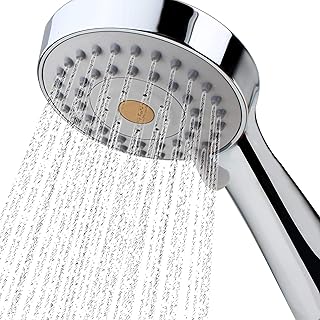
| High Sierra Classic 1.5 GPM FCS-100 | Fixed 1.5-gpm shower head using the manufacturer’s patented nozzle design | Concentrated single-pattern approach with a pressure-compensating flow regulator |
| Niagara Conservation Earth Massage N2915CH | 1.5-gpm adjustable shower head with nine-jet turbo massage | Pressure-compensating design and adjustable spray character at a lower rated flow |
| Speakman Anystream Hotel S-2005-HB | 2.0-gpm WaterSense shower head with five adjustable jets and 50 sprays | Higher permitted WaterSense flow and user-adjustable spray distribution |
These models illustrate different strategies rather than universal winners. Local rules may cap shower-head flow below a manufacturer’s available configuration. Confirm the exact model and rated flow on the product page, packaging, and applicable state or local requirements before ordering.
Run a Bucket Test Before Shopping
Use a graduated bucket and stopwatch at the existing shower. Capture water for a measured interval with the head installed, then calculate gallons per minute: gallons collected divided by seconds, multiplied by 60. Repeat at the usual temperature because a restriction may appear only through the hot-water path or mixing valve.
If the manufacturer permits removal, repeat the measurement from the bare shower arm while controlling splash. A large increase without the old head points to a clogged screen, mineral buildup, or restrictive outlet. Little change points upstream. Protect threads, do not damage the arm inside the wall, and reinstall only with the sealing method specified for the connection.
Record whether other fixtures are running. A test with every tap closed measures a different condition from a morning shower while a washer fills. Repeat under the household’s problem scenario. The result establishes delivered flow; it does not by itself reveal static pressure.
Separate Pressure From Flow
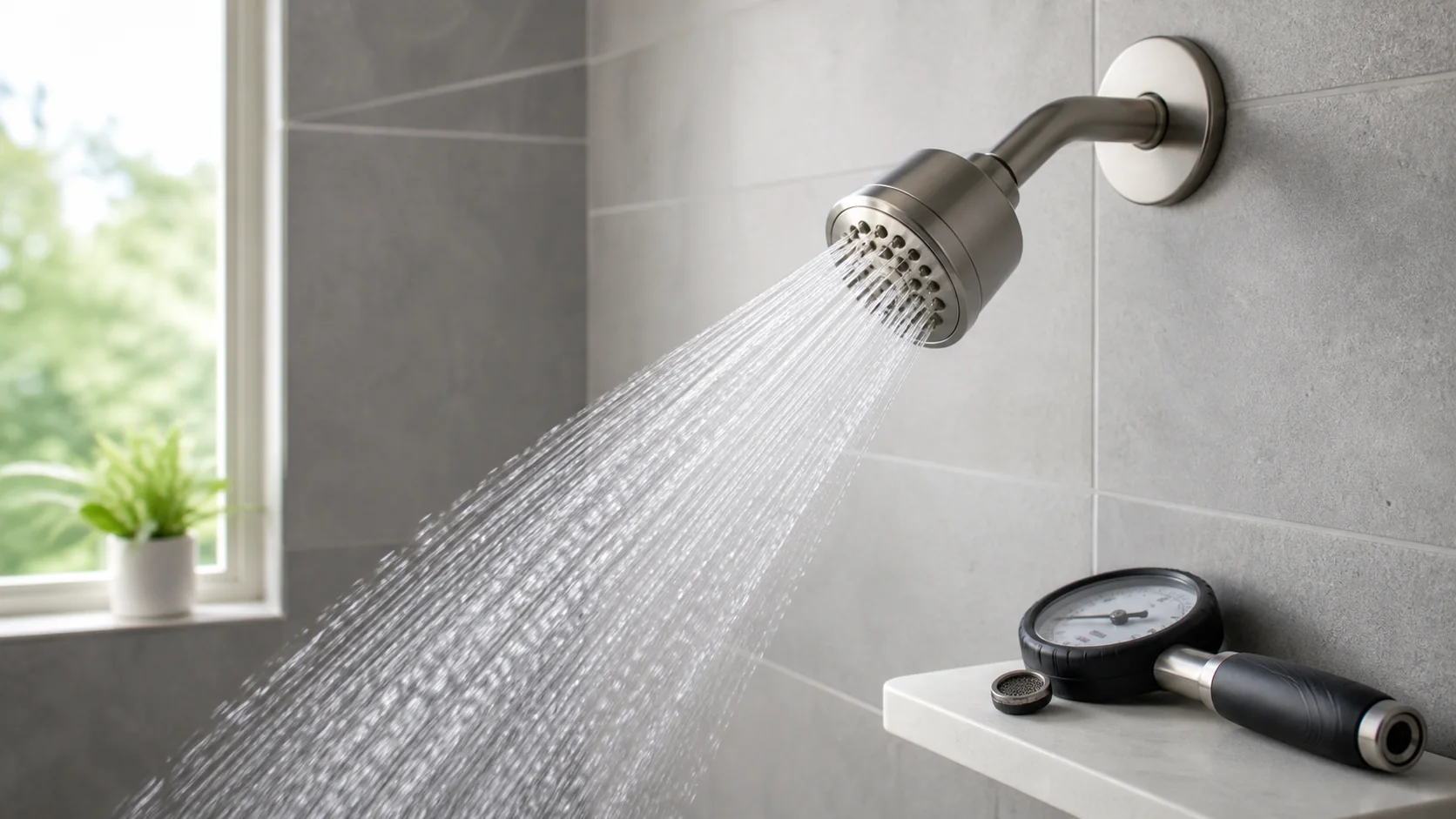
Static pressure is measured while water is not moving. Dynamic pressure is observed while a fixture flows. A threaded pressure gauge at an appropriate hose connection can help a qualified person compare those conditions, but plumbing layout, elevation, pipe size, and fixture valves still affect what reaches the shower.
High static pressure with poor shower flow suggests a restriction: scaled cartridge, blocked screen, partially closed valve, kinked line, debris, or small passage. Low pressure throughout the home may involve a municipal supply, pressure-reducing valve, well pump, filter, softener, or elevation. Sudden changes deserve diagnosis rather than a product swap.
Do not defeat a code-required flow regulator or enlarge shower-head outlets. That can violate efficiency rules, change temperature behavior, increase hot-water demand, and void product coverage. Fix the system fault and select an approved model for the jurisdiction.
How Spray Geometry Changes Perception
A broad rain pattern divides water among many outlets. At marginal supply, each stream may feel soft or cool as droplets spread and lose momentum. A concentrated pattern directs the same allowed flow through fewer or more focused openings, which can feel more forceful without increasing gallons per minute.
High Sierra uses a single-nozzle concept rather than a conventional face full of small holes. Niagara’s Earth Massage uses nine jets and allows spray adjustment. Speakman’s Anystream mechanism changes the distribution among its five jets. Those geometries create different sensations; manufacturer descriptions do not substitute for standardized comparative pressure data at the exact home condition.
Outlet cleanliness matters. Mineral film narrows or deflects small passages. An accessible screen and cleanable face help restore the documented pattern, but the maintenance method must follow the exact finish and nozzle instructions. Never soak an entire coated fixture in acid unless its maker explicitly permits that treatment.
Model-by-Model Diagnostic Fit
High Sierra Classic FCS-100 at 1.5 GPM
This model is the most focused option in the set. High Sierra documents a patented nozzle and pressure-compensating regulator. It is appropriate to investigate when measured supply is adequate for 1.5 gpm but a conventional wide face feels diffuse. Verify thread, finish, current certification, and the exact flow variant; similar-looking High Sierra models may carry different ratings.
Niagara Earth Massage N2915CH
Niagara also publishes a 1.5-gpm pressure-compensating approach, but adds an adjustable massage pattern. It suits a user who wants to tune spray concentration rather than accept one fixed plume. Confirm the `N2915CH` identifier because Niagara sells related Earth models at other flow rates and configurations.
Speakman S-2005-HB at 2.0 GPM
Speakman’s Hotel Anystream option uses the full 2.0-gpm WaterSense ceiling and distributes water through five adjustable jets. It may suit a location where 2.0 gpm is legal and the supply can actually deliver it. A higher label rating provides no benefit when upstream plumbing only supplies substantially less.
Flow Law and Hot-Water Consequences
EPA states that WaterSense-labeled shower heads use no more than 2.0 gpm and meet performance criteria. Some jurisdictions impose stricter limits or regulate which models may be sold. Product pages can offer multiple flow versions, so a collection name alone is not sufficient evidence of compliance.
Changing from 1.5 to 2.0 gpm raises water and hot-water demand by one-third at equal shower duration. A small water heater, long wait for hot water, or limited well recovery can make that tradeoff noticeable. Compare comfort, legal flow, energy use, and actual delivered capacity rather than assuming the largest allowed number is always best.
A pressure-compensating regulator aims to stabilize flow over a stated pressure range; it does not create pressure. Review the manufacturer’s performance information and minimum operating condition when available. Below that range, every model may underperform its rated flow.
A Stepwise Low-Pressure Decision Tree
- Compare hot-only, cold-only, and mixed behavior.
- Run the timed bucket test under normal household demand.
- Clean the existing inlet screen and nozzles according to its manual.
- Measure again before replacing anything.
- Check whether sinks and other showers share the symptom.
- Have valve, regulator, well, or concealed piping assessed when evidence points upstream.
- Identify the maximum legal flow for the installation location.
- Select fixed-concentrated or adjustable geometry from the remaining compatible models.
- Retest delivered flow after installation and keep the result as a baseline.
Stop DIY work when a shower arm moves inside the wall, a valve leaks, pressure is unsafe or unstable, hot-water temperature fluctuates, corrosion appears, or local rules require licensed plumbing. A cosmetic fixture should never become the experiment used to diagnose concealed damage.
Coordinate the next decision with the compare spray patterns and shower-head fit.
Frequently Asked Questions
Can a 1.5-gpm head feel stronger than a 2.0-gpm head?
Yes, depending on outlet geometry and the actual supply, a concentrated 1.5-gpm pattern may feel more focused than a broad 2.0-gpm pattern. Sensation is not proof of higher pressure.
What bucket-test result proves the shower head is clogged?
No single number proves it. A meaningful increase after safely removing the old head, combined with a dirty screen or distorted spray, supports an outlet restriction diagnosis.
Will a pressure-compensating model fix a weak well pump?
No. It may regulate flow within its designed pressure range, but it cannot restore deficient source pressure, well recovery, or a failing pump system.
Should the flow restrictor be removed?
No. Removal may violate law, upset product performance, increase hot-water use, and void support. Diagnose the restriction and buy the correct legal model.
Why is only the hot shower weak?
Possible causes include a mixing cartridge, water-heater valve, hot-side debris, or scaled hot piping. Compare fixtures and have the system assessed before blaming the shower head.
Recommendation: Match Geometry to Measured Supply
Consider High Sierra FCS-100 when a fixed concentrated 1.5-gpm plume matches the diagnostic result. Choose Niagara N2915CH when adjustable massage at 1.5 gpm is more useful. Consider Speakman S-2005-HB where 2.0 gpm is permitted, available, and preferred. First correct any restriction; then select the spray architecture whose exact rating, connection, maintenance, and legal status fit the home.
Sources
- U.S. EPA official product page
- High Sierra official product page
- Niagara Conservation official product page
- Speakman official product page