“Replace the bathroom fixtures” is not a single trade item. A deck-mounted faucet may be reachable through a vanity, a toilet can expose a failed flange after lifting, and a shower valve may sit behind tile with no rear access. A bathtub adds a large product, demolition, waterproofing, and finish restoration. Combining them into one average hides the work that controls the price.
The U.S. figures in this guide were checked on August 26, 2026. They are planning references for defined scopes, not promises for a particular address. Local wages, fixture quality, access, permit rules, and damage discovered after removal can move a quote outside a national range.
Our top picks


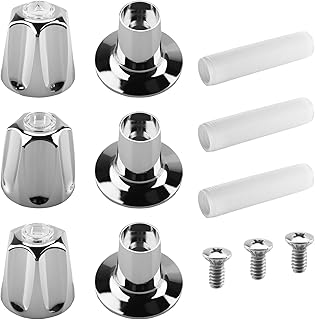
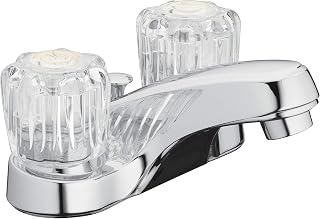

As an Amazon Associate we earn from qualifying purchases at no extra cost to you.
Affiliate disclosure: Qualifying product links may earn the site a commission at no added cost to the reader.
Use a Fixture Matrix, Not One Bathroom Average
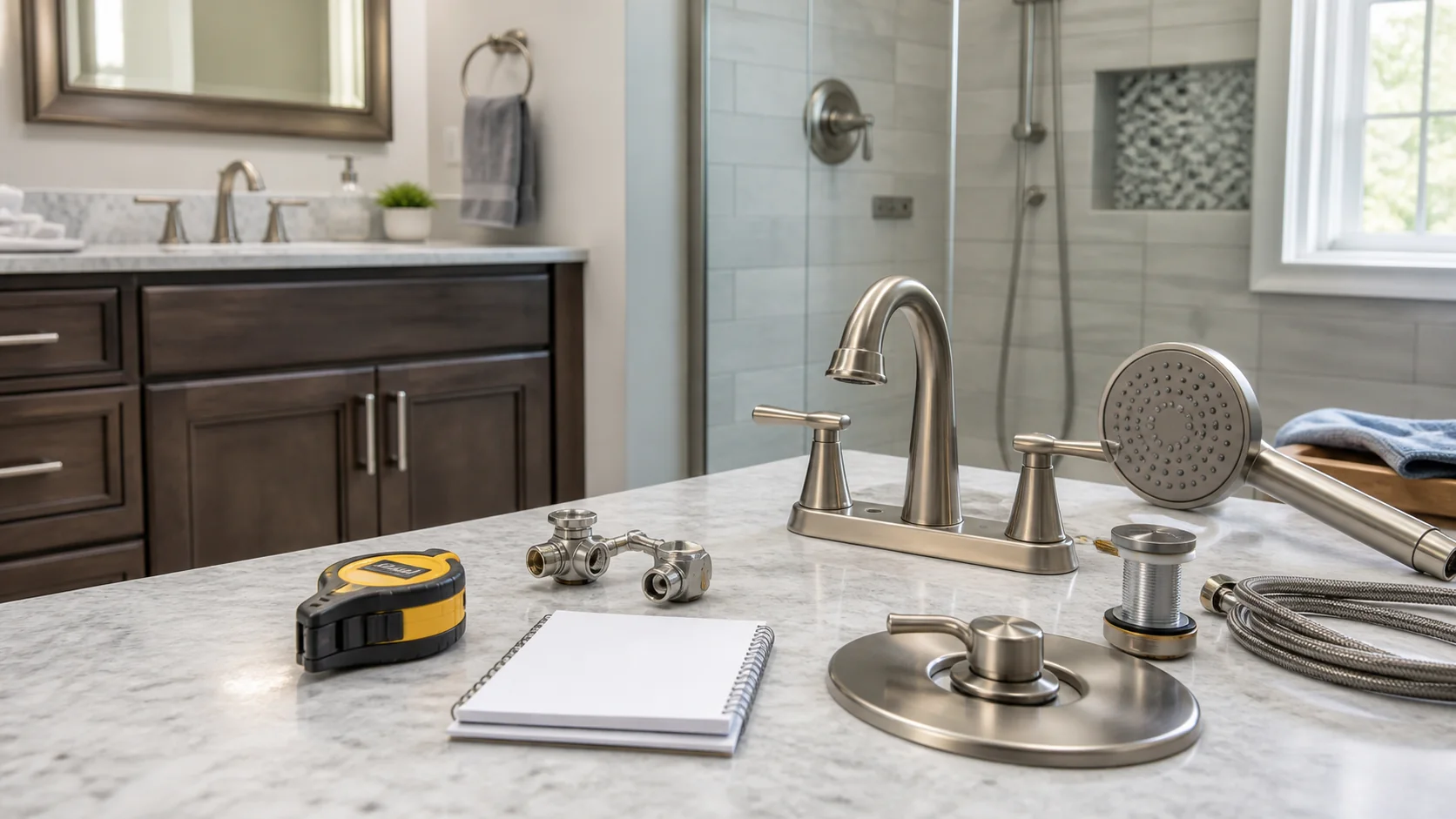
Create one row for each faucet, toilet, shower component, tub, and accessory. Then divide every row into product, removal, connection labor, surrounding-finish work, permit or inspection, and unresolved-condition allowance. This prevents a visible trim price from being mistaken for the cost of concealed work.
| Fixture | Usually simple when | Scope expands when |
|---|---|---|
| Lavatory faucet | Hole pattern, drain, valves, and supplies remain compatible | Connections are corroded, wall-mounted, or inaccessible |
| Toilet | Floor mount and rough-in match; flange and subfloor are sound | Flange, drain, floor, wall carrier, or supply needs repair |
| Shower trim/cartridge | Existing valve body is identified and serviceable | Valve body changes or tile/wall must be opened |
| Bathtub | Same alcove, drain position, and surround can be retained | Size, material, deck, waterproofing, plumbing, or structure changes |
| Accessories | New items reuse suitable blocking and holes | Grab bars, glass, or cabinets require new support and finish repair |
Complete the matrix before seeking bids. A contractor can then see whether “three fixtures” means three straightforward swaps or three different construction projects.
Bathroom Faucet: Separate Product From Accessible Labor
HomeGuide’s faucet guide, published July 14, 2025, reports $200 to $600 for a new faucet plus installation across common locations, with $120 to $300 for installation labor. Its bathroom-faucet labor table shows $130 to $350. See HomeGuide’s faucet cost data. Those benchmarks fit an accessible replacement better than a wall-mounted faucet or a job involving stone drilling.
List the faucet, drain assembly, supply hoses, shutoff-valve condition, hole layout, countertop thickness, and removal of seized hardware. Widespread faucets have more below-deck parts than many single-hole models. A vessel sink may need a taller faucet and careful reach. Wall-mounted fixtures can involve concealed valves and wall finishing, so they belong closer to a plumbing-and-surface project than a simple deck swap.
If several small faucets or accessories are being replaced, ask whether one mobilization charge can cover them. Do not assume savings until the quote states which removal, connection, and testing tasks are included.
Toilet: Price the Flange and Floor Risk
HomeGuide’s toilet guide, published September 22, 2025, places a typical toilet plus installation at $350 to $800, with $150 to $450 or more identified for replacement labor. It separately lists $50 to $200 for removal. See HomeGuide’s toilet installation dataset.
The reliable pre-install checks are rough-in distance, bowl projection, supply position, door clearance, seat height, and floor condition. The hidden risk is the flange: corrosion, poor height, loose anchoring, or damaged subfloor may not be fully visible until the toilet is lifted. Keep a flange/floor allowance separate rather than inflating the fixture price.
A wall-hung toilet is a different category because the carrier and tank are concealed. Changing from floor-mount to wall-hung can involve framing, drain relocation, wall opening, and inspection. Likewise, powered bidet seats or smart toilets may require a compliant nearby electrical receptacle.
Shower: Cartridge, Valve Body, and Finished Wall Are Different Jobs
A showerhead or compatible trim swap does not establish the cost of replacing a mixing valve. HomeGuide reports $100 to $350 for a cartridge replacement and $225 to $575 for a mixing or diverter valve replacement, including parts and labor. The source notes that access and valve type affect the total. See HomeGuide’s shower-valve cost guide.
Identify the existing manufacturer and valve series before purchasing trim; cartridges and trim are not universally interchangeable. If symptoms can be corrected with a documented compatible cartridge, opening the wall for a complete body replacement may be unnecessary. If the body leaks, lacks required temperature protection, or cannot accept the desired controls, price plumbing and access together.
Access from an adjacent closet or drywall surface may be less disruptive than removing tile. The proposal should say who opens and closes the wall, whether waterproofing is disturbed, how matching tile will be sourced, and whether a service panel is acceptable. A plumber’s valve price may legitimately exclude tile, backer board, waterproofing, paint, or glass removal.
Bathtub: Treat Replacement as a Mini Construction Project
HomeGuide’s bathtub guide, published August 20, 2025, reports $1,500 to $8,000 for a tub plus installation. Its breakdown identifies $300 to $3,000 or more for the tub, $400 to $2,000 or more for installation labor, $150 to $750 for removal, $200 to $700 or more for plumbing modifications, $200 to $700 for potential wall repairs, and $50 to $250 for permits where required. See HomeGuide’s bathtub replacement data.
Do not add every published line automatically; first define the actual scope. A same-size alcove tub with an intact surround differs from a freestanding tub requiring a relocated drain, floor reinforcement, and finished walls on all sides. Jetted equipment adds electrical and service-access questions. Walk-in products introduce door clearance, filling/emptying behavior, hot-water capacity, and accessibility considerations.
Confirm how the old tub leaves the room, whether the new unit fits through doors, and when it must be on site. Waterproofing and wall substrate should be described by system, not merely as “tile repair.” Product instructions, local code, and the chosen finish assembly determine sequencing.
Accessories, Permits, and Wall Repair
Towel bars and mirrors may be cosmetic; grab bars, glass doors, wall cabinets, and heavy mirrors can require structural backing or specialized anchors. Electrical accessories—lighted mirrors, bidet seats, fans, heated towel rails—need circuit and location review. Price accessories by mounting condition rather than counting pieces.
Permit rules are local. A trim or like-for-like surface fixture may be exempt where concealed plumbing, electrical, structural changes, or a relocated fixture require a permit and inspection. Ask the authority having jurisdiction and make the contract identify who obtains and closes permits.
Wall repair deserves its own allowance: opening, backing, substrate, waterproofing, tile, grout, drywall, texture, paint, trim, and glass reinstallation are different tasks. Matching discontinued tile may be impossible. Before demolition, decide whether a deliberate accent or larger resurfacing area is preferable to an uncertain patch.
Build Three Totals Before Approving the Work
- Verified base: selected fixtures, known removal, accessible connections, and testing.
- Defined add-ons: requested upgrades such as new accessories, premium trim, bidet power, or improved controls.
- Risk reserve: allowances only for named unknowns such as flange repair, failed shutoffs, valve access, wall damage, or waterproofing.
Ask bidders to use these same buckets. Compare model numbers, quantities, labor by trade, protection, disposal, permits, finish restoration, cleanup, warranty, and exclusions. A low proposal may omit the wall closer, electrician, tile setter, or disposal fee rather than deliver the same result more efficiently.
Inspect delivered fixtures before the return window closes. At completion, test each fixture under normal use, check visible and concealed-access areas for leaks, verify stable mounting, collect inspection approvals, and retain model and finish codes.
Safety and Scope Limits
Water, electricity, heavy fixtures, glass, cutting, and concealed damage can cause injury or major property loss. Verify shutoffs and circuits before work. Use appropriate qualified trades for regulated plumbing, electrical, structural support, waterproofing, glass, or hazardous-material concerns. Stop for mold, rotten framing, damaged wiring, failed shutoffs, or instructions that conflict with the site.
This article cannot diagnose a fixture, inspect concealed conditions, or determine local permits. Source ranges describe different datasets and inclusions; they should not be blended into one “average bathroom” price.
Coordinate the next decision with the bathroom fixture checklist.
Bathroom Fixture Cost FAQs
Is it cheaper to replace several fixtures in one visit?
It can reduce mobilization, but only compatible, accessible tasks share efficiency. Tile opening, electrical work, or a failed flange still adds separate scope.
Does shower trim fit any valve?
No. Identify the valve manufacturer and series. Compatible trim may preserve the body; incompatible controls can force concealed replacement.
Should a toilet quote include floor repair?
Routine setting usually does not include unknown subfloor damage. Request an allowance or unit rate for flange and floor repairs discovered after removal.
Can a plumber repair the wall after replacing a valve?
Some firms coordinate closure; others exclude it. Assign drywall, waterproofing, tile, paint, and glass work explicitly.
When does an accessory need blocking?
Follow its rated installation instructions. Safety-related or heavy accessories often need framing or approved structural support, not generic hollow-wall anchors.
Final Recommendation
Budget each fixture as a small system, then combine the verified totals. Keep materials, connection labor, permits, wall or floor restoration, and named risks visible. Faucet, toilet, shower, tub, and accessory projects have different failure points; an itemized matrix makes those differences reviewable before demolition and protects the budget from a misleading single-number estimate.