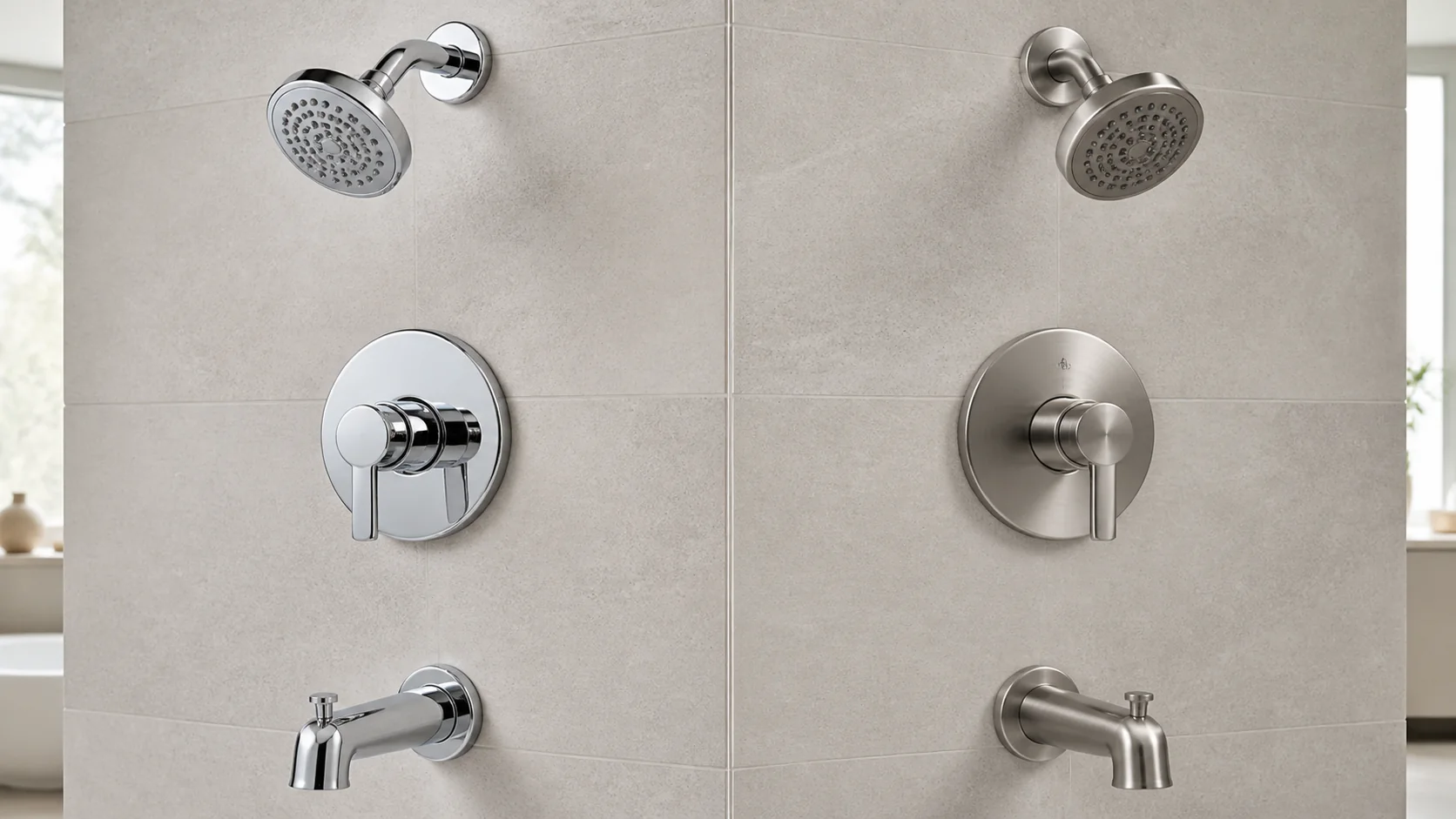
Chrome and brushed nickel can use similar fixture bodies yet create very different bathrooms. Chrome acts almost like a small mirror: cool, bright, and quick to show droplets. Brushed nickel diffuses reflections through a fine directional texture and usually reads warmer. Neither is automatically more durable or easier to own; construction quality, water chemistry, cleaning habits, and replacement availability matter as much as color.
Affiliate disclosure: Garay Kitchens & Baths may earn a commission from eligible purchases made through links in this guide. The comparison remains based on documented care, compatibility, and everyday maintenance.
Our top picks


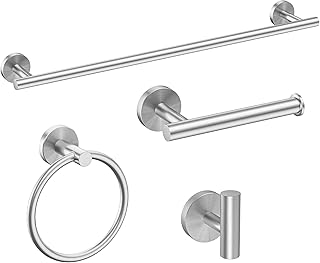

As an Amazon Associate we earn from qualifying purchases at no extra cost to you.
Quick Comparison
| Decision factor | Chrome | Brushed nickel |
|---|---|---|
| Visual character | Crisp, reflective, generally cool | Soft sheen, muted, often warm |
| Water-spot visibility | Usually obvious under direct light | Texture disguises light spotting better |
| Fingerprint visibility | High on frequently touched areas | Generally less noticeable |
| Cross-brand availability | Very broad | Broad, but color varies more visibly |
| Style role | Bright accent or neutral metallic | Quiet bridge between warm and cool materials |
| Cleaning risk | Scratches and haze disrupt reflections | Abrasives can alter the directional grain |
Compare Real Samples Under Bathroom Light
Online images are unreliable for judging metal finishes. Camera white balance, screen settings, and surrounding colors can make nickel look gray in one photo and beige in another. Obtain a sample, drain part, or actual accessory from the same manufacturer and finish code. Hold it vertically and horizontally because brushed texture reflects differently by orientation.
View the sample in daylight, with vanity lighting, and with the shower light. Place it beside tile, grout, countertop, cabinet hardware, and mirror frame. Chrome tends to echo nearby colors through reflection. Brushed nickel contributes more of its own undertone, which may complement warm stone and wood or conflict with a very cool gray scheme.
Water Spots and Fingerprints
Chrome does not create more mineral residue, but its uninterrupted reflective surface makes dried droplets easy to see. Brushed nickel scatters light, so minor marks can blend into the texture. Hard water will still build deposits on either finish, especially around aerators, handles, shower nozzles, and joints.
If household members will not wipe fixtures regularly, brushed nickel often maintains a more even appearance between cleanings. If the owner enjoys a polished, bright surface and is willing to dry it, chrome rewards that routine. A water test is more useful than a showroom impression: place a drop of local tap water on each sample, let it dry, then clean it according to the manufacturer’s instructions.
Durability Depends on the Finish System
The visible color does not reveal the complete construction. A fixture may use plated metal, physical vapor deposition, lacquer, or another manufacturer-specific process over different substrates. Two products both called brushed nickel can have different resistance to abrasion, corrosion, and household chemicals. Examine the warranty language for finish exclusions and confirm whether replacement trim remains available.
Chrome has a long history and broad parts availability, which can simplify matching a replacement accessory years later. Brushed nickel is also common, but undertone and brush pattern vary among brands and product generations. Durability should therefore be judged model by model rather than awarded to a finish name.
Use a Finish-Safe Cleaning Routine
Begin with the exact care sheet. In general, a soft damp cloth followed by rinsing and drying is safer than aggressive scrubbing. Do not assume a cleaner approved for tile, glass, or a toilet bowl is suitable for faucet trim. Acids, bleach, ammonia, abrasive powders, rough pads, and extended chemical contact may damage some coatings or void warranties.
For chrome, avoid anything that leaves micro-scratches or dull residue because reflected light makes surface disruption conspicuous. Wipe brushed nickel with its grain when the manufacturer permits, without trying to polish away the texture. Spray cleaner onto a cloth rather than directly into handle joints or wall openings. The EPA Safer Choice product search can help identify household products with reviewed ingredients, but the fixture maker’s compatibility guidance still controls.
Matching Fixtures Across Brands
Chrome is usually the easier cross-brand match because the mirror-like surface leaves less room for an obvious undertone. Shape and reflectivity can still differ. Brushed nickel may range from cool silver-gray to warm champagne, and one company’s satin nickel may resemble another company’s brushed nickel without matching exactly.
Exact matching is not always necessary. A bathroom can deliberately use chrome plumbing fixtures with warm cabinet hardware, provided each finish repeats and the division is understandable. For example, use chrome for every water-related component and brushed nickel for furniture hardware and lighting. Avoid scattering several nearly identical metals with no pattern.
Availability, Repairs, and Remodel Risk
A concealed shower valve deserves special attention. Select the valve for performance, compatible trim, and future parts support before choosing a finish. If a favored nickel trim is discontinued, changing to another finish within the same supported valve platform may be easier than opening the wall. Keep model numbers and finish codes in the project file.
For faucets and accessories, verify that the collection includes every piece the room needs: drain, overflow cover, shower arm, supply elbow, grab bar, towel storage, and toilet-paper holder. An uncommon finish with only partial coverage can force compromises late in the remodel. Our bathroom remodel fixture checklist helps coordinate these parts before demolition.
A Five-Test Selection Scorecard
- Light test: view both samples in every lighting condition used in the room.
- Water test: allow local water to dry, then follow approved cleaning instructions.
- Material test: compare each finish with tile, stone, paint, wood, and hardware.
- Collection test: confirm the required valve trim, faucets, drains, and accessories exist.
- Replacement test: check warranty terms, cartridges, trim compatibility, and parts channels.
Weight the tests according to the household. A busy family with hard water may give cleaning visibility twice the importance of perfect color coordination. A lightly used guest bath may prioritize appearance. A long-term primary suite should place concealed-valve support and replacement availability near the top.
Where Each Finish Usually Works Best
Chrome suits rooms that need sparkle, visual contrast, or a metal that is easy to find across product categories. It pairs naturally with white ceramic, cool stone, glass, black accents, and many colorful tiles. Its reflection can make a small bathroom feel livelier, though it will demand more frequent wiping if a spotless look is expected.
Brushed nickel suits households that prefer a subdued surface and less-visible handling marks. Its warmth can connect stainless-colored elements with beige stone, natural wood, cream paint, and transitional cabinetry. Test it carefully against cool gray finishes; the difference may be attractive or may expose an unwanted yellow cast.
Frequently Asked Questions
Is brushed nickel harder to keep clean than chrome?
Not usually. It often hides light spots and fingerprints better, but mineral deposits still require removal. The safest method depends on the exact coating, so use the manufacturer’s care guide rather than a universal homemade formula.
Can chrome and brushed nickel be mixed in one bathroom?
Yes. Assign each finish a role and repeat it. Chrome might cover faucets and shower components while brushed nickel appears on cabinet hardware and lighting. Compare samples together so the contrast looks deliberate.
Which finish is better for hard water?
Brushed nickel may conceal residue better, but neither finish prevents scale. Easy-to-reach shapes, routine drying, approved cleaning, and local water treatment have more influence than the finish label alone.
Does chrome always look modern?
No. Fixture shape determines much of the style. Chrome can look traditional on cross handles and curved spouts or contemporary on slim geometric fittings. Brushed nickel spans similar design ranges.
Should the faucet match the mirror and light fixture exactly?
Exact matching is optional. Coordinated undertones and a repeated finish hierarchy matter more. Test all visible metals under installed lighting, especially when combining products from different manufacturers.
Bottom Line
Choose chrome when you value brightness, broad availability, and a crisp reflective accent—and accept that droplets will be easy to see. Choose brushed nickel when you prefer a softer, warmer surface that disguises everyday handling. In either case, the best purchase is a documented, serviceable fixture whose finish survives the cleaning routine the household will actually follow.