Key takeaways
- Tubing length and diameter. Most kits supply 50–250 feet of 1/4-inch distribution line plus a shorter run of 1/2-inch mainline. A 50-foot kit sounds adequate until you map a real layout: a single 4×8 ft raised bed with rows on both sides consumes roughly 60–80 feet of 1/4-inch line alone.
- Emitter flow rates. Fixed emitters usually run 0.5, 1, or 2 GPH (gallons per hour). Adjustable emitters span 0–10 GPH. Vegetable beds want 1–2 GPH at each plant; established shrubs and containers can need two 2 GPH emitters per plant.
- Filter and pressure regulator. Drip systems run at 20–30 PSI, while household spigots deliver 40–80 PSI. A kit without a regulator will pop emitters off the line; without a filter (typically 120–200 mesh), emitters clog within a season on well water or older municipal lines.
- Connector quality. Barbed fittings hold better than push-fit in hot climates where tubing softens. Cheap barbs crack after one winter; look for kits listing UV-resistant polypropylene or acetal fittings.
The best drip irrigation kits combine at least 100 feet of tubing, adjustable emitters in the 0.5–2 GPH range, a built-in filter and 25 PSI pressure regulator, and enough connectors to cover your actual planting layout — for most home gardens, kits in the $40–$120 range meet all of those criteria. The right pick depends less on brand and more on matching the kit’s specs to how your beds are arranged.
Our top picks
 TJJFMM 230FT Drip Irrigation System for Garden
- 【Upgraded Tube Design & Water Saving】 Our adjustable…
- 【Easy Installation & Quick Connection Technology】 The 4-way…
- 【Wide Applications】 Drip irrigation system is perfect for…
 Rain Bird DRIPKITBAG Drip Irrigation Kit
- Convenient and portable storage kit contains 102 professional…
- Plastic pouch neatly stores an included 100' of…
- Individual bags inside kit hold commonly needed parts…
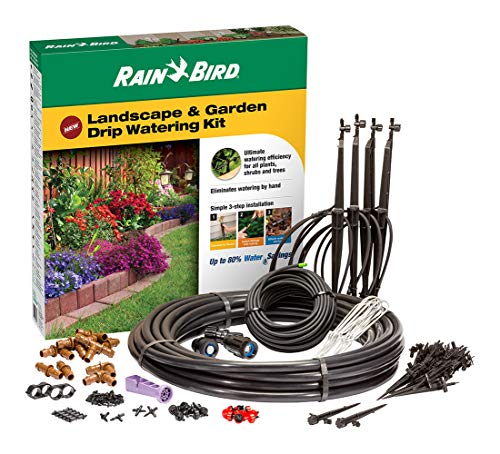 Rain Bird LNDDRIPKIT Drip Irrigation Kit
- Comprehensive 108-piece kit for flower beds, gardens and…
- Ultimate watering efficiency for all plants, shrubs and…
- Simple 3-step installation: connect to faucet, insert fittings…
| Product | Key specs | |
|---|---|---|
| TJJFMM 230FT Drip Irrigation System for Garden | 【Upgraded Tube Design & Water Saving】 Our adjustable… 【Easy Installation & Quick Connection Technology】 The 4-way… 【Wide Applications】 Drip irrigation system is perfect for… | Check price |
| Rain Bird DRIPKITBAG Drip Irrigation Kit | Convenient and portable storage kit contains 102 professional… Plastic pouch neatly stores an included 100' of… Individual bags inside kit hold commonly needed parts… | Check price |
| Rain Bird LNDDRIPKIT Drip Irrigation Kit | Comprehensive 108-piece kit for flower beds, gardens and… Ultimate watering efficiency for all plants, shrubs and… Simple 3-step installation: connect to faucet, insert fittings… | Check price |
 133FT Quick-Connect Drip Irrigation Kit with 30 133FT Quick-Connect Drip Irrigation Kit with 30 | 【133FT Complete Drip Irrigation Kit】Includes 100ft 1/4'' tubing,… 【Upgrade Push-to-Fit Design】Features an innovative quick connector design,… 【3 Types Of Drip Emitters】Includes 3 types of… | Check price |
As an Amazon Associate we earn from qualifying purchases at no extra cost to you.
How Drip Kits Differ — and Why It Matters
Drip kits look identical in product photos: a coil of black tubing, a bag of fittings, a handful of drippers. The differences that determine whether your plants thrive show up in the spec sheet. Four specs carry almost all the weight:
- Tubing length and diameter. Most kits supply 50–250 feet of 1/4-inch distribution line plus a shorter run of 1/2-inch mainline. A 50-foot kit sounds adequate until you map a real layout: a single 4×8 ft raised bed with rows on both sides consumes roughly 60–80 feet of 1/4-inch line alone.
- Emitter flow rates. Fixed emitters usually run 0.5, 1, or 2 GPH (gallons per hour). Adjustable emitters span 0–10 GPH. Vegetable beds want 1–2 GPH at each plant; established shrubs and containers can need two 2 GPH emitters per plant.
- Filter and pressure regulator. Drip systems run at 20–30 PSI, while household spigots deliver 40–80 PSI. A kit without a regulator will pop emitters off the line; without a filter (typically 120–200 mesh), emitters clog within a season on well water or older municipal lines.
- Connector quality. Barbed fittings hold better than push-fit in hot climates where tubing softens. Cheap barbs crack after one winter; look for kits listing UV-resistant polypropylene or acetal fittings.
Matching Kit Specs to Your Garden Layout
Before comparing products, sketch your layout and count two things: total linear feet the tubing must cover, and total emitter count. Then check this sizing guide:
| Garden type | Tubing needed | Emitter count | Flow rate | Typical kit price |
|---|---|---|---|---|
| 4–6 container pots on a patio | 25–50 ft (1/4″) | 6–12 | 0.5–1 GPH | $25–$45 |
| Two raised beds (4×8 ft each) | 75–100 ft | 16–24 | 1–2 GPH | $40–$70 |
| In-ground vegetable plot, ~200 sq ft | 150–200 ft | 30–40 | 1–2 GPH + drip line | $60–$100 |
| Mixed beds + shrub border + containers | 200–250 ft + 1/2″ mainline | 40–60 | Mixed 0.5–4 GPH | $80–$140 |
The most common buying mistake is undersizing. Kit manufacturers count every component generously — a “covers 150 sq ft” claim assumes dense spacing and optimal conditions. Plan for 20% more tubing and emitters than your sketch suggests, because rerouting around a path or adding a forgotten bed always happens.
Best Drip Irrigation Kits by Situation
Best for raised beds: Rain Bird and DripWorks bed kits
Rain Bird’s raised-bed kits and DripWorks’ bed-specific bundles ship with pre-cut drip line at row spacing (typically 12 inches apart) rather than point emitters — better for densely planted vegetables where you want the whole soil zone wet. Expect 1/2-inch dripline with emitters pre-installed every 9–12 inches at 0.6–1 GPH. These run about $50–$90 depending on bed count.
Best for containers and patios: Raindrip and Orbit container kits
Raindrip’s automatic container kits and Orbit’s patio watering kits focus on 1/4-inch line with adjustable 0–10 GPH drippers, plus a battery timer. Adjustable emitters matter here: a 10-inch herb pot needs a fraction of the water a 20-inch tomato planter does. Budget $40–$80 with timer included.
Best for larger or mixed gardens: DripWorks and Irrigatia-style expandable systems
For gardens combining beds, borders, and hanging baskets, look for kits built around a 1/2-inch mainline with 1/4-inch branches — the mainline keeps pressure even across runs over 50 feet, where all-1/4-inch systems lose flow at the far end. DripWorks’ deluxe garden kits and similar trade-grade bundles run $100–$150 but include pressure-compensating emitters, which hold flow rate constant even on slopes or long runs.
Best budget option for beginners: generic 100-ft kits
Unbranded and store-brand kits with 100+ feet of tubing, 20–40 emitters, a regulator, and a filter sell for $30–$50. The fittings are the weak point — barbs may need a softer touch and an occasional spare. Fine for a first season while you learn your layout; upgrade connectors later if anything leaks.
Spec Trade-Offs Worth Understanding
| Component | Budget tier | Premium tier | Practical difference |
|---|---|---|---|
| Emitters | Fixed 1–2 GPH, non-compensating | Pressure-compensating, 0.5–4 GPH | On runs over 30 ft or slopes, non-compensating emitters at the far end can deliver half the rated flow |
| Fittings | Standard barbed polyethylene | Acetal/Delrin barbs or compression fittings | Cheap barbs crack in freeze-thaw cycles; compression fittings allow re-use when you reconfigure beds |
| Timer | None, or single-dial mechanical | Battery timer with multiple programs | Mechanical timers can’t run daily short cycles — the pattern containers actually need |
| Filter | Often omitted | 120–150 mesh Y-filter | Without filtration, fine sediment clogs 1 GPH emitters within weeks on well water |
Setup Realities Listings Don’t Mention
- Cold tubing fights you. Unroll tubing in the sun for 30 minutes before assembly, or soak ends in warm water before pushing onto barbs — cold 1/4-inch line pops off fittings all summer.
- Flushing is mandatory. Leave end caps open for the first few runs each season. One clogged mainline can starve every downstream emitter without any visible symptom.
- What wears first: emitters clog or pop off (keep spares), stakes become brittle after 2–3 seasons of UV, and timer batteries die mid-August. The tubing itself typically lasts 5–8 years above ground, longer if buried under mulch.
- Winterization matters in freezing climates. Disconnect the regulator, filter, and timer and store them indoors; drain the lines. Fittings left full of water crack by spring.
- Check your backflow requirements. Many municipalities require a vacuum breaker between the spigot and any irrigation system — a roughly $8 part that few kits include.
FAQ
Do I need a pressure regulator if my kit doesn’t include one?
Yes. Household pressure of 40–80 PSI will blow emitters off the line and split thin tubing. A standalone 25 PSI regulator costs about $8–$12 and screws on after the timer.
Can I run a drip kit off a rain barrel?
Only kits designed for gravity feed, which use low-pressure emitters rated for 2–10 PSI. Standard kits need pressurized supply — a barrel’s roughly 0.43 PSI per foot of height is rarely enough.
How long should I run the system?
A 1 GPH emitter running 30 minutes delivers half a gallon — appropriate for most vegetables every day or two in summer. Sandy soil wants shorter, more frequent cycles; clay wants longer, less frequent ones to avoid runoff.
Can I expand a kit later?
Yes — that’s the strongest argument for buying a kit with a 1/2-inch mainline. Branch new beds off it with 1/4-inch tees. Just keep total emitter demand under roughly 75% of your spigot’s flow capacity, or split the system into two zones.
The short version: measure your layout before you shop, insist on a filter and regulator in the box, and choose pressure-compensating emitters if your garden is large, sloped, or mixed. Get those three right and almost any reputable kit will water reliably for years.