Key takeaways
- Freestanding in soil: Push or hammer legs 10-12 inches into soil for panels up to 6 feet, and 12-16 inches for 7-8 foot panels. For loose or sandy soil, add 12-inch ground stakes or rebar driven at a 45-degree angle and wired to the trellis legs. For heavy woody vines, set two 24-inch steel U-posts 18 inches deep and zip-tie the trellis to them.
- Against a wall or fence: Do not lean. Use L-brackets or eye hooks with 3-4 inch standoffs screwed into studs or masonry anchors. A 6-foot cedar lattice needs at least two anchor points on the top rail and one at mid-height to prevent bowing.
- In containers: Choose a pot at least 16-18 inches wide and 14 inches deep for a 5-6 foot trellis. Add 8-10 lbs of gravel at the bottom for ballast, and secure the trellis legs to the pot rim with pot clips or wire. On windy balconies above the third floor, mount to the railing with U-bolts rather than relying on soil weight alone.
- Assembly and moving realities: A flat-pack 72×36 inch steel trellis typically ships in a 74x14x4 inch box weighing 18-26 lbs and assembles with 8-12 bolts in 20-30 minutes; you need a 7-foot clearance to carry it upright through doorways. Cedar panels often ship as one piece and will not fit through a standard 30-inch interior door without tilting diagonally (measure 78 inches diagonal clearance). The first points to wear are lower joints where wood meets soil and any plastic connectors on vinyl – reinforce those with stainless screws before planting.
The best garden trellises for most climbing plants are 5 to 6 feet tall for annual vines like clematis and jasmine, 6 to 8 feet tall for vigorous perennials like wisteria and trumpet vine, and made from powder-coated steel or rot-resistant cedar with ground anchoring rated for at least 30-40 lbs of mature vine weight.
Our top picks
 Adorox 7.3FT Garden Arch Trellis for Climbing
- Transform your backyard into a beautiful garden retreat…
- Give climbing roses, clematis, flowering vines, and other…
- Perfect for backyard gardens, walkways, garden entrances, and…
 30'' Large Metal Plant Trellis for Climbing
- Perfect Support for Climbing Plants:Designed for climbing and…
- Sturdy Metal Construction:Made of durable metal with a…
- Ideal for Indoor and Outdoor Use:Perfect for monstera,…
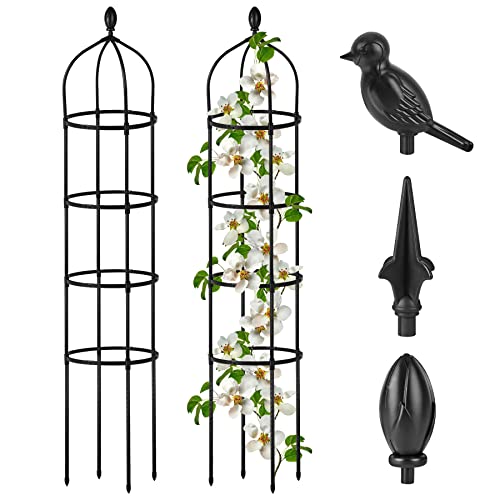 Garden Obelisk Trellis for Climbing Plants Outdoor
- 【Trellis for Climbing Plants Outdoor 6ft】1 pack, 6ft(69…
- 【Anti-rust Material】Each plant stake is made of Steel…
- 【Easy to Install】No screws, no wrench or screwdriver…
| Product | Key specs | |
|---|---|---|
| Adorox 7.3FT Garden Arch Trellis for Climbing | Transform your backyard into a beautiful garden retreat… Give climbing roses, clematis, flowering vines, and other… Perfect for backyard gardens, walkways, garden entrances, and… | Check price |
| 30'' Large Metal Plant Trellis for Climbing | Perfect Support for Climbing Plants:Designed for climbing and… Sturdy Metal Construction:Made of durable metal with a… Ideal for Indoor and Outdoor Use:Perfect for monstera,… | Check price |
| Garden Obelisk Trellis for Climbing Plants Outdoor | 【Trellis for Climbing Plants Outdoor 6ft】1 pack, 6ft(69… 【Anti-rust Material】Each plant stake is made of Steel… 【Easy to Install】No screws, no wrench or screwdriver… | Check price |
 VEVOR Garden Trellis for Climbing Plants VEVOR Garden Trellis for Climbing Plants | Sturdy Metal Design: Our garden flower trellis is… Chic Aesthetic: Elevate your outdoor space with this… All-Weather Durability: Featuring a robust powder-coated finish, this… | Check price |
As an Amazon Associate we earn from qualifying purchases at no extra cost to you.
Height Is the First Filter: Match the Trellis to the Plant’s Mature Vigor
Buying by looks leaves you with a trellis that is either swallowed by the plant in one season or too tall to anchor safely. Climbing plants fall into three height tiers, and the trellis should be 12-18 inches taller than the plant’s expected first-year growth to allow for training without constant pruning.
| Plant Vigor Category | Examples | Ideal Trellis Height | Min. Width Per Plant | Mature Vine Weight Load |
|---|---|---|---|---|
| Light & Compact (3-6 ft) | Sweet pea, black-eyed Susan vine, compact clematis | 4 – 5 ft | 18 – 24 inches | 8 – 15 lbs |
| Moderate (6-12 ft) | Roses (climbing), jasmine, passionflower, honeysuckle | 5 – 6.5 ft | 24 – 36 inches | 15 – 30 lbs |
| Vigorous (12-25+ ft) | Wisteria, trumpet vine, hardy kiwi, Dutchman’s pipe | 7 – 8 ft+ (or wall-mounted to pergola/arbor) | 36 – 60 inches | 40 – 90+ lbs |
For containers and balconies, subtract 12-18 inches from these heights. A 6-foot freestanding trellis in a 14-inch diameter pot becomes top-heavy once the vine fills in. On a small patio or in a 10×12 ft garden nook, a single 36-inch wide by 72-inch tall panel uses vertical space without blocking light, while two panels placed at a 90-degree angle create a corner screen that needs only 4 square feet of floor space.
How Much Clearance Does a Trellis Actually Need?
A common product listing omission is wall and airflow clearance. Mount a wall trellis 3-4 inches off the siding or fence using standoff brackets or spacer blocks. That gap prevents moisture trapped behind foliage from rotting wood or staining stucco, allows you to tie stems without crushing them, and improves air circulation to reduce powdery mildew. For freestanding trellises, leave 18-24 inches between the trellis base and any walkway so mature foliage does not encroach on foot traffic. If you are training a plant on a balcony railing, keep at least 6 inches of clearance from railings and glass to avoid heat scorch on south-facing exposures.
Material Trade-Offs: What Holds Up After Three Summers Outside
Material determines weight, lifespan, maintenance, and how hot the trellis gets in sun – which affects tender tendrils.
| Material | Weight (for 72×36 in panel) | Lifespan Outdoors | Maintenance | Best For / Watch Out For |
|---|---|---|---|---|
| Solid Cedar / Redwood | 12 – 18 lbs | 7 – 12 years | Annual sealing optional; natural rot resistance | Best for natural gardens and edible vines; will gray and can split if not sealed. Weight limit ~25-35 lbs per panel. |
| Powder-Coated Steel | 15 – 28 lbs | 10 – 15+ years | Rinse annually; touch up chips to prevent rust | Best for heavy perennials and wind; stays rigid. Gets hot in full sun – light-colored finishes are cooler than black. |
| Wrought Iron | 25 – 45 lbs | 15 – 20+ years | Repaint every 2-3 years if coating chips | Strongest for wisteria and roses; very heavy to move. Requires deep anchoring. |
| Vinyl / PVC | 8 – 12 lbs | 10 – 20 years | Wash with soap and water | Best for renters and low maintenance; flexes under heavy vines. Weight limit ~15-20 lbs – not for vigorous woody vines. |
| Treated Pine / Fir | 14 – 20 lbs | 5 – 8 years | Must seal/stain every 1-2 years | Budget option usually $30–$70; weakest rot resistance if untreated. Check for ground-contact rated lumber. |
Solid wood vs. engineered wood vs. metal matters less for indoor furniture than outdoors, but for trellises the same logic applies: solid cedar and steel handle moisture cycles without delaminating, while engineered wood composites and untreated pine swell and separate at joints within 1-2 seasons. If you want a wooden look with less upkeep, look for slatted cedar with mortise-and-tenon or stainless steel hardware rather than stapled pine lath.
Panel Shape Dictates How the Plant Grows and How You Use Space
Height and material get the most attention, but shape controls coverage and support.
Flat Lattice Panel (Diagonal or Square Grid)
The classic 72-inch tall flat panel with 2-4 inch openings is the most versatile. It supports twining vines (clematis, morning glory) and can be zip-tied to create a privacy screen. Widths of 24, 36, and 48 inches are standard. For a 10×12 ft side yard, two 36-inch panels overlapped 4-6 inches and staked as one 68-inch wide screen will cover a 6×8 ft fence section without a custom build.
Fan and Sunburst Trellises
Fan shapes are 48-60 inches tall and wider at the top (36-48 inches) than at the base (12-18 inches). They suit single specimen plants like a climbing rose or clematis trained from one crown, directing growth outward in a vase shape. They take less ground space than a rectangular panel but offer less lateral coverage for screening.
Obelisk and Tuteur (3D Structures)
These freestanding towers are typically 60-84 inches tall with a 18-24 inch square or round base. They allow 360-degree coverage and work in beds where you cannot anchor to a wall. Stability is the trade-off: a 72-inch obelisk needs its bottom 8-10 inches buried or staked, or it will lean once a 20-lb vine catches wind. They are usually $60–$150 for steel and $80–$180 for cedar.
A-Frame, Arch, and Tunnel
Arches are typically 80-96 inches tall with an interior clearance of 42-60 inches wide – enough for a person and wheelbarrow to pass. They require two deep anchor points and are best for vigorous vines that need overhead space. An A-frame set at 48-60 inches high can straddle a raised bed, giving beans or cucumbers two sides to climb while creating shade below for lettuce.
Anchoring Is Durability: How to Keep a Trellis Upright Under Load
Most trellis failures are not broken slats but foundations that pull out in late summer when foliage acts like a sail. A mature clematis in full leaf can add 18-24 lbs of wind load in a 25 mph gust.
- Freestanding in soil: Push or hammer legs 10-12 inches into soil for panels up to 6 feet, and 12-16 inches for 7-8 foot panels. For loose or sandy soil, add 12-inch ground stakes or rebar driven at a 45-degree angle and wired to the trellis legs. For heavy woody vines, set two 24-inch steel U-posts 18 inches deep and zip-tie the trellis to them.
- Against a wall or fence: Do not lean. Use L-brackets or eye hooks with 3-4 inch standoffs screwed into studs or masonry anchors. A 6-foot cedar lattice needs at least two anchor points on the top rail and one at mid-height to prevent bowing.
- In containers: Choose a pot at least 16-18 inches wide and 14 inches deep for a 5-6 foot trellis. Add 8-10 lbs of gravel at the bottom for ballast, and secure the trellis legs to the pot rim with pot clips or wire. On windy balconies above the third floor, mount to the railing with U-bolts rather than relying on soil weight alone.
- Assembly and moving realities: A flat-pack 72×36 inch steel trellis typically ships in a 74x14x4 inch box weighing 18-26 lbs and assembles with 8-12 bolts in 20-30 minutes; you need a 7-foot clearance to carry it upright through doorways. Cedar panels often ship as one piece and will not fit through a standard 30-inch interior door without tilting diagonally (measure 78 inches diagonal clearance). The first points to wear are lower joints where wood meets soil and any plastic connectors on vinyl – reinforce those with stainless screws before planting.
Decision Matrix: Pick the Best Garden Trellis for Your Situation
Use your space, plant type, and how long you plan to stay in one place as the filter.
| Your Situation | Recommended Height & Shape | Recommended Material & Anchoring | Why It Works |
|---|---|---|---|
| Small balcony or renter, light vines (sweet pea, annual jasmine) | 48-60 in fan or flat panel, 18-24 in wide | Vinyl or powder-coated steel, pot-anchored with clips | Lightweight to move, no wall drilling, handles 10-15 lbs load and stores flat in winter. |
| Compact garden bed, wants 360-degree interest | 60-72 in obelisk, 20×20 in base | Cedar or steel, legs buried 10 in + central rebar stake | Vertical focal point without fence; supports moderate vines on all sides in 4 sq ft footprint. |
| Privacy screen on 10×12 ft patio, moderate vines | Two 72×36 in flat lattice panels side by side | Powder-coated steel, U-posts driven 18 in deep | Creates 6 ft tall, ~6 ft wide screen; rigid in wind and holds 25-35 lbs of foliage for screening. |
| Heavy woody perennial (wisteria, trumpet vine) on fence or house wall | 7-8 ft wall-mounted trellis or arbor extension | Wrought iron or heavy-gauge steel, masonry/Stud-mounted with 4+ standoffs | Only metal safely holds 50-90 lbs long-term; wall mounting avoids ground heave and keeps load off siding. |
| Vegetable garden, beans/cucumbers, needs harvest access | 60 in A-frame or 80 in arch, 42-48 in wide | Cedar or galvanized steel, freestanding with ground stakes | Double-sided yield, fruit hangs clean, tunnel provides shade below; easy to relocate seasonally. |
If you are unsure of the plant’s vigor, start with a 72-inch powder-coated steel flat panel with 3-inch grid spacing – it accommodates twining, tendril, and tie-in training methods, holds the widest weight range, and can be repurposed from wall to freestanding by adding posts. Avoid solid privacy-style trellises with less than 30% open area; they block airflow and double wind load compared to open lattice.
Care That Extends Life by Years
For wood, apply exterior penetrating oil or stain before the first season and reapply where the legs enter soil. For metal, inspect welds and feet each spring and dab rust spots with rust-inhibiting paint. At season’s end, cut annual vines to 6 inches, untie perennial stems before they girdle the slats, and if you store a lightweight vinyl or steel panel indoors, it needs only a 6-inch deep lean against a garage wall. This 10-minute offseason check is what separates a trellis that lasts three years from one that lasts ten.