Key takeaways
- At least 1–2 inches of length beyond the rifle’s longest rigid component.
- At least 1 inch of clearance above the highest optic or sight.
- Enough width for the stock, magazine, pistol grip, and bolt handle without forcing the foam closed.
- Room for the rifle to remain supported when the case is carried vertically or turned on its side.
Best Gun Cases for Rifles
The best gun case for a rifle is a rigid, lockable case with at least 2 inches of protective clearance around the firearm, dense closed-cell foam, and interior dimensions matched to the rifle rather than simply the longest case available.
For most owners, a molded polymer case is the best all-purpose choice for storage and vehicle transport. A hard aluminum case offers a more finished appearance and strong crush resistance, while a soft padded case is lighter and easier to carry but provides less protection against impact, moisture, and unauthorized access. The right choice depends on your rifle’s dimensions, transport conditions, storage space, and local firearm-transport rules.
Our top picks
 VEVOR Rifle Case
- IP67 Waterproof & Dustproof: This hard case features…
- TSA Compliant: Meet TSA standards, this case is…
- 4-Layer Foam: Our case features 4 layers of…
 Plano Single Scoped or Double Non-Scoped Rifle
- Plano gun cases: Protecting your passion since 1952
- Features this hard case feature a molded-in-handle and…
- Comfortable molded-in handle, thick wall construction, high density…
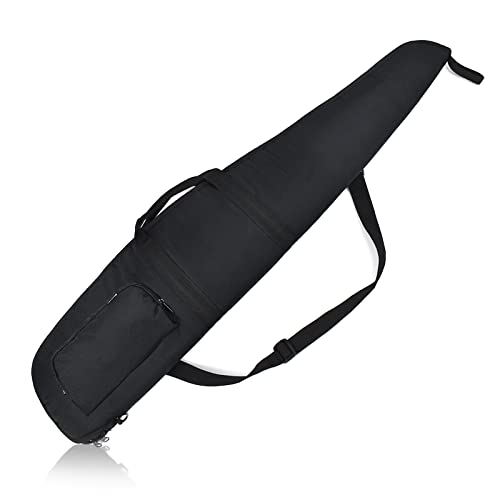 AUMTISC Soft Rifle Case 41/45/49 Padded Shotgun
- Shotgun Soft Case Size: Interior size 41" x…
- Soft Padded Rifle Case: Gun case offers high-quality…
- Durability Gun Cases: The rifle case made of…
| Product | Key specs | |
|---|---|---|
| VEVOR Rifle Case | IP67 Waterproof & Dustproof: This hard case features… TSA Compliant: Meet TSA standards, this case is… 4-Layer Foam: Our case features 4 layers of… | Check price |
| Plano Single Scoped or Double Non-Scoped Rifle | Plano gun cases: Protecting your passion since 1952 Features this hard case feature a molded-in-handle and… Comfortable molded-in handle, thick wall construction, high density… | Check price |
| AUMTISC Soft Rifle Case 41/45/49 Padded Shotgun | Shotgun Soft Case Size: Interior size 41" x… Soft Padded Rifle Case: Gun case offers high-quality… Durability Gun Cases: The rifle case made of… | Check price |
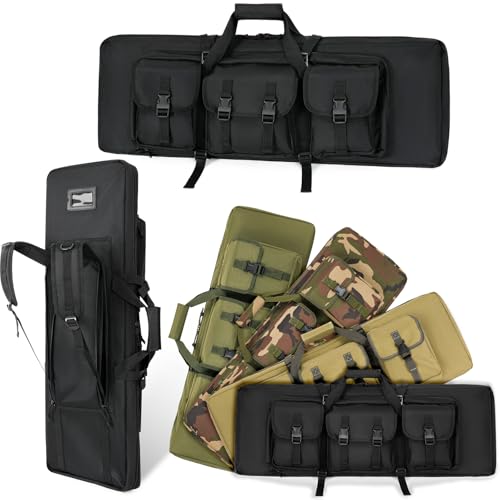 DULCE DOM 36 inch Double Rifle Case DULCE DOM 36 inch Double Rifle Case | Durable: Made with 600D Heavy Duty Industrial Nylon,… Spacious: A Perfect Soft Double Gun Case You… Padded Rifle Backpacks: All Around Protection for Your… | Check price |
As an Amazon Associate we earn from qualifying purchases at no extra cost to you.
Quick picks by situation
| Situation | Best case type | Specifications to prioritize | Typical price range |
|---|---|---|---|
| Regular vehicle transport | Rigid molded polymer case | Water-resistant seal, two or more lock points, customizable foam | $80–$250 |
| Air travel or frequent shipping | Heavy-duty polymer or reinforced aluminum case | Non-TSA combination or keyed padlock compatibility, strong hinges, wheels or reinforced corners | $180–$600 |
| Closet or under-bed storage | Low-profile soft case or compact hard case | Case length under 48 inches if compatible, lockable zippers or steel lock loops, slim profile | $35–$150 |
| Kids, pets, or busy household | Lockable hard case stored out of reach | Recessed latches, multiple lock points, crush-resistant shell, no exposed rifle controls | $100–$350 |
| Range trips on foot | Padded soft rifle case | Backpack straps, reinforced carry handle, 1-inch or thicker padding, accessory pockets | $40–$140 |
Compare the main rifle-case materials
| Case material | Strengths | Limitations | Best use |
|---|---|---|---|
| Rotomolded or injection-molded polymer | Good impact resistance, corrosion-resistant, often weather-sealed, relatively affordable | Can be bulky; inexpensive hinges and latches may wear first | Vehicle transport, storage, general-purpose use |
| Aluminum | Rigid, professional appearance, good crush resistance, easy to wipe clean | Can dent, may weigh more than expected, seals and corner hardware affect durability | Organized storage and careful transport |
| Soft nylon or polyester | Lightweight, flexible, easy to carry, often includes backpack straps and pockets | Less protection from crushing, moisture, and cutting; zipper may be the weak point | Short trips, range use, and compact storage |
| Wood or wood-composite | Stable, traditional appearance, can provide a rigid interior | Heavier, vulnerable to moisture, usually less convenient for vehicle transport | Stationary display or home storage where appearance matters |
Interior dimensions matter more than the exterior length
Measure the rifle as it will be stored, including the stock, muzzle device, scope, bolt handle, bipod, sling swivels, and any attached accessories. Do not rely on the manufacturer’s advertised case length unless it clearly identifies the usable interior measurement.
A rifle case should generally provide:
- At least 1–2 inches of length beyond the rifle’s longest rigid component.
- At least 1 inch of clearance above the highest optic or sight.
- Enough width for the stock, magazine, pistol grip, and bolt handle without forcing the foam closed.
- Room for the rifle to remain supported when the case is carried vertically or turned on its side.
For example, a rifle measuring 42 inches from butt to muzzle may need an interior length of approximately 44–46 inches. A scoped rifle with a tall optic may fit the length but fail the height test, so check the interior height at the scope area. If the rifle has a bipod or oversized stock, measure the widest point rather than assuming a standard rifle profile.
Cases with pick-and-pluck foam allow a more exact fit, but remove foam conservatively. Once too much foam is removed, the rifle can shift inside the case. A layered foam design is preferable when you may change optics or accessories later.
Padding: soft does not always mean protective
Look for closed-cell polyethylene or cross-linked polyethylene foam when moisture resistance and long-term shape retention are important. It tends to resist absorbing water and is less likely to collapse under repeated pressure than low-density open-cell foam. Egg-crate foam can cushion the upper surface, but it should work with a firm base layer rather than replace it.
| Padding specification | What it means in practice |
|---|---|
| 1/2 inch total padding | Suitable mainly for light handling and short-range trips |
| 1 inch total padding | A reasonable minimum for a soft case carried in a vehicle |
| 2 inches or more of molded or layered foam | Better protection against drops, case stacking, and movement during transport |
| Dense foam with a shaped cutout | Reduces shifting and protects optics more effectively than loose blanket-style padding |
Inspect the lid compression. When closed, the foam should hold the rifle securely without pressing hard against delicate optic turrets or bending a sling. A case that is too tight can damage accessories; one that is too loose allows impact and abrasion.
Locking options and security features
A zipper lock on a soft case can discourage casual access, but it is not equivalent to a rigid case with steel-reinforced lock loops. For a hard case, look for two or more lock points, recessed latches, and hinges that cannot be easily pried when the case is closed. Weather-resistant seals are useful for transport, but they do not turn a case into a security safe.
For air travel, verify current airline and government requirements before departure. A case intended for checked transport normally needs to be rigid and lockable, with the owner retaining control of the key or combination; requirements can vary by jurisdiction and carrier. A small cable lock may be useful for securing a case to a vehicle anchor or storage point, but it should not replace a proper hard-case locking system.
Never treat a locked case as a substitute for safe firearm handling. Store the rifle unloaded, follow the firearm manufacturer’s instructions, and check state, local, and destination rules before transporting it.
Hard case or soft case?
Choose a hard case when protection is the priority
A hard case is the better choice for a scoped rifle, expensive finish, long-distance driving, wet conditions, or a household where other objects could fall on the case. Polymer cases usually offer the best balance of impact protection, water resistance, and price. Their main disadvantages are weight and bulk: a long case may not fit across a compact car’s trunk or through a narrow storage area without planning.
Choose a soft case when portability and access matter
A soft case is practical for a short drive to the range, especially when you need backpack straps, exterior pockets, or space for a sling and small accessories. Select thick padding, reinforced seams, a full-length zipper, and lockable zipper pulls. Avoid thin fabric cases that allow the rifle’s controls or optic to press directly against the exterior.
Moving and durability realities
Measure more than the rifle. A 48-inch hard case may have an exterior length close to 50 inches and can be awkward through a 30-inch interior doorway, around stair landings, or into a small sedan. Empty polymer cases commonly weigh about 8–18 pounds; reinforced aluminum cases may weigh 12–25 pounds before adding the rifle and accessories. If you need to carry the case more than a short distance, wheels or a padded shoulder strap can matter more than an extra inch of shell thickness.
The parts most likely to wear are zippers, foam edges, latch springs, hinges, and carry handles. Replace a case when the foam has permanently compressed, the shell no longer closes evenly, the seal has split, or the rifle can move inside. Keep foam dry, wipe grit from latches, and avoid storing a damp rifle or wet case closed for long periods.
How to select the right case in five steps
- Measure the rifle. Record overall length, maximum height with optic, and widest point with accessories installed.
- Add clearance. Allow roughly 1–2 inches beyond the length and at least 1 inch above the highest component.
- Choose the shell. Select polymer for general protection, aluminum for rigid organized storage, or padded nylon for lightweight range use.
- Check the security hardware. Prefer multiple reinforced lock points for transport and households with children or pets.
- Test the logistics. Confirm the case fits your vehicle, closet, doorway, and carrying ability before buying.
For most shoppers in 2026, a weather-resistant polymer case with custom-fit closed-cell foam, two reinforced lock points, and an interior at least 2 inches longer than the rifle is the strongest all-around choice. Choose a soft case only when its lower weight and easier carrying outweigh the reduced protection.