Key takeaways
- Entry value (usually $600–$900): 1080p gaming at 60-144Hz, modern GPUs like NVIDIA RTX 4050 / 4060 Laptop or AMD Radeon RX 7600M class. Best if you play esports titles, older AAA games, and want a cooler, lighter machine.
- Mid-range performance (usually $900–$1,400): 1440p or high-refresh 1080p, GPUs like RTX 4060 / 4070 Laptop, 16GB RAM as standard. Best for current AAA games at high settings without paying for desktop-replacement weight.
- High-end without ceiling (usually $1,500–$2,500+): RTX 4070 / 4080 Laptop and above, 240Hz or OLED displays, advanced cooling. Only worth it if you need 1600p+ or create content alongside gaming.
The best gaming laptop for under an unspecified budget is the one where the GPU class, display, memory, and cooling system are balanced for the games you actually play and the desk and room you have, because an unbalanced spec sheet will bottleneck performance or overheat long before you notice a higher price tag.
When a search leaves off the number after “under,” most listings try to fill the gap with random best-sellers. A better approach is to set your own ceiling first, then compare the four specs that decide real gaming value within any price bracket. Below is how to do that in 2026, plus what to measure at home so the laptop you choose actually fits how you work, play, and live.
Our top picks
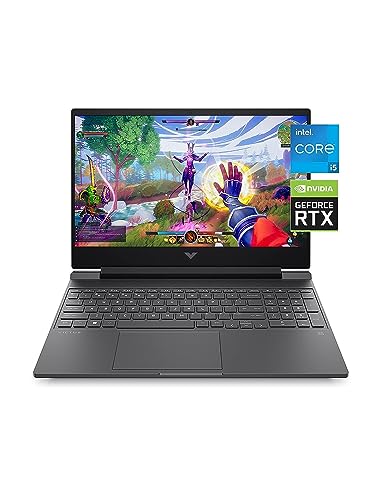 HP Victus 15 Gaming Laptop
- Get a fresh perspective with Windows 11: From…
- A dynamic processor that adapts to you for…
- NVIDIA GeForce RTX 3050: Step up to the…
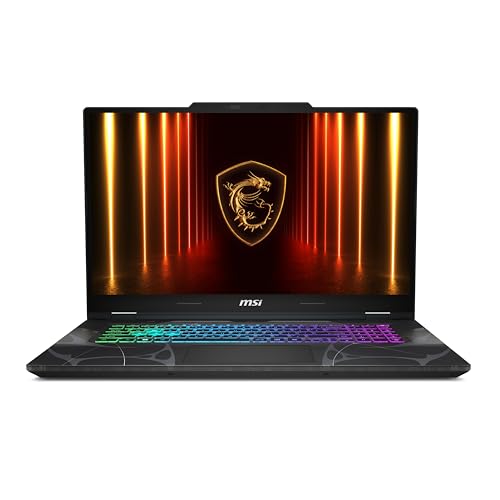 msi Cyborg 17 17.3" FHD 144Hz Gaming
- Thin & Light 17.3” Gaming Powerhouse: Experience big-screen…
- Powered by Intel Core 7-240H for Smooth, Responsive…
- RTX 5060 Graphics for Next-Gen Gameplay & AI-Boosted…
 Lenovo LOQ AI-Powered Gaming Laptop
- The Lenovo Legion LOQ is your first step…
- Be everything you want to be, in game…
- STAY ICY, GAME SPICY
| Product | Key specs | |
|---|---|---|
| HP Victus 15 Gaming Laptop | Get a fresh perspective with Windows 11: From… A dynamic processor that adapts to you for… NVIDIA GeForce RTX 3050: Step up to the… | Check price |
| msi Cyborg 17 17.3" FHD 144Hz Gaming | Thin & Light 17.3” Gaming Powerhouse: Experience big-screen… Powered by Intel Core 7-240H for Smooth, Responsive… RTX 5060 Graphics for Next-Gen Gameplay & AI-Boosted… | Check price |
| Lenovo LOQ AI-Powered Gaming Laptop | The Lenovo Legion LOQ is your first step… Be everything you want to be, in game… STAY ICY, GAME SPICY | Check price |
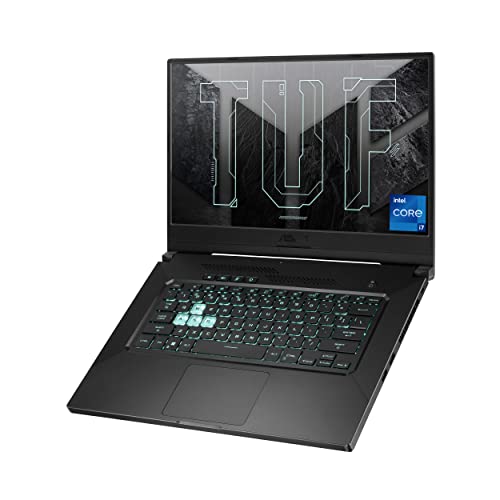 ASUS TUF Dash 15 ASUS TUF Dash 15 | NVIDIA GeForce RTX 3050 Ti 4GB GDDR6 up… Intel Core i7-11370H processor (12M Cache, up to… 15.6” 144Hz IPS-Type Full HD (1920x1080) display with… | Check price |
As an Amazon Associate we earn from qualifying purchases at no extra cost to you.
Set Your Hidden Budget Before You Compare
Without a stated limit, you need to create three usable tiers for yourself and filter everything else out:
- Entry value (usually $600–$900): 1080p gaming at 60-144Hz, modern GPUs like NVIDIA RTX 4050 / 4060 Laptop or AMD Radeon RX 7600M class. Best if you play esports titles, older AAA games, and want a cooler, lighter machine.
- Mid-range performance (usually $900–$1,400): 1440p or high-refresh 1080p, GPUs like RTX 4060 / 4070 Laptop, 16GB RAM as standard. Best for current AAA games at high settings without paying for desktop-replacement weight.
- High-end without ceiling (usually $1,500–$2,500+): RTX 4070 / 4080 Laptop and above, 240Hz or OLED displays, advanced cooling. Only worth it if you need 1600p+ or create content alongside gaming.
Pick one tier based on the games and monitor you plan to use. Comparing an RTX 4050 system against an RTX 4080 system without acknowledging they live in different tiers tells you nothing useful. Compare only inside the tier you will actually buy.
The 4 Specs That Decide Value at Any Price
Marketing often highlights CPU generation or RGB design first. For gaming, prioritize in this order:
1. GPU Class and Wattage, Not Just the Name
Two laptops can both list an “RTX 4060 Laptop” and perform 15-25% differently because the GPU’s Total Graphics Power (TGP) varies by chassis. A thin 14-inch with an 85W RTX 4060 will be quieter but slower than a thicker 16-inch with a 115W RTX 4060. Always check the wattage and whether Dynamic Boost is enabled. If the listing hides wattage, treat it as the lower-power variant.
For under any budget, the rule is: the highest GPU tier is not best if it is forced into a chassis that cannot cool it. A fully-powered RTX 4060 often beats a power-limited RTX 4070 in sustained gaming.
2. Display: Resolution and Refresh Must Match the GPU
- 1080p 144Hz–165Hz: Ideal pairing for RTX 4050 / 4060. Easier to drive, lower cost, better battery life.
- 1440p (2560×1600) 165Hz–240Hz: Needs RTX 4060 / 4070 or higher to hold 60+ fps at high settings. Looks sharper on 16-inch panels.
- Panel type: IPS is bright and color-accurate and usually 300-500 nits; OLED gives true blacks and faster response but costs more and can use more power at high brightness. For competitive shooters, response time under 5ms and low ghosting matter more than OLED contrast.
Avoid paying for a 240Hz OLED if your GPU tier cannot push past 100 fps in your favorite games — you are paying for refresh you will never see.
3. Memory and Storage: The 16GB Minimum
In 2026, 16GB DDR5 (2x8GB dual-channel) is the baseline for gaming; 32GB helps if you stream, run Chrome with many tabs, or play simulation-heavy titles like Cities: Skylines 2 or Starfield. Single-stick 16GB (1x16GB) cuts bandwidth and can drop fps 10-15% — two sticks are measurably better.
Storage: 512GB fills quickly (one modern AAA game can be 100GB+). 1TB NVMe is the practical sweet spot. Check if there is a second M.2 slot for future expansion; many 15- and 16-inch models include one, while 14-inch models often do not.
4. Cooling: The Spec That Protects All Others
A gaming laptop lives or dies on heat dissipation. Look for:
- Dual fans with 3-4 heat pipes minimum, plus side and rear exhausts rather than only bottom vents
- Liquid metal or high-quality thermal interface on CPU/GPU in mid-range and above
- A chassis thick enough to sustain 45W+ CPU and 90W+ GPU simultaneously without throttling to 85 degrees and throttling clocks
Thin-and-light gaming laptops typically run 5-8 degrees hotter and louder at the same performance. If you often game on a desk for hours, a slightly thicker chassis with larger vents will maintain framerate longer than a thinner design with the same GPU name.
Will It Actually Fit Your Desk and Room?
This is where a furniture site matters more than a spec sheet. A 17-inch desktop-replacement does not belong on a 40-inch writing desk in a 10×10 ft bedroom, and a compact 14-inch is wasted on a deep executive desk with no external monitor.
| Setup Scenario | Recommended Laptop Size | Minimum Desk Size (WxD) | Chair + Desk Clearance Needed | Typical System Weight |
|---|---|---|---|---|
| Small apartment / 10×12 ft bedroom, folding or 42-inch desk | 14-inch or 15.6-inch | 42 x 20 inches | 36 inches behind chair to wall, 28-30 inch desk height | 3.8–4.8 lbs |
| Standard home office, 48–55 inch desk with monitor | 15.6-inch or 16-inch (16:10) | 48 x 24 inches | 42 inches behind chair for recline, 29-30 inch desk height | 4.6–5.5 lbs |
| Dedicated gaming room, 60+ inch desk, external keyboard | 16-inch or 17.3-inch | 60 x 30 inches | 48 inches total depth to allow airflow behind laptop, 29-30 inch desk height | 5.5–6.8 lbs |
| Renter / frequent mover, needs portability | 14-inch or 15.6-inch thin | 40 x 20 inches minimum | Must fit through 30-inch doorway inside bag; box size ~ 24 x 18 x 6 inches | 3.5–4.5 lbs |
Measure before you buy:
- Desk depth: You need at least 4–6 inches of open space behind the laptop for rear exhaust. Pushing the hinge against a wall chokes cooling and raises keyboard temperatures.
- Seat height: Standard desk height is 29–30 inches; standard office chair seat is 17–19 inches. If your elbows are above the keyboard, your wrists will fatigue. A 15- or 16-inch laptop on a low 27-inch table needs a riser or external keyboard to reach neutral wrist position.
- Doorway and storage: Factory boxes for 17-inch systems weigh 12–16 lbs and are too large for many closets. If you move yearly, the box weight and width matter.
- Weight limits: Glass-top or small floating desks often rate for 50–80 lbs total. A 6.5 lb laptop plus a 15 lb monitor and accessories is fine, but a 30 lb all-in-one desktop replacement with power brick may exceed a lightweight desk’s point load.
Decision Matrix: Match Your Situation to a Balanced Pick
Use this to filter “best” lists down to what wins for you:
| Your Situation | What to Prioritize | What You Can Sacrifice |
|---|---|---|
| Limited space, shared table, need quiet for roommates | 14–15.6 inch, RTX 4050/4060 85–100W, 16GB dual-channel, 1080p 144Hz | High wattage GPU, 240Hz, OLED |
| Kids and pets, spills and bumps likely | Spill-resistant keyboard, plastic or aluminum chassis with MIL-STD-810H, 16GB RAM, 512GB–1TB with second slot | Ultra-thin design, 4K display, RGB extras |
| Back or wrist pain, long sessions | 16-inch 16:10 display to reduce hunching, external keyboard + laptop stand, good thermals over raw thinness | Lightest weight, 17-inch bulk |
| Renter who moves or games in different rooms | Under 5 lbs, 100W or lower GPU for battery life, 14–15.6 inch, power brick under 1.6 lbs | Maximum TGP, large 300W+ brick |
| Play at a fixed desk with external monitor | Full-power RTX 4060/4070, ports: HDMI 2.1 + USB-C DisplayPort, rear exhaust | Internal display resolution (let the monitor handle it), thinness |
Material and Construction Trade-Offs That Affect Durability
The chassis material decides weight, heat, and what wears first — not just looks.
| Material / Build | Pros | Cons | Best For |
|---|---|---|---|
| Aluminum unibody | Rigid, premium feel, better heat spreading | Dents on impact, shows fingerprints, heavier, usually higher cost | Daily movers who want rigidity |
| Aluminum lid + plastic bottom | Balance of weight and cost, reasonable cooling | Flex under pressure, bottom panel can creak | Most buyers in mid-range tier |
| All-plastic (ABS/polycarbonate) | Lightest, lowest cost, absorbs drops better | More flex, retains more heat, hinges wear faster | Budget and family use where replacement cost matters |
| Mechanical vs. membrane keyboard | Mechanical: tactile, durable to 50M presses; Membrane: quiet, low profile | Mechanical adds height/weight; Membrane wears smooth in 2–3 years heavy use | Mechanical for fixed desk; membrane for portable quiet |
What wears first on gaming laptops regardless of brand: hinge covers, WASD key shine, fan bearings after 18–24 months of dust buildup, and battery capacity (expect 15–20% loss after 300 full cycles). Choose a model where fans and M.2 drives are accessible via a bottom panel — you can clean dust and add storage without a full teardown. If the bottom panel requires prying glued clips, plan on professional service.
Assembly, Moving, and Real-World Ownership
- Box and setup: Unboxing usually requires a 24-inch clear surface; power bricks for 240W+ systems weigh 1.8–2.4 lbs and need a cable-management tray so they do not hang off the desk edge.
- Airflow realities: Do not place a gaming laptop on fabric, a bed, or a soft kitchen chair. Bottom intakes need a hard, flat surface; otherwise CPU temps can rise 10–15 degrees within minutes and cause stuttering. A simple $20–$40 mesh stand improves intake more than any software tweak.
- Noise expectations: At full load, most gaming laptops measure 48–55 dB at 20 inches — similar to a normal conversation. Quiet or office modes drop this to 38–42 dB but cap fps.
- Durability tip: If you have pets, clean intake vents monthly. Pet hair clogs fins faster than dust and is the most common cause of premature thermal throttling.
How to Compare Two Listings Without a Stated “Under” Number
When two options both claim to be “best for under…” but no budget is given, run this 60-second check inside your chosen tier:
- Note GPU model + wattage, not just GPU name. Higher wattage inside same tier wins for raw fps.
- Check RAM: 16GB dual-channel (2x8GB) beats 16GB single-channel; 32GB only matters if you multitask heavily.
- Check display: match resolution to GPU power; favor 100% sRGB or better and 300+ nits over an inflated refresh number.
- Check cooling: rear exhaust + 2 fans + 3+ heat pipes beats a thinner design with one side vent.
- Check expansion: one extra M.2 slot and accessible RAM slots extend useful life by 2–3 years.
For example, within the mid-range tier, an ASUS ROG Strix G16, Lenovo Legion Pro 5, or Acer Nitro 16 configured with an RTX 4060 at 110W+ with 16GB dual-channel and a 165Hz 2560×1600 IPS display will consistently outperform a thinner premium 14-inch with an RTX 4070 limited to 85W, even though the second lists a higher GPU number. The spec balance, not the badge, decides value.
Final Takeaway for Any “Under” Search
Ignore any ranking that does not disclose wattage, memory channel count, and thermal design. Define your tier, match GPU power to display resolution, insist on 16GB dual-channel, and verify the system fits your desk depth and clearance. A balanced mid-tier laptop that stays cool on your actual furniture will feel faster and last longer than an undersized high-end system that throttles in a tight space.