Key takeaways
- Use two matching memory modules rather than one module. Single-channel memory can remove a large portion of available graphics performance.
- Choose at least 16GB for a basic gaming PC and 32GB for modern multitasking or content creation.
- For Ryzen 8000G systems, DDR5-6000 is a sensible target when the motherboard and memory kit support it.
- Leave some memory available to the operating system. Assigning too much RAM to the integrated GPU does not automatically improve frame rates.
- Use an SSD. It will not increase graphics performance directly, but it improves boot times, loading, and general responsiveness.
Best Integrated Graphics CPU for Gaming & Work
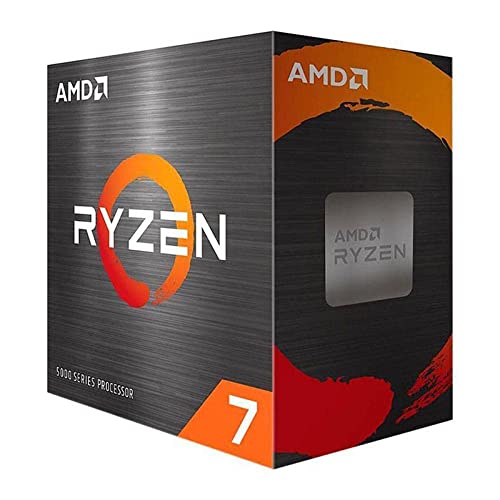
The AMD Ryzen 7 8700G is the best integrated graphics CPU for most people who want light 1080p gaming and productive desktop performance without buying a dedicated graphics card. Its Radeon 780M graphics are substantially faster than ordinary Intel UHD graphics, while the six-core Ryzen 5 8600G is the better value for office work, school use, media PCs, and occasional gaming.
These processors make sense when your computer will spend most of its time browsing, handling documents, editing photos, or running business software, but you still want to play games such as Fortnite, Rocket League, Minecraft, League of Legends, or Valorant. They are not substitutes for a modern dedicated GPU in demanding games at high settings.
Our top picks


As an Amazon Associate we earn from qualifying purchases at no extra cost to you.
Quick comparison: which integrated graphics CPU should you buy?
| CPU | Integrated graphics | Cores / threads | Typical package power | Typical market range | Best for |
|---|---|---|---|---|---|
| AMD Ryzen 7 8700G | Radeon 780M, 12 graphics cores | 8 / 16 | About 45–90 watts | Usually $250–$330 | Best overall gaming and work balance |
| AMD Ryzen 5 8600G | Radeon 760M, 8 graphics cores | 6 / 12 | About 35–80 watts | Usually $170–$240 | Best value for light gaming |
| AMD Ryzen 5 8500G | Radeon 740M, 4 graphics cores | 6 / 12 | About 35–65 watts | Usually $130–$190 | Low-cost compact PCs |
| Intel Core i5-14500 | Intel UHD Graphics 770 | 14 / 20 | About 65–150 watts | Usually $230–$320 | CPU-heavy work with minimal gaming |
| Intel Core Ultra 5 245K | Integrated Xe graphics | 14 / 14 | About 55–160 watts | Usually $280–$360 | Modern desktop productivity and upgrade plans |
Power figures vary with motherboard settings, cooling, workload, and the selected performance mode. The AMD G-series chips are especially attractive in small systems because they can deliver useful graphics performance without the heat and power consumption of a separate graphics card.
1. AMD Ryzen 7 8700G: best overall choice
The Ryzen 7 8700G is the strongest all-around pick when integrated graphics are your main gaming solution. Its eight Zen 4 CPU cores handle multitasking, large spreadsheets, code compilation, streaming, and everyday creative applications comfortably. The Radeon 780M is the important feature, though: it uses 12 RDNA 3 graphics cores and is far more capable than the basic graphics included with most desktop processors.
With 32GB of fast dual-channel DDR5 memory, many competitive games can run around 60–100 frames per second at 1080p with low or medium settings, depending on the title. More demanding games may need 720p or 900p resolution, reduced texture quality, and upscaling. The 8700G is a particularly good choice for a quiet living-room PC, a compact office computer, or a first gaming system that may receive a dedicated GPU later.
Its main drawback is value. If you will never play games, a conventional CPU with weaker integrated graphics can provide similar office performance for less money. If you need high-refresh-rate gaming in modern AAA titles, the money is better directed toward a CPU paired with a dedicated graphics card.
2. AMD Ryzen 5 8600G: best value for light gaming
The Ryzen 5 8600G is the practical recommendation for most budget-conscious buyers. It has six cores and 12 threads, which is enough for office software, web applications, light photo editing, video calls, and normal multitasking. Its Radeon 760M graphics are slower than the 8700G’s, but still suitable for esports games and older or well-optimized titles.
Expect roughly 45–80 frames per second in lighter games at 1080p low settings when the system uses two matched DDR5 memory modules. In tougher games, a 900p or 720p resolution can produce a smoother experience than trying to maintain 1080p. This CPU is often the best integrated graphics CPU when the computer budget is limited and the buyer wants usable gaming rather than maximum performance.
The 8600G also works well in a compact case. A small case with a 65-watt-class cooler, two intake or exhaust fans, and unobstructed ventilation is normally sufficient. Avoid placing the computer inside a tightly enclosed cabinet, where warm air can recirculate and make the fan louder.
3. AMD Ryzen 5 8500G: choose it for the lowest sensible cost
The Ryzen 5 8500G is aimed at inexpensive desktops and small home-office systems. It has six cores and 12 threads, but its Radeon 740M graphics are a noticeable step below the 8600G and 8700G. It is suitable for older games, browser-based games, Minecraft with modest settings, and competitive titles at reduced settings.
Choose this model when the price difference can fund more memory, a larger SSD, or a better monitor. Do not choose it expecting the same gaming experience as the 8700G. The graphics limitation appears first in newer games, where lowering the resolution and image quality may still not provide consistent frame rates.
AMD versus Intel integrated graphics
Intel desktop processors such as the Core i5-14500 can be excellent for CPU-heavy work. Their extra cores are useful for compiling software, encoding video, and running several applications at once. However, Intel UHD Graphics 770 is generally intended for display output, video playback, and basic 3D work rather than serious gaming.
Intel’s newer Core Ultra desktop processors offer more modern integrated graphics than traditional UHD models, but the platform cost and power behavior can vary by motherboard and performance settings. They are worth considering if you prioritize Intel-specific software features or plan to add a dedicated graphics card soon. For gaming without a dedicated GPU, AMD’s Ryzen 8000G processors are usually the clearer choice.
Performance depends on memory more than many buyers expect
An integrated GPU has no separate video memory. It borrows system RAM, so memory speed, capacity, and channel configuration directly affect game performance.
- Use two matching memory modules rather than one module. Single-channel memory can remove a large portion of available graphics performance.
- Choose at least 16GB for a basic gaming PC and 32GB for modern multitasking or content creation.
- For Ryzen 8000G systems, DDR5-6000 is a sensible target when the motherboard and memory kit support it.
- Leave some memory available to the operating system. Assigning too much RAM to the integrated GPU does not automatically improve frame rates.
- Use an SSD. It will not increase graphics performance directly, but it improves boot times, loading, and general responsiveness.
Match the CPU to your situation
| Your situation | Recommended choice | Why |
|---|---|---|
| Small apartment or quiet living-room PC | Ryzen 5 8600G | Good light-gaming performance with manageable heat and power |
| Gaming without a graphics card for several years | Ryzen 7 8700G | Fastest integrated graphics in this group and eight CPU cores |
| Strict budget | Ryzen 5 8500G | Leaves more budget for memory and storage |
| Video encoding, compiling, or heavy CPU workloads | Core i5-14500 or Ryzen 7 8700G | Choose based on software compatibility and whether gaming matters |
| Plan to add a dedicated GPU soon | CPU chosen for the future GPU, not just its iGPU | A stronger graphics card will make the integrated GPU less important |
Power, cooling, and case fit
A computer built around a Ryzen 8000G chip can often use a 400–550 watt power supply, provided it does not include a power-hungry future graphics card. The power supply should still come from a reputable manufacturer and include the correct connectors for planned upgrades.
Allow at least 20–30 millimeters of space around the case’s ventilation openings. For a compact desktop placed in a shelf, leave approximately 75 millimeters behind the exhaust fan so hot air does not collect against the wall. A low-profile cooler may be required in a slim case; check the case’s maximum CPU-cooler height before ordering. A standard tower cooler may be 155–165 millimeters tall, while slim cases may allow less than 70 millimeters.
Integrated-graphics systems also need the right display connection. Connect the monitor to the motherboard’s HDMI or DisplayPort output, not an unused graphics-card connector. If the motherboard firmware does not recognize the processor, a BIOS update may be necessary, so selecting a board with BIOS flashback can make installation easier.
Final recommendation
Buy the Ryzen 7 8700G if you want the best integrated graphics CPU for gaming and work, particularly when a dedicated GPU is not part of the current budget. Choose the Ryzen 5 8600G for the strongest balance of price, efficiency, and everyday gaming. Select the Ryzen 5 8500G only when keeping the initial cost as low as possible matters more than frame rate. For primarily professional workloads with little or no gaming, an Intel processor with more CPU cores may be the better fit, but AMD remains the safer choice for gaming on integrated graphics alone.