Key takeaways
- The best hyperextension benches and roman chairs compared on pad fit, frame build and capacity, with 45-degree and flat picks for lower back training.
A hyperextension bench, often sold as a roman chair, anchors your legs and lets your torso hinge freely at the hips, so one bodyweight movement trains the lower back, glutes and hamstrings together. It is one of the few home gym pieces aimed squarely at the back of the body, a natural partner to the pressing and pulling gear most garages fill up with first.
This guide covers the classic designs only: 45-degree benches and flat roman chairs. It does not cover reverse hyper machines, where you lie face down and swing a loaded pendulum with your legs; that is a different movement with a different loading pattern, and it sits in our glute machines coverage instead. It also leaves out preacher curl benches and ab mats, which train the arms and trunk flexion rather than hip extension.
The five benches below were chosen for frame build, pad design and adjustment range. Two fold away for small spaces, one is a flat roman chair for lifters who want the harder horizontal version, and all five let you add load once bodyweight reps feel easy.
Disclosure: As an Amazon Associate, we earn from qualifying purchases made through links on this page, at no extra cost to you.
How to Choose a Hyperextension Bench
45 degrees or flat. A 45-degree bench tilts your body on a diagonal, which shortens the lever and makes each rep gentler. Getting on and off is easy, your head stays well above your hips, and the lower back works through a friendly range, so this is the format most beginners should pick. A flat roman chair holds your body horizontal, which lengthens the lever and makes the top of each rep much harder. It rewards strong lifters, but it is an unforgiving place to learn the movement.
Pad position decides what works. The hip pad should sit just below the front of your pelvis, low enough that your hip bones clear the top edge and your trunk can fold forward freely. Set the pad too high and it digs into your abdomen and locks the hips, turning the rep into a lower back bend. Set it too low and the pad presses into the thighs, the quads take over the work, and the glutes and hamstrings barely join in.
Match pad height to torso length. Because pad position matters this much, the pad support must adjust over a range that fits your body. Taller lifters need the pad further from the footplate; shorter lifters need it closer. Check the published range against your own build, and favour many closely spaced settings over a few wide ones, because a half inch of pad height changes how the whole movement feels.
Technique comes before load. Fold forward at the hips, not by rounding the back, and keep the spine in one long line from head to pelvis. Rise only until your body forms a single straight line. Going past that line is true hyperextension, and it compresses the small joints and discs of the lower back for no extra muscle work. Slow, flat-backed reps to a straight line will build more strength than fast reps that swing past it.
Adding weight. Once sets of fifteen bodyweight reps feel controlled, hold a weight plate against your chest with both arms crossed over it. Add small plates first, keep the same straight-line finish, and never hold a plate behind your head, which pulls the neck into the movement.
Leg anchoring. Your calves and ankles press against padded rollers or a footplate while the hip pad holds your pelvis. That anchor lets the hips hinge without the body sliding, so look for rollers that adjust or pivot to meet your lower leg, a footplate with real grip, and padding firm enough that your ankles stay put mid-set.
A clear warning on back pain. This movement loads the lower back directly, and it is used in rehab settings only with guidance. If you have a history of disc trouble, spinal surgery or ongoing back pain, talk to a doctor or physiotherapist before training on one. Healthy lifters should also stop a set when form breaks down, because tired spinal muscles hand the load to passive tissue quickly.
Frame, capacity and footprint. A bench that flexes or rocks will steal confidence long before it fails, so heavier steel and a wide base matter. Check the published weight limit against your bodyweight plus the plate you plan to hold, and measure your floor: fixed benches need a permanent patch of roughly four feet by two feet, while folding models trade a little rigidity for storage against a wall.
The 5 Best Hyperextension Benches
1. Marcy JD-3.1 Adjustable Hyperextension Roman Chair
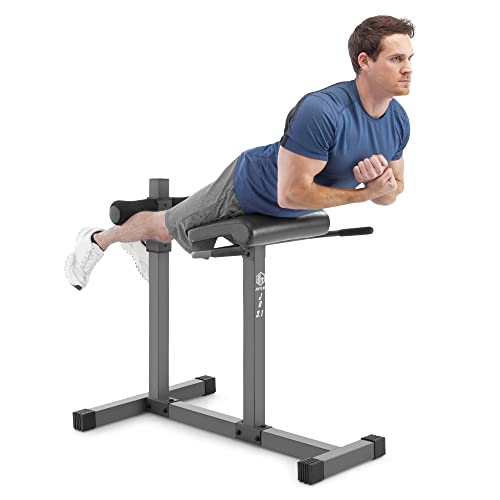
The Marcy JD-3.1 is the default recommendation in this category for a reason: a simple iron frame, a padded hip support that adjusts for height, and a 45-degree layout that suits first-time users and long-term training alike. The pad sits on a sliding support, so you can place it just below the pelvis whether you are short or tall, and the ankle pads hold your legs securely.
There is nothing decorative here. The frame stays where you put it, the padding is firm rather than plush, and there are no folding joints to work loose. Lifters who plan to hold plates early should note the listed weight limit and stay within it, but for bodyweight work and moderate added load, this is the bench most home gyms end up happy with.
Specs
- Model: JD-3.1
- Type: 45-degree hyperextension bench
- Frame: Iron
- Weight limit: 308 lb as listed
- Colour: Dark grey
- UPC: 096362998857
2. Sunny Health & Fitness SF-BH6629 45-Degree Hyperextension Roman Chair

The Sunny SF-BH6629 is built for rooms where a fixed bench cannot live full time. It folds to a slim profile that slides against a wall or into a cupboard, yet open it up and you get a proper 45-degree bench with foam rollers at the ankles, padded handles, and height adjustment for the hip pad.
At 24 lb it is light enough to move with one hand: a bench you can store is a bench you will use three times a week. The trade-off is a 250 lb limit and a lighter frame feel than the fixed designs here, so it suits bodyweight training and modest plate loading rather than heavy weighted work.
Specs
- Model: SF-BH6629
- Type: 45-degree hyperextension bench, folding
- Frame: Alloy steel
- Weight limit: 250 lb
- Assembled size: 38 x 24 x 32 in
- Folded size: 12.3 x 24 x 43 in
- Item weight: 24 lb
- UPC: 815749011473
3. Stamina X Hyper Bench 20-2015
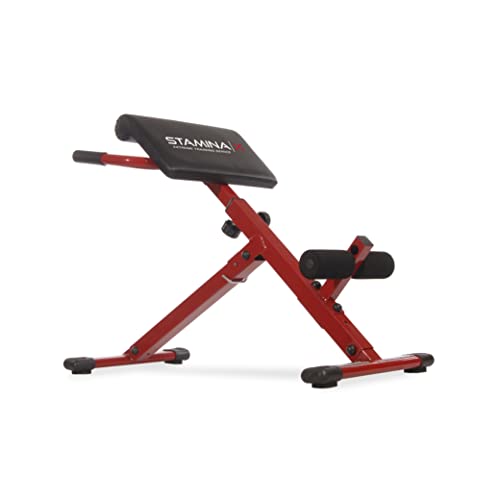
The Stamina X Hyper Bench takes the folding idea further with a frame that folds flat, pivoting foam rollers that swing to meet your lower legs, and an adjustable footrest and back support so the fit can be tuned to your leg length. The pivoting rollers matter: they keep contact with your calves as you hinge, instead of forcing your ankles into one fixed angle.
Extended hand grips give you something solid to hold while climbing on and off, which beginners appreciate more than they expect. It packs away small enough for an apartment, and as with the Sunny, the light build is the compromise: treat this as a bodyweight and light-load bench.
Specs
- Model: 20-2015
- Type: Hyperextension bench, folds flat
- Frame: Steel
- Weight limit: 250 lb
- Assembled size: 39.5 x 22.75 x 32 in
- Item weight: 25 lb
- Leg anchor: Pivoting foam rollers
- UPC: 022643220157
4. Titan Fitness Roman Chair Back Extension Machine BKHYPERv2

The Titan is the heavy option in this group: 11-gauge steel on a Y-frame base, 50 lb, and planted when you lean your full bodyweight over the pad. The torso support adjusts from 34 to 43 in, the widest fit range here, so taller lifters who find compact benches cramped should look at this one first.
A diamond-textured footplate and handlebars help you set up and bail out of a set with control. The 250 lb limit matches the folding benches: the Titan buys you rigidity and fit range rather than a higher load ceiling. It also takes up the most floor, at roughly 32 by 52 in, so it belongs in a dedicated gym corner.
Specs
- Model: BKHYPERv2
- Type: Roman chair back extension machine
- Frame: 11-gauge steel, Y-frame base
- Weight limit: 250 lb
- Torso height adjustment: 34 to 43 in
- Footprint: 32 x 52 in
- Item weight: 50 lb
- UPC: 719318386590
5. Body-Solid Powerline PCH24X Roman Chair
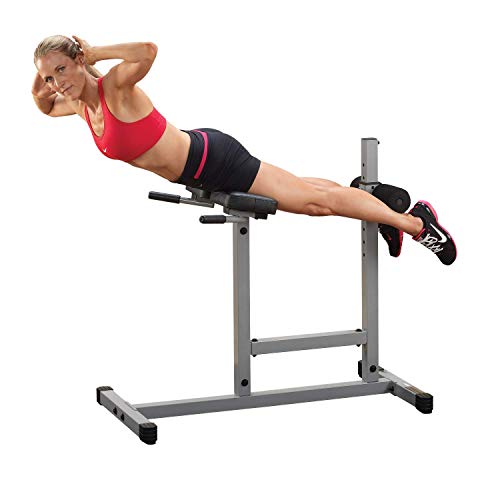
The PCH24X is the flat roman chair of the group, holding your body horizontal so gravity fights you hardest at the top of every rep. It is the pick for lifters who have outgrown a 45-degree bench and want the harder version of the movement without moving to a glute ham developer.
Body-Solid builds it from heavy-gauge steel with thick DuraFirm padding under the hips, and the design has barely changed in years. There is no folding and little adjustment to fuss with; you set it down and train. Newer lifters should build up on a 45-degree bench first, because the horizontal position punishes sloppy form quickly.
Specs
- Model: PCH24X
- Type: Flat (horizontal) roman chair
- Frame: 2 x 2 in heavy-gauge steel
- Weight limit: 120 kg as listed
- Assembled size: 46 x 25 x 36 in
- Item weight: 42 lb
- Padding: DuraFirm hip pads
Comparison Table
| Bench | Format | Weight limit | Item weight | Folds | Best for |
|---|---|---|---|---|---|
| Marcy JD-3.1 | 45-degree | 308 lb | Not published | No | Most home gyms |
| Sunny SF-BH6629 | 45-degree | 250 lb | 24 lb | Yes | Small rooms, easy storage |
| Stamina X Hyper Bench 20-2015 | 45-degree style | 250 lb | 25 lb | Yes, flat | Apartments, pivoting rollers |
| Titan BKHYPERv2 | Roman chair | 250 lb | 50 lb | No | Tall lifters, rigid frame |
| Body-Solid PCH24X | Flat roman chair | 120 kg | 42 lb | No | Advanced lifters |
FAQ
Should a beginner choose a 45-degree bench or a flat roman chair?
Choose the 45-degree bench. The diagonal position shortens the lever, makes mounting simple, and is gentler on the lower back while you learn to hinge at the hips. Move to a flat roman chair once bodyweight sets on the angled bench feel easy and your form stays clean.
Where exactly should the hip pad sit?
The top edge of the pad should sit just below the front of your pelvis, so your hip bones clear it and your trunk can fold forward without the pad pressing into your stomach. If the pad digs into your abdomen, lower it. If it presses into your thighs and your quads burn first, raise it slightly.
When and how should I add weight?
Add weight when you can finish sets of twelve to fifteen slow reps with a straight back and a dead stop at a straight body line. Hold a small plate against your chest with crossed arms and increase in small steps. Never hold the plate behind your head.
Is a hyperextension bench safe if my back sometimes aches?
Treat this as a medical question, not an equipment question. The movement loads the lower back directly, so anyone with disc problems, past spinal surgery or recurring pain should get a doctor or physiotherapist to clear it first. Build up gradually, and stop if pain appears.
How much space does a roman chair need?
Plan on about four feet of length and two feet of width, plus room to step in from the side. Fixed benches like the Marcy, Titan and Body-Solid need that patch permanently. Folding models need the same space in use but store flat against a wall between sessions.
Conclusion
For most people, the Marcy JD-3.1 is the right first hyperextension bench: a fixed 45-degree frame, sensible pad adjustment and no weak points to manage. If floor space rules your gym, the folding Sunny SF-BH6629 and Stamina X Hyper Bench keep the movement available in rooms that cannot spare a permanent station, with the Stamina adding pivoting rollers for a better leg anchor. The Titan BKHYPERv2 suits taller lifters who need its wider fit range and rigid frame, while the Body-Solid PCH24X is the flat roman chair for experienced lifters who want the hardest version of the exercise. Whichever you pick, set the pad below your pelvis, hinge at the hips, and finish each rep at a straight line rather than beyond it.
More from Amazon
Programs that pair well with the guide above. Offers and eligibility are set by Amazon and may change.
Set up recurring deliveries of everyday items on eligible products. Terms and savings are set by Amazon.
Explore Subscribe & SaveCollect the home and kitchen items you want in one registry that guests can shop from.
Create a wedding registryFree shipping on eligible items, Prime Video and more. Eligible new members can start with a free trial.
Start a Prime free trialAudiobooks and podcasts to listen to on the go. Eligible new members can start with a free trial.
Try Audible freeAs an Amazon Associate we earn from qualifying purchases.