Key takeaways
- One person, one daily bath towel: A compact rack or bucket is generally sufficient. Prioritize a towel-sized usable area over a high item count that assumes small hand towels.
- Two people sharing a bathroom: Look for a wider rack with enough bars to drape towels separately, or a bucket large enough for the towels you actually use. If both towels need warming at once, verify that the stated capacity means two bath towels—not two small towels.
- Small bathroom: A wall rack frees floor area, but only if its depth and door clearance work. In a narrow room, a bucket can obstruct movement even when it fits against a wall.
- Rental or occasional use: A plug-in or freestanding unit avoids electrical work. Confirm that its cord can reach an outlet without crossing a walkway or running beneath a rug.
- Robes, pajamas, or several small items: A bucket’s enclosed chamber may suit folded garments, but check its internal dimensions. A rack is better for hanging and airing items after use.
- Children or pets at home: Prefer stable mounting or a bucket with a secure, tip-resistant base. Keep hot surfaces and cords out of reach, and follow the maker’s instructions on unattended operation.
Best Towel Warmers: Choose by Bathroom, Capacity, and Installation
The best towel warmer is usually a wall-mounted, hardwired rack for a bathroom with a permanent installation and daily use; choose a plug-in wall model when you have a nearby outlet, or a freestanding bucket warmer when you want portability and simple setup. Compare how many towels each can warm, how long it takes, and whether the unit fits your wall, outlet, and bathing routine—not just its advertised capacity.
Wall-mounted vs. freestanding: the practical difference
| Type | Best fit | Typical capacity | Warm-up and heating style | Installation and trade-offs |
|---|---|---|---|---|
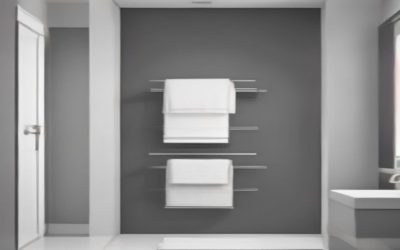
| Wall-mounted rack | Bathrooms with a clear wall and regular towel use | One or two bath towels, depending on rack width and how towels are folded | Electric elements warm the bars; allow roughly 20–40 minutes for useful warmth, with timing varying by model and towel thickness | Needs wall anchors or studs and a suitable power connection. A hardwired unit keeps cords out of sight; a plug-in model needs a safely located outlet. |
| Freestanding bucket or cabinet | Rentals, bedrooms, or bathrooms where wall space is limited | Often one large towel or robe at a time; some models fit more than one smaller item | Enclosed heating warms fabric more evenly; many need about 10–30 minutes, depending on load and settings | Usually plugs into an outlet and can be moved. It occupies floor space and may not fit a fully spread, oversized towel. |
These time ranges are planning estimates, not guarantees: ambient room temperature, towel weight, how tightly the towel is folded, and the warmer’s controls all matter. Check the manufacturer’s stated cycle time and capacity before buying. A rack warms the areas touching its bars first, while an enclosed bucket surrounds more of the fabric but may require folding it to fit.
Our top picks
 SAMEAT Heated Towel Warmers for Bathroom
- Extra Large Capacity Towel Warmer: The ultra-large Bucket…
- Heats up rapidly and 4 Timer Settings: The…
- Thermos Bucket Design: The towel warmer will heat…
 FLYHIT Large Towel Warmer for Bathroom
- Generous Capacity Warmer: This spacious bathroom essential easily…
- Experience Swift Heating: With a simple process, just…
- Safety at the Core: Safety is paramount, which…
 CWDOlROI Towel Warmer
- Extra Large Towel Warmer: Our towel warmers for…
- Quickly Heating Up and Heat Evenly: This towel…
- Upgraded with Smart LCD: The hot towel warmer…
| Product | Key specs | |
|---|---|---|
| SAMEAT Heated Towel Warmers for Bathroom | Extra Large Capacity Towel Warmer: The ultra-large Bucket… Heats up rapidly and 4 Timer Settings: The… Thermos Bucket Design: The towel warmer will heat… | Check price |
| FLYHIT Large Towel Warmer for Bathroom | Generous Capacity Warmer: This spacious bathroom essential easily… Experience Swift Heating: With a simple process, just… Safety at the Core: Safety is paramount, which… | Check price |
| CWDOlROI Towel Warmer | Extra Large Towel Warmer: Our towel warmers for… Quickly Heating Up and Heat Evenly: This towel… Upgraded with Smart LCD: The hot towel warmer… | Check price |
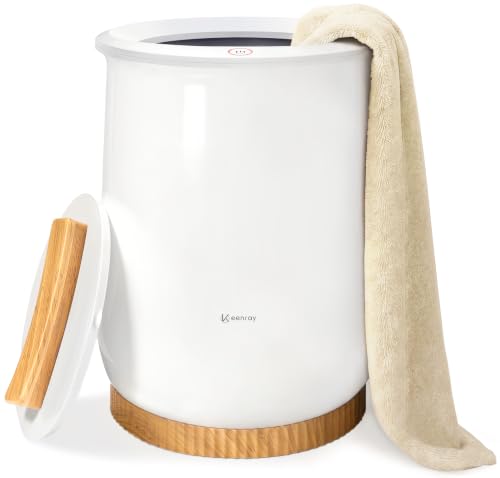 Keenray Towel Warmer Keenray Towel Warmer | Extra Large Capacity - Ultra large Bucket towel… Quickly Heating up - Offers rapid heat up… Heat Evenly - This bath towel warmer will… | Check price |
As an Amazon Associate we earn from qualifying purchases at no extra cost to you.
Pick the warmer that matches your routine
- One person, one daily bath towel: A compact rack or bucket is generally sufficient. Prioritize a towel-sized usable area over a high item count that assumes small hand towels.
- Two people sharing a bathroom: Look for a wider rack with enough bars to drape towels separately, or a bucket large enough for the towels you actually use. If both towels need warming at once, verify that the stated capacity means two bath towels—not two small towels.
- Small bathroom: A wall rack frees floor area, but only if its depth and door clearance work. In a narrow room, a bucket can obstruct movement even when it fits against a wall.
- Rental or occasional use: A plug-in or freestanding unit avoids electrical work. Confirm that its cord can reach an outlet without crossing a walkway or running beneath a rug.
- Robes, pajamas, or several small items: A bucket’s enclosed chamber may suit folded garments, but check its internal dimensions. A rack is better for hanging and airing items after use.
- Children or pets at home: Prefer stable mounting or a bucket with a secure, tip-resistant base. Keep hot surfaces and cords out of reach, and follow the maker’s instructions on unattended operation.
Measure before choosing a wall rack
Start with the towel, not the product photo. A typical bath towel is about 27–30 inches wide and 52–58 inches long; larger bath sheets can be roughly 35–40 inches wide and 60–70 inches long. Measure your own towel, then compare it with the rack’s usable bar width and height. A towel folded over a narrow bar may hang too low or bunch up, slowing drying.
| Measurement or planning check | Useful starting point | Why it matters |
|---|---|---|
| Rack width for a standard bath towel | About 24–30 inches of usable width | Allows most towels to drape without excessive bunching; verify the maker’s stated usable span. |
| Wall space beside a door or cabinet | Measure the full unit width and leave about 2–3 inches of side clearance where possible | Helps prevent contact with swinging doors, drawers, and nearby fixtures. Follow any larger clearance specified by the manufacturer. |
| Space in front of the rack | Keep roughly 24 inches clear as a practical access target | Provides room to reach and remove a towel; more is helpful in a shared or accessible bathroom. |
| Bucket footprint | Measure the base and reserve its full footprint plus a clear route past it | A unit that fits beside the vanity may still interfere with the toilet, shower door, or bathroom entrance. |
| Plug-in cord route | Measure from the planned unit position to the outlet | A short cord may dictate placement. Do not rely on an extension cord unless the manufacturer explicitly permits one. |
These are layout guidelines, not electrical-code clearances. Bathrooms have wet-zone and outlet requirements that vary by location. Have a qualified electrician confirm whether an outlet or hardwired connection is permitted where you plan to install the warmer.
Heating style, controls, and running expectations
Bar-style electric heating
Wall racks commonly heat metal bars, using either a liquid-filled design or an electric heating element. A liquid-filled model spreads heat through the rails; a dry-element design heats the bars directly. Neither automatically warms every part of a folded towel at the same rate. Choose a layout with enough bars for contact and space between rails so fabric is not tightly compressed.
Enclosed bucket heating
Bucket warmers heat towels inside a lidded chamber. They can be convenient when you want a warm towel without mounting hardware, but capacity is limited by the chamber’s interior—not its exterior size. Check whether the unit accommodates a full bath towel, robe, or only smaller towels. Do not put damp or dripping fabric inside unless the manufacturer says it is designed for that use.
Timers and temperature settings
A timer helps avoid leaving a warmer running longer than needed; multiple heat settings can help with different fabrics and comfort preferences. Some units maintain warmth, while others run for a set cycle. Check whether the controls are easy to reach and whether the product is intended for continuous operation. For an electricity-cost estimate, use the unit’s wattage and your local utility rate: watts ÷ 1,000 × hours used × cost per kilowatt-hour.
Installation: what to check before ordering
- Mounting surface: Find studs or use anchors rated for the warmer and its expected load. Follow the supplied template and hardware instructions; tile may require a suitable drill bit and careful drilling.
- Electrical connection: Decide between plug-in convenience and a hardwired finish. Hardwiring may require an electrician, especially in a bathroom. Confirm voltage, circuit requirements, and permitted placement in the product instructions and local code.
- Controls and service access: Make sure switches, timers, and connections will remain reachable after mounting. Avoid placing the unit where towels cover controls or block ventilation specified by the maker.
- Moving a bucket warmer: Check its weight and dimensions, including the lid or handle, and compare them with the route through your bathroom doorway. A full-looking chamber can be awkward to carry even when the appliance itself is light.
- Care and longevity: Wipe surfaces as directed and avoid harsh cleaners that could damage finishes. On racks, finish wear and loose mounting hardware are practical things to inspect over time; on buckets, hinges, lids, and controls are moving parts to treat gently.
How to narrow down the best towel warmers
First, decide whether you want a permanent fixture or a movable appliance. Next, measure the towel or robe you plan to warm and compare it with the warmer’s actual usable dimensions. Then confirm the installation location, outlet or wiring needs, and required bathroom clearances. Finally, choose capacity and controls based on how many people will use it and whether you want a timed warming cycle or ongoing warmth.
For a clean, space-saving daily setup, a properly sized wall rack is often the better fit. For renters, flexible placement, or an enclosed warming experience, a bucket can make more sense. The right choice is the one that fits your towels and bathroom safely—not simply the model with the biggest capacity claim.