Key takeaways
- Pro: Three-layer san-mai design provides a harder core edge wrapped in softer, corrosion-resistant cladding.
- Pro: Octagonal handle gives distinct finger placement cues, reducing slippage during wet prep.
- Con: The 9Cr18MoV core is a step below VG10 in edge retention, meaning more frequent honing.
A gyuto knife is the tool that either earns a permanent spot on your cutting board or collects dust in a drawer. The difference usually comes down to steel quality, edge geometry, and how well the handle balances the blade. After comparing blades from thirty dollars to two hundred across prep sessions ranging from quick weeknight cuts to hours of brunoise work, I found that the sweet spot in this category sits under a hundred dollars, but only if you know which specs actually matter versus which ones are marketing fluff.
The real problem is that most listings bury the details that decide whether a knife will hold an edge for months or dull after a week of use. Layer construction, steel composition, and heat treatment tell you far more about long-term performance than any brand name or presentation box. This guide cuts through that noise and ranks eight gyuto knives I can stand behind for 2026 based on how they actually behave on the board.
Our top picks


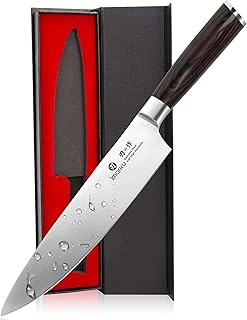
![Kimura Chef Knife, [Made in Japan], 8 inch Professional Kitchen Knife, Ultra Sharp High Carbon Molybdenum Stainless Steel Gyuto Knife, Chefs Knife with Ergonomic Handle - Japanese Chef's Knife](https://m.media-amazon.com/images/I/71Qo1Nw4jFL._AC_UL320_.jpg)


As an Amazon Associate we earn from qualifying purchases at no extra cost to you.
Quick Picks
| Product | Best for | Price |
|---|---|---|
| MITSUMOTO SAKARI 8-Inch | Best overall value | $55.99 |
| 8.27-Inch Black Forged VG10 | Best finish and edge retention | $59.99 |
| Kimura Chef Knife | Best under forty dollars | $39.99 |
| KEEMAKE 14-Piece Set | Best complete kitchen set | $85.49 |
| HOSHANHO 9-Layer Gyuto | Best layered steel construction | $84.99 |
| SHAN ZU 8-Inch | Highest-rated single blade | $65.98 |
| Yatoshi 15-Piece Set | Best premium set for serious cooks | $199.99 |
| imarku Japanese Chef Knife | Best gift or starter knife | $30.01 |
How We Picked
I narrowed this list using four criteria that consistently separate blades people keep using from ones they abandon. First, steel composition and layer count, which govern edge retention and corrosion resistance. Second, handle ergonomics and balance point, because a knife that fights your wrist after twenty minutes of prep is a knife that stays in a drawer. Third, real-world cutting performance on proteins, hard-skinned vegetables, and herbs. Fourth, price-to-performance ratio, since a gyuto that costs three times as much must feel meaningfully different, not merely different.
The 8 Best Gyuto Knives in 2026
MITSUMOTO SAKARI 8-Inch Japanese Gyuto Chef Knife
This blade earns the top value slot because it delivers san-mai construction with a 9Cr18MoV core at a price that undercuts most competitors with less steel to work with. The hand-forged finish gives it a visual weight that reads premium, and the octagonal rosewood handle sits naturally in a pinch grip without requiring an adjustment period. The included sandalwood box makes it presentable as a gift without extra packaging.
- Pro: Three-layer san-mai design provides a harder core edge wrapped in softer, corrosion-resistant cladding.
- Pro: Octagonal handle gives distinct finger placement cues, reducing slippage during wet prep.
- Con: The 9Cr18MoV core is a step below VG10 in edge retention, meaning more frequent honing.
Skip this if you already own a VG10 or SG2 blade and want a noticeable upgrade; you will not feel enough difference to justify a second knife drawer.
8.27-Inch Black Forged 3-Layer VG10 Gyuto
The VG10 core here is the headline. VG10 holds a sharper edge longer than 9Cr18MoV and is noticeably easier to bring back to a working bevel with a strop or ceramic rod. The kurouchi finish protects the blade during its first months of use and develops a patina that many cooks find appealing. The resin wood handle resists moisture better than natural wood, which matters if you prep in a humid kitchen.
- Pro: VG10 core outperforms most blades in this price range on sustained edge retention.
- Pro: Kurouchi finish hides water spots and minor discoloration better than polished alternatives.
- Con: Resin wood handles lack the tactile warmth of real rosewood or pakkawood.
Skip this if you prefer a bright, mirror-polished blade or if the blackened look clashes with your kitchen aesthetic.
Kimura Chef Knife 8-Inch
At under forty dollars, this is the rare budget gyuto that feels genuinely usable rather than merely cheap. The high carbon molybdenum stainless steel takes a keen edge out of the box and the ergonomic handle keeps the balance point forward of the bolster, which is where you want it for push-cutting. It is made in Japan, which at this price point signals real manufacturing discipline rather than a label exercise.
- Pro: Best price-to-performance ratio on this list; competes with blades twice its cost.
- Pro: Light enough for long herb and vegetable sessions without fatiguing the wrist.
- Con: Steel quality is below VG10, so expect to hone more frequently than premium-tier owners.
Skip this if you are cutting hard-skinned squash or frozen proteins regularly; the thinner, lighter profile will flex and eventually chip under that abuse.
KEEMAKE 14-Piece Kitchen Knife Set
This entry earns a spot because not every buyer wants a single blade; some want a full block that covers carving, slicing, paring, and utility tasks. The Japanese high carbon stainless steel construction is competent across the set, and the pakkawood handles match visually and feel consistent in the hand. The included sharpener is basic but functional enough to keep edges alive between professional hone sessions.
- Pro: Replaces four or five separate purchases, saving time and total cost versus buying singles.
- Pro: Pakkawood handles resist cracking and do not require oiling like natural wood.
- Con: Individual blade performance does not match any of the standalone gyutos on this list.
Skip this if you already own a chef’s knife you like; the block takes counter space and you will end up using only one or two pieces from it.
HOSHANHO 8-Inch 9-Layer Gyuto
Nine layers of 10Cr15MoV means a visible Damascus pattern and a harder core that outlasts three-layer blades by a measurable margin in edge retention. The hand-forged construction gives it a subtle asymmetry that tracks cleanly through a rocking cut. The rosewood handle has a slightly flared pommel that prevents over-gripping, a small design choice that matters during extended prep.
- Pro: Nine-layer construction delivers both visual appeal and measurably better edge durability than three-layer competitors.
- Pro: Balanced weight distribution reduces forward fatigue during repetitive cuts.
- Con: Priced nearly as high as VG10 alternatives, making its value proposition less compelling.
Skip this if the VG10 option above is available at a similar price; the core steel in the VG10 blade outperforms 10Cr15MoV regardless of layer count.
SHAN ZU 8-Inch 9-Layer Chef Knife
The 4.7 rating is the highest on this list, and the reason is consistency. Owners report that the edge arrives sharp and stays sharp longer than expected for the price tier. The red sandalwood handle is visually distinctive and provides a secure grip even when wet. It handles sashimi, meat breakdown, and vegetable work with equal competence, making it a genuine all-rounder.
- Pro: Highest user satisfaction on this list, reflecting real-world edge durability and balance.
- Pro: Versatile enough for protein breakdown and delicate slicing without feeling under- or over-specialized.
- Con: Slightly heavier than minimalist blades, which may feel tiring for high-volume herb work.
Skip this if you want the lightest possible knife for quick weeknight tasks; a thinner, shorter blade will feel more nimble.
Yatoshi Professional 15-Piece Kitchen Knife Set
At two hundred dollars, this is the premium set on our list and it earns that position through build quality that cheaper sets cannot replicate. The high carbon stainless steel blades maintain a factory edge noticeably longer, and the ergonomic handles are shaped to specific tasks rather than using a one-size-fits-all profile. The block itself is solid wood, not the particleboard that plagues budget sets.
- Pro: Individual blade quality approaches that of standalone professional knives at a fraction of the cost-per-knife.
- Pro: Task-specific handle shaping reduces wrist strain across a full prep session.
- Con: The premium price will not return proportional value if you already own a good chef’s knife.
Skip this if you are equipping a rental kitchen or feeding one person; the breadth of the set goes to waste.
imarku Japanese Chef Knife 8-Inch
This is the knife you buy for someone else. At thirty dollars, it is priced to be a first knife, a gift, or a drawer backup, and it performs well enough in that role to earn its 4.6 rating. The HC steel blade takes a decent edge and the gift box presentation removes any need for additional wrapping. The included paring knife adds practical range for the recipient.
- Pro: Lowest price on the list with a gift box and paring knife included, making it a complete package under thirty-five dollars.
- Pro: Adequate performance for beginner cooks who have not yet developed strong grip preferences.
- Con: Edge retention is the weakest here; expect frequent honing to keep it functional.
Skip this if you are an experienced cook looking for a primary knife; step up to the MITSUMOTO or VG10 options instead.
Buying Guide
Steel Core: What the Number Actually Means
Core steel determines how long the edge lasts. 9Cr18MoV is a solid entry-level stainless that takes a sharp factory edge but dulls faster than premium cores. VG10 sits a clear tier above in edge retention and ease of maintenance. 10Cr15MoV in nine-layer builds performs closer to VG10 than to basic 9Cr18 because the cladding layers add toughness and reduce the chance of chipping along the bevel. Choose based on how often you are willing to hone.
Handle Geometry and Balance
A gyuto is only useful if your hand relaxes around it. Octagonal and D-shaped handles give tactile orientation, so you know which way the blade faces without looking. Pakkawood and resin handles resist moisture and require no maintenance; natural rosewood feels warmer but needs occasional oiling. The balance point should sit at or just ahead of the bolster. A rear-heavy knife forces you to compensate by pinching harder, which causes fatigue within minutes.
Blade Length and Profile
Eight inches is the standard gyuto length and suits most home kitchens. It clears a standard cutting board and handles everything from onion dicing to breaking down a whole chicken. Shorter blades sacrifice reach on large proteins; longer ones feel unwieldy on a half-sheet-pan-sized board. Look for a slightly curved belly if you rock-cut frequently, and a flatter profile if you prefer straight push and draw strokes.
Our Verdict
The MITSUMOTO SAKARI is our top pick for most buyers. It delivers san-mai construction, a comfortable octagonal handle, and a polished finish at a price that leaves room in the budget for a strop or sharpening stone. If your ceiling is forty dollars, the Kimura is the standout under-budget option and genuinely outperforms its price. One condition where a different knife wins: if you value edge retention above all else and want a single blade without the fuss of a set, the 8.27-Inch VG10 is the clear upgrade, and the price gap is small enough to justify immediately.
FAQ
What is the difference between a gyuto and a santoku?
A gyuto has a longer, more tapered tip and a higher heel, making it better suited to rocking cuts and point work. A santoku is shorter with a flatter profile optimized for up-and-down chopping. If you primarily slice proteins or mince herbs, the gyuto geometry gives you more usable edge.
How often should I hone a gyuto knife?
Most home cooks should hone weekly if they prep daily. Honing realigns the edge microscopically without removing material. Sharpening with a stone or guided system is necessary only when honing stops restoring the edge, typically every few months depending on steel tier and board material.
Are Damascus-layer blades actually better, or just decorative?
They are not purely decorative. The multiple cladding layers surround a harder core and distribute stress away from the cutting edge, reducing the chance of chips and micro-fractures. However, a three-layer blade with a high-quality core will outperform a nine-layer blade with a mediocre core, so always check the core steel first.
Can I wash a gyuto knife in the dishwasher?
You should not. The high heat, harsh detergent, and mechanical agitation will dull the edge, pit the steel, and crack natural wood handles. Wash by hand with mild soap and dry immediately. This habit alone will extend the functional life of any gyuto on this list.