Key takeaways
- Personal blenders like the Ninja Fit or Nutri-Plus blend directly into a to-go cup, ideal for single servings and fast cleanup.
- Countertop pitchers like the Ninja UltraCrush make multiple servings at once and handle hot soups or larger batches.
- Choose personal if you make one shake at a time and value speed; choose countertop if you blend for a household or want more versatility.
The gap between a smoothie and a gritty, half-blended mess comes down to power and blade design. Frozen fruit, ice, and fibrous greens demand real torque, and a blender that stalls or leaves chunks turns a healthy habit into a chore. Wattage is the headline number, but it is only part of the story; blade geometry, cup design, and the balance between countertop and personal formats all decide whether your daily shake comes out silky.
This guide breaks down exactly what to look for so you can match a blender to how you actually drink. Whether you want a grab-and-go personal bullet or a full-size pitcher for the family, here is how to choose, plus the models that get smoothies right in 2026.
Our top picks




As an Amazon Associate we earn from qualifying purchases at no extra cost to you.
⚡ Save on Your Next PC — Amazon Prime
Prime members get fast free shipping on the systems above, plus early access to Prime Day & Black Friday PC deals. New members get a 30-day free trial.
Watch: How to Choose a Powerful Blender for Smoothies and Shakes — Video Review
Understand Wattage and What It Really Means
Motor power is measured in watts, and for smoothies with ice and frozen fruit, 700 watts is a reasonable floor while 1,000 watts and up crushes almost anything. But watts alone can mislead; a well-designed 900-watt bullet often out-blends a cheap 1,200-watt pitcher. Treat wattage as a rough guide, then weigh it against blade and cup design.
Personal vs. Countertop Blenders
- Personal blenders like the Ninja Fit or Nutri-Plus blend directly into a to-go cup, ideal for single servings and fast cleanup.
- Countertop pitchers like the Ninja UltraCrush make multiple servings at once and handle hot soups or larger batches.
- Choose personal if you make one shake at a time and value speed; choose countertop if you blend for a household or want more versatility.
Blade Design and Cup Material
Stacked or angled blade assemblies pull ingredients down into the vortex better than a flat two-prong blade, which is why some lower-wattage bullets punch above their weight. Look for durable Tritan or thick BPA-free cups that resist scratching, and a wide base that creates a strong vortex so greens and seeds fully break down.
Capacity, Speed Settings, and Auto Programs
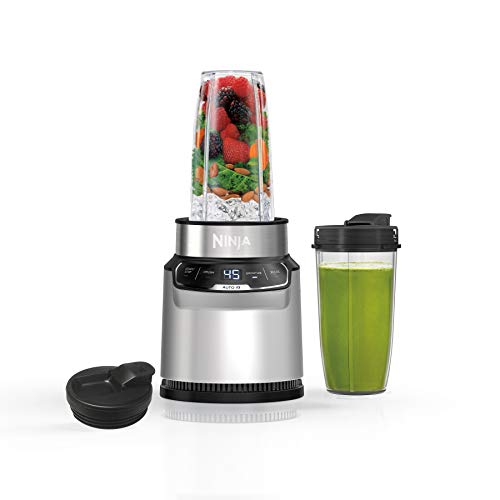
Match cup size to your typical serving: 16-20 oz for one drink, 24 oz and up for two. Multiple speeds and an Auto-iQ style pulse program, as on the Ninja Nutri-Blender Pro, help with tough frozen loads. For simple daily use, a single-button bullet is faster and less fiddly.
Tips
- Add liquid first, then soft ingredients, then frozen fruit and ice on top for the smoothest pull.
- Do not overfill; leave room for the vortex to move ingredients.
- Blend leafy greens with just liquid first to eliminate grit, then add the rest.
- Rinse or blend warm water and a drop of soap right after use so residue never dries on the blades.
Frequently Asked Questions
How many watts do I need for frozen smoothies?
Aim for at least 700 watts for regular frozen fruit and a handful of ice. If you blend dense frozen loads, nut butters, or fibrous greens daily, 900-1,100 watts gives you more headroom and less stalling.
Are personal blenders powerful enough?
Yes, for single servings. A 700-900 watt bullet like the Ninja Fit or Nutri-Plus handles everyday smoothies well thanks to a tight cup and efficient blades. For batches or hot soups, step up to a countertop pitcher.
Why is my smoothie gritty?
Grit usually comes from underpowered blending of seeds and greens, or from adding frozen items before liquid. Blend greens with liquid first, then add frozen fruit, and give it a few extra seconds to fully break down.
Is a more expensive blender worth it?
If you blend daily, yes. A stronger motor and better blades produce smoother results, last longer, and stall less. Occasional users can save money with a capable mid-range bullet.
Conclusion
Choosing a smoothie blender is about matching power and format to your routine: a 700-900 watt personal bullet for solo daily shakes, or a 1,000-watt-plus countertop pitcher for batches and versatility. Prioritize blade design and cup quality alongside raw wattage, follow the layering order, and every smoothie comes out smooth instead of chunky.