Our Top Picks

A climbing rope is the simplest tool in a home gym and one of the hardest to master. It hangs vertically from a beam or rig, and you haul your own body weight up it hand over hand. Your grip, lats, biceps, and core either move you upward or they do not, which is why rope climbs show up in military training, wrestling rooms, and obstacle-course preparation.
This guide covers ropes you climb, which separates it from two nearby topics. It is not about battle ropes, the heavy horizontal ropes you whip into waves for conditioning at floor level. It is also not about the garden trellises growers use to support climbing plants. Here, the rope hangs in the air, you leave the ground, and the only way up is to climb.
The five ropes below split by fiber, length, and the fitting worked into the top end, and those details decide which one belongs in your space.
Disclosure: As an Amazon Associate, we earn from qualifying purchases made through links on this page, at no extra cost to you.
How to Choose a Climbing Rope
Diameter: 1.5 inches is the gym standard
Nearly every rope in this guide measures 1.5 inches across. At that size, most adult hands can wrap the fingers around the rope and hold a grip that survives full body weight. Go thinner and the rope cuts into the palms and demands finger strength most trainees lack. Go thicker, toward 2 inches, and the grip itself becomes the exercise: forearms fail long before the back and arms do. Unless you have very large hands or a specific grip goal, buy 1.5 inches.
Fiber: natural grip versus weather resistance
Manila, sisal, hemp, and jute are natural fibers with a shared personality. Their surfaces are textured and slightly fuzzy, so hands hold on even as palms sweat. Manila is the traditional gym fiber: strong and kind to skin. Sisal grips well too, though it is a step down in longevity.
Every natural fiber has the same weakness: water. A manila or sisal rope that stays damp will rot from the inside, losing strength in ways you cannot always see, so natural-fiber ropes belong indoors, stored dry. Synthetic ropes, usually polyester dacron, trade a little of that natural bite for weather resistance. They do not rot, shrug off rain, and suit a rig that lives outside all year, though the surface feels a touch slick when new.
Length: match the anchor, keep a tail on the floor
Buy for your anchor height, not for ambition. The rope should run from the anchor to the floor, with a little extra lying on the ground. That tail gives your feet a stable platform for the first foot lock and keeps the end from swinging free on the way down. A 10-foot rope suits an 8- or 9-foot garage ceiling once the top loop takes its share, while a 25-foot rope needs a genuinely tall anchor. Excess length simply pools on the floor, but a rope that ends above the ground is a hazard every session.
The top end decides how it hangs
Look closely at how the top of the rope is finished, because that fitting is your connection to the anchor. A hand-spliced eye, often built around a metal thimble, gives a clean loop you can pass over a beam or clip into a rated mount. A plain spliced or knotted loop does the same job with no hardware. Some ropes arrive with a metal eyehook or carabiner already fitted, which speeds up hanging and removal. The loose end matters too: heat-shrink caps or sealed boots keep strands from unraveling where hands and feet work hardest.
The anchor point is part of the purchase
A climbing rope is only as safe as what it hangs from. Every climb adds dynamic force well beyond your static body weight. The anchor needs to be structural: a steel rig, a load-bearing beam, or a ceiling mount built for this job. Drywall anchors, decorative hooks, and thin lumber are not anchor points. Check the hardware and the anchor itself before every climb. If you cannot verify what sits above the ceiling, have a professional make that call.
Learn the foot lock before you need it
Almost nobody climbs with arms alone on day one, and nobody needs to. In a J-hook, the rope runs down one shin, under that foot, and is pinned by the other foot on top, so you can stand in the lock and rest your grip between pulls. In an S-wrap, the rope winds around one leg for even more friction at the cost of a slower reset. Pure arm-only climbing is a long-term goal, not an entry requirement.
Mats and inspection are not optional
Put thick crash mats under the rope, always. Then inspect: run your hands along the full length before sessions, feeling for soft spots, cuts, fraying, or a musty smell that signals rot in natural fiber, and check the splice and fitting at the top. Any rope showing real damage comes down and gets replaced; no repair makes it trustworthy again.
The 5 Best Climbing Ropes
1. Valor Fitness CLR-25 Sisal Climbing Rope (25 ft x 1.5 in)

The CLR-25 is the classic school-gym formula done properly. Sisal fiber gives a textured, sweat-tolerant grip that stays friendly on the hands across repeated climbs. At 25 feet it needs a tall anchor: high garage ceilings, barn spaces, or a strong overhead limb. One end is spliced into a loop for mounting, and the tail wears a heat-shrunk vinyl sleeve that resists fraying where feet pinch the rope. It carries a 300 lb capacity and weighs just over 13 lb, so one person can hang it.
Specs
- Material: Sisal
- Length: 25 ft
- Diameter: 1.5 in
- Capacity: 300 lb
- Top end: Spliced loop
- Tail end: Heat-shrunk vinyl sleeve
- Product weight: 13.2 lb
2. RopeFit Manila Gym Climbing Rope (25 ft x 1.5 in)
RopeFit builds its ropes by hand in the USA from genuine manila. Each rope is hand-spliced with a knotted loop by certified riggers, so it hangs from a beam or mount with no extra hardware. The maker quotes a breaking strength around 16,000 lb for the fiber, far beyond any body weight. Manila grips better than any synthetic here and stays comfortable on bare hands, and heat-shrink caps guard the tail. The trade-offs are familiar: it sheds a little early on, carries a natural odor at first, and must stay dry, since manila rots in damp air.
Specs
- Material: Manila
- Length: 25 ft
- Diameter: 1.5 in
- Breaking strength: 16,000 lb (maker figure)
- Top end: Hand-spliced knotted loop
- Tail end: Heat-shrink cap
- Origin: Handmade in the USA
3. Crown Sporting Goods Poly Dac Climbing Rope (12 ft x 1.5 in)
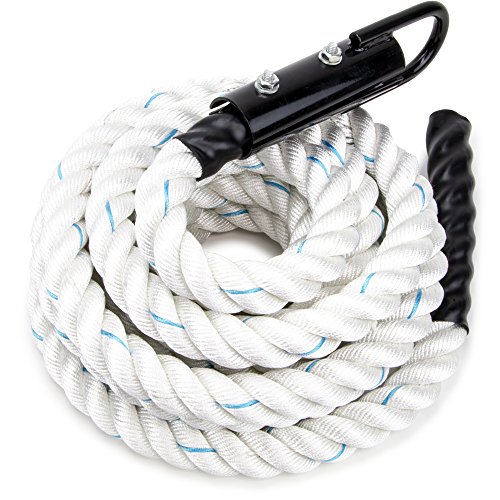
This is the pick for a rope that lives outside. The braided polyester dacron build does not rot, does not mind rain, and will not fray or splinter the way natural fibers can after a wet season. The white surface feels soft, almost cotton-like, and stays gentle on hands. A heavy-duty metal eyehook is worked into the top end, so hanging it takes seconds, and both ends are heat-sealed with waterproof boots. The surface feels a little slick at first compared with manila, so expect a short break-in before the grip feels fully trustworthy.
Specs
- Material: Polyester dacron
- Length: 12 ft
- Diameter: 1.5 in
- Color: White
- Top end: Metal eyehook
- Ends: Heat-sealed waterproof boots
- Capacity: Not published
4. Perantlb Outdoor Climbing Rope (10 ft x 1.5 in)
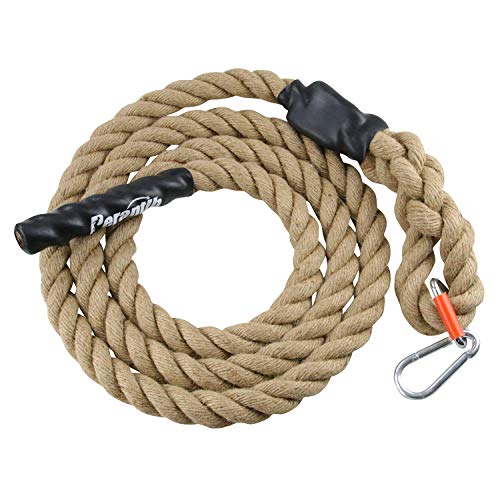
Perantlb aims this natural jute rope at ordinary ceiling heights, and 10 feet is what most garages need. One end is hand-braided back into itself to form a loop, so it mounts to any sturdy anchor without a bracket, and the tail is heat-shrunk against fraying. Jute has a coarse texture palms read easily, which helps new climbers trust their grip. The maker quotes a 500 lb capacity when mounted correctly, and a printed manual covers installation.
Specs
- Material: Natural jute
- Length: 10 ft
- Diameter: 1.5 in
- Capacity: 500 lb
- Top end: Hand-braided loop
- Tail end: Heat-shrink cap
- Part number: PE010002-1-10
- Included: Instruction manual
5. Keepark Gym Climbing Rope (10 ft x 1.5 in)

The Keepark rope, model CR30, is a compact natural hemp build for low anchor points where 10 feet is all the height available. Hemp gives a firm, traditional grip, and the listing quotes a 500 lb tensile figure with a 1,000 lb maximum tension load. Heat-shrink end caps protect the tail. Plan around two things: no mounting bracket is included, so anchor hardware comes from your own setup, and the rope is a plain-ended design rather than a loop-top one, so confirm your hanging method before the first session. Within those limits, it is a sturdy short rope for technique practice.
Specs
- Material: Hemp
- Model: CR30
- Length: 10 ft
- Diameter: 1.5 in
- Tensile strength: 500 lb
- Maximum tension load: 1,000 lb
- End caps: Heat shrink
- Mounting bracket: Not included
Comparison Table
| Rope | Fiber | Length | Diameter | Top End | Best For |
|---|---|---|---|---|---|
| Valor Fitness CLR-25 | Sisal | 25 ft | 1.5 in | Spliced loop | Tall indoor anchors |
| RopeFit Manila | Manila | 25 ft | 1.5 in | Hand-spliced knotted loop | Traditional grip, dry gyms |
| Crown Sporting Goods Poly Dac | Polyester dacron | 12 ft | 1.5 in | Metal eyehook | Outdoor rigs, wet climates |
| Perantlb Outdoor | Natural jute | 10 ft | 1.5 in | Hand-braided loop | Standard garage ceilings |
| Keepark CR30 | Hemp | 10 ft | 1.5 in | Plain end, caps fitted | Low ceilings, technique work |
Frequently Asked Questions
What diameter climbing rope should a beginner buy?
Buy 1.5 inches. School gyms settled on this size because average hands can close around it and hold body weight without the grip failing first. Thinner ropes demand finger strength most beginners have not built, and 2-inch ropes turn every climb into a forearm contest. Move to a thicker rope later, once standard climbs feel routine.
How long should a gym climbing rope be?
Match the rope to the anchor height and let a short tail rest on the floor. Measure from the anchor to the ground, then choose the closest length at or slightly above that number, remembering the top loop consumes a little length. A rope that ends above the floor is dangerous, because feet hunt for a lock that is not there.
Can a manila rope hang outside?
It can hang outside for a session, but it should not live outside. Manila is a natural fiber, and repeated wetting leads to rot that weakens the rope from the inside. Bring a manila or sisal rope in and store it dry. If the rope must stay outdoors in all weather, choose polyester dacron instead, since synthetic fiber does not rot.
Should I learn to climb without my legs?
Not at first. Leg-assisted climbing with a J-hook or S-wrap foot lock is the standard teaching path, because the legs are far stronger than the arms and the lock lets you rest your grip mid-climb. Arm-only climbing is a long-term project built on months of assisted volume.
How often should I inspect a climbing rope, and when do I replace it?
Run your hands over the full length before every session and look at the top splice or fitting weekly. Feel for soft sections, cuts, and heavy fraying, and smell natural fiber for mildew. Retire the rope at the first sign of real damage, after any hard shock load, or when the fiber feels dried out and brittle. A climbing rope is a single point of support with your body on it, so doubt means replacement.
Conclusion
The right climbing rope matches your anchor, your climate, and your hands. For tall, dry indoor spaces, the Valor Fitness CLR-25 and the hand-built RopeFit manila rope deliver the classic long-climb experience. For an outdoor rig, the Crown Sporting Goods poly dacron rope removes rot from the equation. For the typical garage ceiling, the Perantlb and Keepark 10-foot ropes put technique practice within reach. Give the anchor, the mats, and a solid foot lock as much care as the rope itself.
FAQ
What diameter climbing rope should a beginner buy?
How long should a gym climbing rope be?
Can a manila rope hang outside?
Should I learn to climb without my legs?
How often should I inspect a climbing rope, and when do I replace it?
More from Amazon
Programs that pair well with the guide above. Offers and eligibility are set by Amazon and may change.
Set up recurring deliveries of everyday items on eligible products. Terms and savings are set by Amazon.
Explore Subscribe & SaveCollect the home and kitchen items you want in one registry that guests can shop from.
Create a wedding registryFree shipping on eligible items, Prime Video and more. Eligible new members can start with a free trial.
Start a Prime free trialAudiobooks and podcasts to listen to on the go. Eligible new members can start with a free trial.
Try Audible freeAs an Amazon Associate we earn from qualifying purchases.