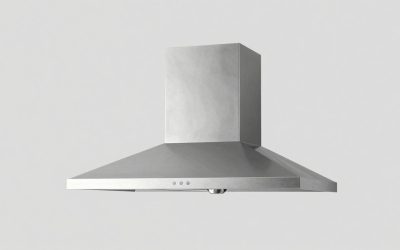
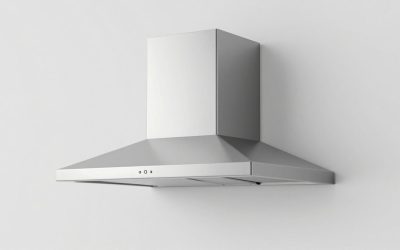
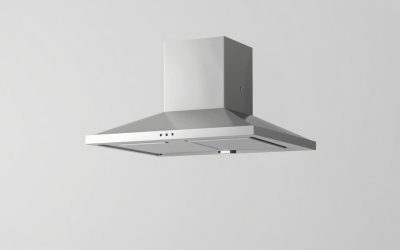
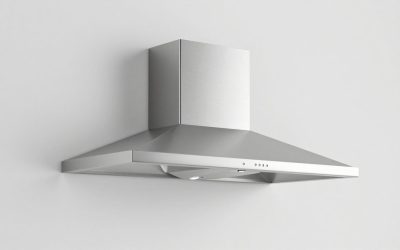
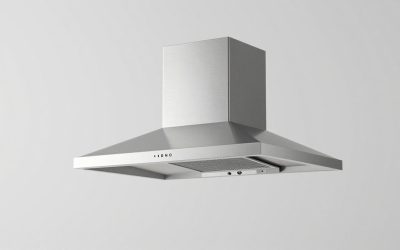
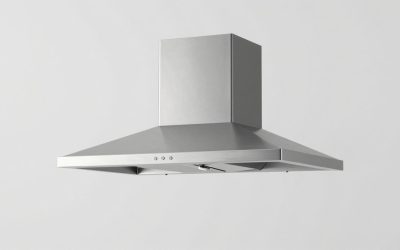
The best 36 inch range hoods are the ones that extend far enough over your burners, move enough air for your cooking style, and can be vented outdoors without exceeding your kitchen’s clearance, duct, or noise limits.
A 36-inch hood is generally the correct minimum width for a 36-inch range or cooktop. If the hood is mounted between cabinets, the opening may need to be slightly wider than 36 inches, so check the insert or liner’s exact dimensions before ordering. For an island installation, a wider hood—often 42 inches—can provide better protection because air currents pull cooking vapor away from the canopy.
Our top picks
 FIREGAS Range Hood 36 inch
- Space-Saving Slim Design: With a sleek 4.7-inch ultra-slim…
- 36 Inch Range Hood: Crafted from durable 20-gauge…
- Whisper-Quiet Power: 300 CFM of suction instantly clears…
 FIREGAS White Range Hood 36 inch
- Sleek Design: Slim profile saves space
- 36 Inch Range Hood: 20gauge brushed stainless steel,…
- Powerful but Really Quiet:Stainless steel kitchen stove vent…
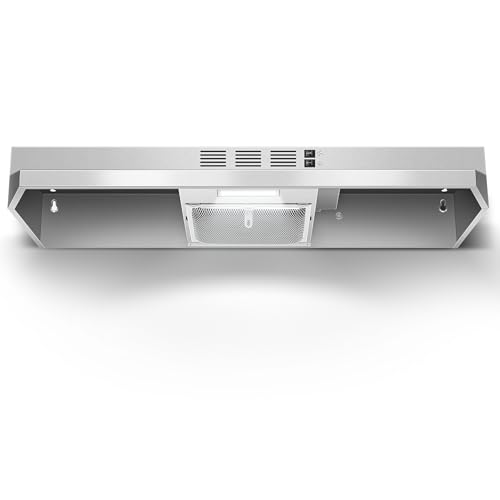 Zomagas Range Hood 36 inch Under Cabinet
- 36 inch Range Hood with Slim Design: With…
- 280 CFM Efficient Suction: Features with 2 different…
- 3-layer Grease Filter: Including one piece aluminum mesh…
| Product | Key specs | |
|---|---|---|
| FIREGAS Range Hood 36 inch | Space-Saving Slim Design: With a sleek 4.7-inch ultra-slim… 36 Inch Range Hood: Crafted from durable 20-gauge… Whisper-Quiet Power: 300 CFM of suction instantly clears… | Check price |
| FIREGAS White Range Hood 36 inch | Sleek Design: Slim profile saves space 36 Inch Range Hood: 20gauge brushed stainless steel,… Powerful but Really Quiet:Stainless steel kitchen stove vent… | Check price |
| Zomagas Range Hood 36 inch Under Cabinet | 36 inch Range Hood with Slim Design: With… 280 CFM Efficient Suction: Features with 2 different… 3-layer Grease Filter: Including one piece aluminum mesh… | Check price |
 FIREGAS Black Range Hood 36 inch FIREGAS Black Range Hood 36 inch | Sleek Design: Slim profile saves space 36 Inch Range Hood: 20 gauge brushed stainless… Powerful but Really Quiet: Stainless steel kitchen stove… | Check price |
As an Amazon Associate we earn from qualifying purchases at no extra cost to you.
Best 36-Inch Range Hoods by Kitchen Situation
| Kitchen situation | Recommended hood type | Useful specifications | Why it fits |
|---|---|---|---|
| 36-inch electric or induction range against a wall | Wall-mount chimney or under-cabinet hood | 300–600 CFM; 6- or 8-inch duct | Handles normal boiling, sautéing, and occasional high-heat cooking without excessive noise. |
| 36-inch gas range used daily | Deep wall-mount hood or professional-style canopy | 600–1,000 CFM; usually 8- or 10-inch duct | The deeper capture area and stronger airflow collect more heat, grease, and combustion byproducts. |
| 36-inch range on an island or peninsula | Island canopy hood, preferably wider than the cooktop | 600–1,200 CFM; 42-inch hood when space permits | Island hoods need more capture area and airflow because there are no side cabinets to block drafts. |
| Open-plan kitchen, small room, or noise-sensitive home | Remote-blower or low-sones hood | 400–800 CFM; approximately 1–5 sones at working speed | Moves the motor away from the cooking area and reduces the sound directly over the range. |
| Remodel with no practical exterior duct route | Recirculating hood with substantial charcoal filtration | 300–600 nominal CFM; replaceable filters | Works where exterior venting is impossible, although it will not remove heat, moisture, or combustion gases as effectively. |
Capture Area Matters as Much as CFM
CFM measures how much air the blower can move, but it does not tell you how effectively the hood catches rising smoke. A shallow hood with a powerful motor may still allow steam and grease to escape into the cabinets. Look for a canopy that is approximately 22–24 inches deep, with the rear and front burners positioned well under the hood.
For a 36-inch range, a 36-inch hood should cover the full cooking surface. A 42-inch hood is often a better choice over an island, a powerful gas range, or a cooktop installed where cross-drafts are common. Side coverage is especially helpful when a large pan sits on an outer burner.
Commercial-style ranges may have tall backsplashes, griddles, grills, or unusually high heat output. In those cases, select the hood and liner as a system rather than choosing a blower by width alone. The range manufacturer may specify a minimum hood depth, minimum CFM, or a required noncombustible clearance.
How Much CFM Does a 36-Inch Hood Need?
For many electric and induction cooktops, 300–600 CFM is adequate for ordinary home cooking. Choose closer to 600 CFM if you frequently sear steak, stir-fry, fry food, or use multiple burners at once.
Gas equipment generally needs more ventilation. A commonly used planning rule for a wall-mounted hood is about 100 CFM per linear foot of range, which suggests approximately 300–400 CFM for a standard 36-inch gas cooktop. High-output professional ranges can require considerably more. Island hoods are often planned at roughly 150 CFM per linear foot because they are exposed to drafts, but the appliance manufacturer’s requirement should take priority.
More CFM is not automatically better. A 1,200-CFM blower connected to an undersized duct can be loud, inefficient, and prone to turbulence. High-capacity systems may also require make-up air under local building codes. In many jurisdictions, the threshold is around 400 CFM, but requirements vary. Ask your contractor whether a dedicated make-up-air system, electrical circuit, or permit is needed.
Installation Clearance: Measure Before You Buy
Typical residential guidance places a hood about 24–30 inches above an electric or induction cooking surface and about 30–36 inches above a gas cooking surface. These are planning ranges, not universal rules. The hood, range, and local code instructions may require a different height, and installing too high can reduce capture performance.
- Measure from the top of the cooking grate—not the floor—to the lowest part of the hood.
- Leave enough room to lift pans without striking the hood. A 30-inch sauté pan handle can project several inches beyond the front burners.
- Allow at least 3–6 inches of practical clearance from adjacent cabinet sides for trim, door swing, and installation access, unless the manufacturer specifies otherwise.
- Check the ceiling height. A 36-inch range, a 36-inch hood, and a tall chimney can leave little room for duct transitions in an 8-foot kitchen.
- For combustible cabinets, follow the hood’s listed clearance rather than relying on a general measurement.
For a wall-mounted hood, the underside should usually sit centered over the cooktop, with the duct rising as vertically as possible. For an insert, build the cabinet around the liner’s actual cutout and required front, rear, and side clearances. A decorative shell does not improve ventilation if the internal liner is too small.
Venting and Duct Design: The Hidden Performance Difference
Exterior venting is the preferred arrangement because it removes smoke, grease, moisture, and heat from the home. Use smooth metal ductwork with as few bends as possible. Flexible foil duct can restrict airflow and collect grease, so it is generally a poor choice for a high-CFM hood.
| Blower capacity | Common duct planning range | Practical implication |
|---|---|---|
| 300–400 CFM | 6–8 inches | Often suitable for standard electric or induction cooking, subject to the hood’s instructions. |
| 500–800 CFM | 8 inches | Requires careful routing; long runs and multiple elbows can noticeably reduce performance. |
| 900–1,200 CFM | 8–10 inches or larger | Usually needs professional sizing, make-up air review, and a dedicated electrical supply. |
A duct run with several elbows may perform like a much longer run than its measured length. Confirm the maximum equivalent duct length and transition size in the installation guide. If exterior venting would require a long horizontal route through cabinets, a lower-CFM hood with a well-designed duct may outperform a stronger blower connected to a restrictive path.
Noise: Compare Soness at the Speed You Actually Use
Hood noise is usually listed in sones, but the number may be measured at the lowest or highest speed. Ask for the sound level at the middle setting, where you are likely to run the hood during everyday cooking. Approximately 1–2 sones is quiet, 3–5 sones is noticeable but manageable, and higher settings can be loud enough to interfere with conversation.
Remote blowers place the motor in an exterior wall, roof assembly, or remote duct location. They can reduce sound near the range, but they cost more and require careful weatherproofing. A hood with a quiet motor is still ineffective if the filters are clogged or the duct is undersized.
Which Features Are Worth Paying For?
- Baffle filters: Stainless-steel baffles are durable and effective for greasy, high-heat cooking. They are usually dishwasher-safe, although dishwasher detergents can dull the finish over time.
- Mesh filters: These are often lighter and less expensive, but they need frequent cleaning to prevent grease buildup.
- LED lighting: Useful when the hood is installed high above a deep range. Confirm whether bulbs are replaceable or integrated.
- Heat sensors: Helpful on powerful gas ranges, but they should not replace manual control.
- Convertible venting: A hood advertised as convertible may support either ducted or recirculating installation, but the charcoal filter kit may be sold separately.
- Stainless-steel construction: Heavier-gauge steel resists dents and vibration better, while thin decorative metal can transmit more blower noise.
Bottom Line: Match the Hood to the Range, Not Just the Cabinet Opening
For most 36-inch electric or induction ranges, the best 36 inch range hoods are 36 inches wide, 22–24 inches deep, externally vented, and rated around 400–600 CFM. For a high-output gas range, island installation, or frequent high-heat cooking, choose a deeper canopy, consider a 42-inch width, and plan for 600–1,200 CFM with properly sized ductwork and possible make-up air.
Before purchasing, verify five numbers: the hood’s actual width and depth, the manufacturer’s clearance, the required CFM, the duct diameter and maximum run, and the sound rating at usable speeds. Those measurements will matter more than decorative finish or a long feature list.