Key takeaways
- Width: Choose a hood at least as wide as the range. If cabinets and space allow, a hood 3–6 inches wider overall can capture rising fumes more effectively, especially from front burners.
- Mounting style: Under-cabinet hoods suit existing cabinet runs; wall-mounted chimney hoods need an open wall; island hoods require stronger capture because air currents can carry fumes away from the canopy. A hood insert is designed to fit a custom enclosure, but the enclosure must provide adequate capture area and clearance.
- Height: Follow the range and hood manuals for installation clearance. Many installations fall around 24–30 inches above the cooktop, but requirements vary by appliance, hood type, and local rules. Do not lower a hood below its listed minimum to improve capture.
- Duct route: Prefer a short, smooth, rigid metal duct that vents outdoors. Keep the diameter specified by the hood manufacturer; do not reduce it to fit an existing smaller duct without confirming that the installation is allowed.
Best Range Hoods for Gas Stoves: Choose by Output, Layout, and Ductwork
The best range hood for a gas stove is a properly ducted hood at least as wide as the cooking surface, with enough airflow for the stove’s total burner output and a duct route that can carry that airflow without excessive noise. For many home kitchens, a 30- or 36-inch hood rated around 300–600 CFM is a practical starting point; higher-output ranges or demanding cooking styles may need more capacity and make-up air.
Start with your stove and kitchen—not the CFM headline
CFM means cubic feet of air moved per minute, but the number printed on a hood is not a guarantee of real performance. Narrow ducts, long runs, elbows, restrictive filters, and poor installation all reduce airflow. A powerful hood connected to undersized ductwork may be louder without clearing smoke effectively.
Our top picks
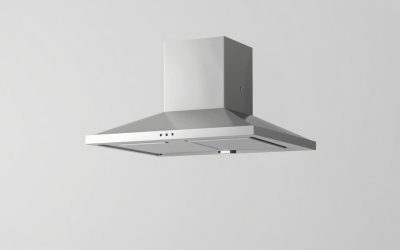
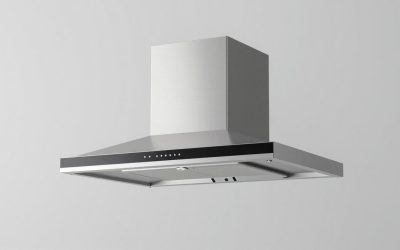
 Range Hood 30 inch Under Cabinet
- 【Under Cabinet Range Hood with Slim Design】With the…
- 【280 CFM Efficient Suction】Features with 2 different speed…
- 【3-layer Grease Filter】Including one piece aluminum mesh &…
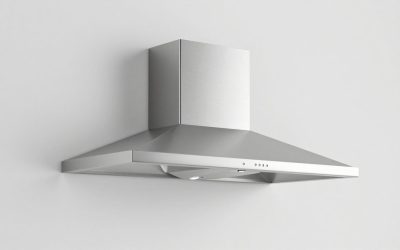
 Zomagas Range Hood Insert 30 inch
- 【600 CFM Powerful Suction But Quiet】Maximum 600 CFM…
- 【Dishwasher Safe Stainless Steel Filters】Both baffle filters of…
- 【Duct/Ductless Convertible】Through simple installation of charcoal filters, ducted…
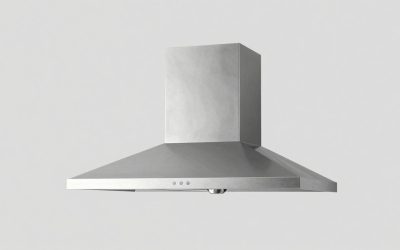
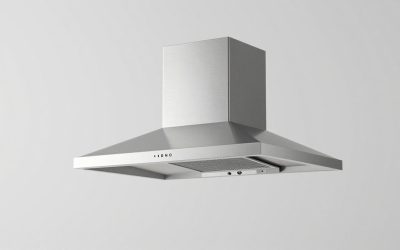
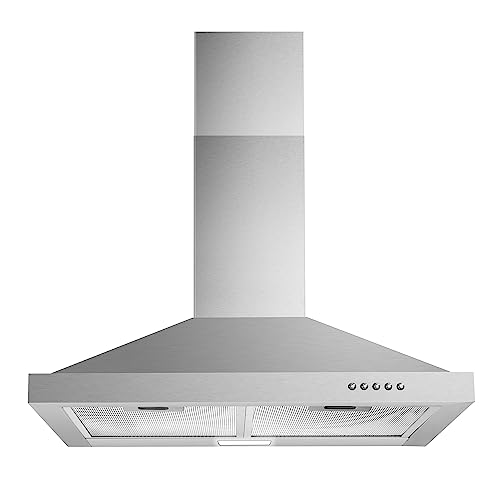 Tieasy Wall Mount Range Hood 30 inch
- Made of Premium 430 grade brushed stainless steel,…
- with 3-speed push button control, quiet 55 dB…
- The unit dimensions 29.3" W x 18.3" L…
As an Amazon Associate we earn from qualifying purchases at no extra cost to you.
For a rough sizing check, use the stove’s total rated BTU output divided by 100 for a starting CFM estimate. A 60,000-BTU range points to about 600 CFM. This is a planning rule, not a substitute for the range and hood manufacturers’ instructions or local code. High-output burners used frequently, wok cooking, and indoor grilling can justify more capacity. For ordinary cooking on a moderate-output range, a well-designed hood around 300–400 CFM may be sufficient.
Match the hood to the cooking surface and installation
- Width: Choose a hood at least as wide as the range. If cabinets and space allow, a hood 3–6 inches wider overall can capture rising fumes more effectively, especially from front burners.
- Mounting style: Under-cabinet hoods suit existing cabinet runs; wall-mounted chimney hoods need an open wall; island hoods require stronger capture because air currents can carry fumes away from the canopy. A hood insert is designed to fit a custom enclosure, but the enclosure must provide adequate capture area and clearance.
- Height: Follow the range and hood manuals for installation clearance. Many installations fall around 24–30 inches above the cooktop, but requirements vary by appliance, hood type, and local rules. Do not lower a hood below its listed minimum to improve capture.
- Duct route: Prefer a short, smooth, rigid metal duct that vents outdoors. Keep the diameter specified by the hood manufacturer; do not reduce it to fit an existing smaller duct without confirming that the installation is allowed.
Compare the options by kitchen situation
| Kitchen situation | Good starting choice | What to check before buying |
|---|---|---|
| 30-inch range, moderate everyday cooking | 30-inch wall or under-cabinet hood, roughly 300–400 CFM | Actual duct diameter, accessible filters, and low-speed noise |
| 36-inch range or frequent searing | 36-inch hood, roughly 400–600 CFM, adjusted for burner output | Capture depth and whether the duct can support the selected airflow |
| High-output range, heavy frying, or frequent wok cooking | Wide, deep canopy with higher airflow, sized to the appliance and duct system | Make-up air requirements, electrical capacity, and professional installation |
| Island range | Island hood at least as wide as the cooktop, with generous canopy coverage | Cross-drafts, ceiling structure, duct path, and greater exposure to room air currents |
| Apartment or no outdoor duct route | Recirculating hood only if venting outdoors is not feasible | Carbon-filter availability and replacement cost; recirculation does not remove combustion gases or moisture outdoors |
These are selection ranges, not universal prescriptions. Check the appliance documentation and local ventilation rules before settling on a model or airflow rating.
Duct size and make-up air can change the right choice
A hood must move air through a duct that is large and direct enough for its rated airflow. Many residential hoods use 6-inch ducting at lower airflow and 8-inch or larger ducting for higher-capacity systems, but the exact requirement depends on the model. A long route with several sharp bends can make a nominally powerful hood perform poorly. Ask an installer to assess the full duct path rather than only the hood connection.
When a ventilation system exhausts a large volume of air, replacement air has to enter the home. Some jurisdictions require a make-up air system above a specified exhaust capacity; thresholds and rules differ. This matters particularly in tightly sealed homes, where strong exhaust can create pressure problems or interfere with fuel-burning appliances. Confirm requirements with the local building authority or a qualified contractor before purchasing a high-CFM hood.
Noise: compare usable speeds, not just maximum airflow
Noise is commonly listed in sones or decibels, and ratings are not always measured under identical conditions. A hood that is quiet on low may become intrusive at maximum speed. Look for noise specifications at more than one setting, and ask whether the rating reflects the installed duct conditions. A remote or in-line blower can move some motor noise away from the cooking area, but adds installation complexity and must be compatible with the hood.
For everyday use, a hood that clears normal cooking at a lower or middle speed is often more useful than one that reaches a very high CFM only at an unpleasant noise level. Turn the hood on before cooking and let it run briefly afterward; this helps clear lingering airborne particles without relying on maximum speed throughout.
Construction and maintenance affect long-term value
| Feature | Practical trade-off | What to look for |
|---|---|---|
| Stainless-steel body | Durable and easy to wipe, but fingerprints and grease show readily | Sturdy seams, accessible grease filters, and a finish that suits your cleaning routine |
| Mesh grease filters | Often lightweight and easy to remove, but need regular washing | Dishwasher-safe instructions and filters that fit securely without rattling |
| Baffle filters | Common in higher-capacity designs; can be robust but may be heavier to handle | Removable construction and clear cleaning guidance |
| Recirculating configuration | Avoids exterior ductwork but returns filtered air to the room | Replacement carbon filters that are available and priced reasonably |
Grease buildup is a performance and fire-safety concern, so filter access matters as much as appearance. Check how filters release, whether they fit in your sink or dishwasher, and how often the manufacturer recommends cleaning them. Carbon filters in recirculating setups require replacement; washing a grease filter does not renew a saturated carbon filter.
Before you buy: a five-point fit check
- Measure the range width and the available wall, cabinet, or ceiling space.
- Record the range’s total BTU output and identify how you cook most often.
- Trace the duct route, including its diameter, length, bends, and outdoor termination.
- Confirm the hood’s required mounting height, electrical supply, and make-up air implications.
- Compare airflow and noise at the speeds you are likely to use, then check filter and replacement-part availability.
In short, choose the widest hood that fits the cooking area, size airflow to burner output and cooking habits, and verify that the duct system can deliver it. A correctly installed, moderately powered hood can outperform a louder, higher-CFM model attached to an inadequate duct.