Key takeaways
- Brushed or directional satin: A practical everyday finish. It softens reflections and makes fingerprints less conspicuous than mirror polish. Clean with the grain, not across it.
- Matte or textured: Can further disguise smudges and minor marks, but texture may take more effort to clean if grease collects in its pattern.
- Polished or mirror finish: Reflects light and is easy to wipe smooth, but fingerprints, water spots, and fine scratches are more visible.
The best stainless steel backsplash panels for most kitchens are 304 stainless steel, 20–22 gauge (about 0.9–0.75 mm), with a brushed finish and a made-to-measure fit; choose 316 near salt air or frequent corrosive cleaners, and thicker 16–18 gauge panels when rigidity or impact resistance matters more than cost.
Our top picks
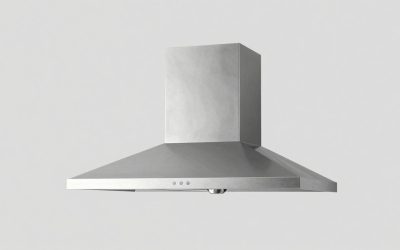
 30" x 24" Thicken Heavy Range Hoods
- Dimensions:30 inches wide by 24 inches high, providing…
- Thickened Heavy: 0.039 inch thick,Made from sturdy stainless…
- Double-sided Brushed Finish: Attractive brushed treatment on both…
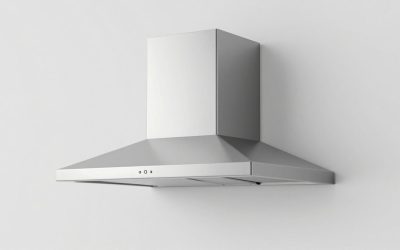
 VEVOR 30" x 24" Stainless Steel Backsplash
- Fashionable Appearance: Sized to fit standard household stoves,…
- 430 Stainless Steel: Long-lasting and designed to match…
- Easy Installation: With 4 pre-drilled holes (one at…
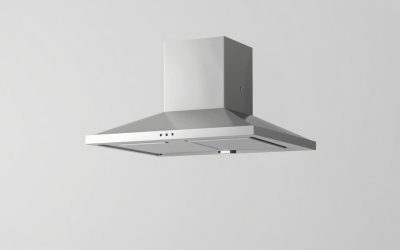
 32" x 30" Thicken Heavy Range Hoods
- Dimensions:32 inches wide by 30 inches high, providing…
- Thickened Heavy: 0.039 inch thick,Made from sturdy stainless…
- Double-sided Brushed Finish: Attractive brushed treatment on both…
| Product | Key specs | |
|---|---|---|
| 30" x 24" Thicken Heavy Range Hoods | Dimensions:30 inches wide by 24 inches high, providing… Thickened Heavy: 0.039 inch thick,Made from sturdy stainless… Double-sided Brushed Finish: Attractive brushed treatment on both… | Check price |
| VEVOR 30" x 24" Stainless Steel Backsplash | Fashionable Appearance: Sized to fit standard household stoves,… 430 Stainless Steel: Long-lasting and designed to match… Easy Installation: With 4 pre-drilled holes (one at… | Check price |
| 32" x 30" Thicken Heavy Range Hoods | Dimensions:32 inches wide by 30 inches high, providing… Thickened Heavy: 0.039 inch thick,Made from sturdy stainless… Double-sided Brushed Finish: Attractive brushed treatment on both… | Check price |
 KOBE SSP36 36-Inch Stainless Steel Backsplash Panel KOBE SSP36 36-Inch Stainless Steel Backsplash Panel | Size: 36" by 32" Made of 18-gauge commercial grade stainless steel to… Protect your walls from harmful grease and oil | Check price |
As an Amazon Associate we earn from qualifying purchases at no extra cost to you.
Choose by kitchen conditions, not just appearance
Stainless backsplash panels vary in alloy, finish, thickness, and installation. Those choices affect corrosion resistance, how much the surface shows fingerprints, whether a panel stays flat, and how easily it can be fitted around outlets and cabinets. Use this comparison to narrow the specification before ordering.
| Kitchen situation | Practical choice | Trade-off to know |
|---|---|---|
| Typical residential kitchen | 304 stainless, 20–22 gauge, brushed or satin finish | Good corrosion resistance and a balanced cost; fingerprints still need occasional wiping. |
| Coastal home or frequent exposure to salty air | 316 stainless, usually 20–22 gauge | Better resistance to chloride corrosion, but costs more and is not immune to damage from salt or harsh chemicals. |
| Busy cooking area or panel likely to be bumped | 16–18 gauge, with supported or folded edges | More rigid and less prone to denting than thinner sheet, but heavier and harder to cut and install. |
| Low-maintenance appearance is the priority | Brushed or textured finish rather than mirror polish | Hides some smears and small scratches; directional grain may show if panels are installed with mismatched grain direction. |
| Temporary or rental kitchen | Lightweight panel secured with a removable-compatible mounting system, if approved for the wall | Adhesives can still pull paint or drywall paper off when removed. Confirm the surface and removal method before committing. |
304 or 316 stainless steel?
Grade 304 is the common choice for indoor kitchens. It resists everyday moisture and food splashes well when cleaned and dried normally. Grade 316 adds molybdenum, improving resistance to chlorides such as salt exposure. That can make it a sensible upgrade for a coastal property or a kitchen where salt residue is a recurring concern.
Neither grade is a guarantee against staining or corrosion. Bleach, chloride-containing cleaners, steel wool, and prolonged wet contact can damage stainless steel. Check the manufacturer’s care instructions, and avoid mixing grades or finishes in adjoining visible panels unless the difference is intentional.
Finish: fingerprint visibility, scratches, and cleaning
- Brushed or directional satin: A practical everyday finish. It softens reflections and makes fingerprints less conspicuous than mirror polish. Clean with the grain, not across it.
- Matte or textured: Can further disguise smudges and minor marks, but texture may take more effort to clean if grease collects in its pattern.
- Polished or mirror finish: Reflects light and is easy to wipe smooth, but fingerprints, water spots, and fine scratches are more visible.
“Fingerprint-resistant” generally describes a surface treatment or finish, not a permanent property of stainless steel. Ask whether the coating is safe for the intended cleaning products and whether it can be repaired if scratched.
Thickness, heat, and clearance
Gauge numbers run in reverse: a lower gauge number means thicker metal. The actual thickness can vary by product and manufacturing standard, so compare the stated measurement in millimeters or inches rather than relying on gauge alone.
| Nominal gauge | Approximate thickness | Typical use |
|---|---|---|
| 22 gauge | 0.76 mm (0.030 in) | Lightweight decorative panels on a flat, well-supported wall |
| 20 gauge | 0.91 mm (0.036 in) | General-purpose residential backsplash panels |
| 18 gauge | 1.21 mm (0.048 in) | Stiffer panels where extra resistance to flexing or impact is useful |
| 16 gauge | 1.52 mm (0.060 in) | Heavy-duty applications; usually more than a typical decorative backsplash requires |
Stainless steel itself is noncombustible, but that does not make every backsplash installation safe directly behind every stove. Heat can transfer through the panel to the wall or adhesive, and appliance manufacturers specify clearances based on the range, hood, and surrounding materials. Follow the appliance instructions and local code; do not use a steel panel to reduce required clearance. Behind a gas range, confirm that the chosen panel, substrate, and mounting method are rated for the location.
Panel sizing and edge details that prevent installation problems
Measure the finished area at several points: walls and counters are not always level or square. Record the width at the top and bottom, height at both ends, outlet and switch locations, and any cabinet or hood projections. For example, a 30-inch-wide range alcove that measures 17½ inches high on one side and 17¾ inches on the other needs a carefully templated panel—not a nominal rectangle assumed to be perfectly square.
Plan seams before ordering. A single large sheet gives a cleaner appearance but may be difficult to carry through a narrow doorway or maneuver around cabinets. Multiple panels are easier to handle but create visible joints. Check the sheet’s weight with the supplier: a 4-by-2-foot panel of 20-gauge steel weighs roughly 10 pounds before packaging, while thicker stock weighs more. Confirm that the route into the kitchen and the wall can accommodate the panel.
Raw cut edges can be sharp. Specify hemmed, folded, or finished edges where exposed, and ask how corners and seams will be treated. Outlet openings need accurate measurements, with enough clearance for electrical boxes and cover plates. Turn off power before working around outlets; have a qualified electrician handle wiring or box adjustments.
Adhesive or mechanical fastening?
- Construction adhesive: Gives a low-profile appearance and avoids visible screws. It requires a clean, dry, flat substrate and the exact adhesive recommended for the panel and heat exposure. Uneven walls can cause gaps or oil-canning (visible waviness), and removal may damage the wall.
- Screws or other mechanical fasteners: Offer a more serviceable installation and can be useful for heavier panels. Fasteners remain visible unless concealed by trim, and holes must be positioned to allow for the panel system’s expansion and the wall construction.
- Magnetic mounting: Convenient only when the underlying surface is compatible and the panel manufacturer approves the system. Magnets do not solve problems with an uneven wall or inadequate support.
Before installation, dry-fit the panel, check that edges and openings align, and protect the finished face from scratches. Do not force a large sheet against a bowed wall; correct the substrate or use a mounting approach designed to accommodate it. For large, thick, or precisely cut panels, professional fabrication and installation can reduce handling risks and costly fit errors.
Quick buying checklist
- Choose 304 for most indoor kitchens; consider 316 for regular salt exposure.
- Compare actual thickness, not gauge alone; 20–22 gauge suits many supported residential installations.
- Select brushed or satin if you want fingerprints and small marks to be less noticeable.
- Confirm the range and hood clearances independently of the backsplash material.
- Provide a measured template for outlets, corners, and out-of-square walls.
- Specify finished edges and confirm the mounting method, substrate requirements, and cleaning guidance.