The best brass kitchen faucets for 2026 are solid-brass models when long-term corrosion resistance and repairability matter most, while brass-finish faucets are often the better value when you want the look of brass at a lower price and can accept a finish that requires more careful cleaning.
Our top picks
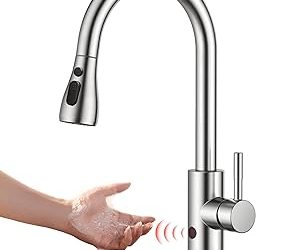
 FORIOUS Kitchen Faucet with Pull Down Sprayer
- High Arc Spout & Flexible Installation: Featuring a…
- Premium Stainless Steel with PVD Finish: Crafted from…
- Lead-Free Ceramic Cartridge for Reliable Use: Built with…
 FORIOUS Gold Kitchen Faucet with Pull Down
- Certified to cUPC & NSF/ANSI/CAN 61 standards and…
- Choose Stream for filling pots, Spray for rinsing…
- MEASURE ONCE, INSTALL WITH EASE
 Delta Faucet Rhett Pro Commercial Style Kitchen
- Patented Diamond Seal Technology reduces leak points and…
- MagnaTite Docking uses a powerful magnet to snap…
- Our Brilliance Champagne Bronze soft gold kitchen faucet…
| Product | Key specs | |
|---|---|---|
| FORIOUS Kitchen Faucet with Pull Down Sprayer | High Arc Spout & Flexible Installation: Featuring a… Premium Stainless Steel with PVD Finish: Crafted from… Lead-Free Ceramic Cartridge for Reliable Use: Built with… | Check price |
| FORIOUS Gold Kitchen Faucet with Pull Down | Certified to cUPC & NSF/ANSI/CAN 61 standards and… Choose Stream for filling pots, Spray for rinsing… MEASURE ONCE, INSTALL WITH EASE | Check price |
| Delta Faucet Rhett Pro Commercial Style Kitchen | Patented Diamond Seal Technology reduces leak points and… MagnaTite Docking uses a powerful magnet to snap… Our Brilliance Champagne Bronze soft gold kitchen faucet… | Check price |
 FORIOUS Gold Kitchen Sink Faucet FORIOUS Gold Kitchen Sink Faucet | Product Specifications: The Forious kitchen faucets has an… Dual Functionality: This kitchen faucet with pull down… Premium Quality: This faucet for kitchen sink is… | Check price |
As an Amazon Associate we earn from qualifying purchases at no extra cost to you.
Solid Brass vs. Brass-Finish Faucets
“Brass faucet” can describe two very different constructions. A solid-brass faucet uses brass for much of the faucet body and internal waterway housing. A brass-finish faucet may use stainless steel, zinc alloy, or another base metal covered with a brass-colored coating such as PVD, electroplating, or a physical vapor deposition finish.
| Decision factor | Solid brass | Brass-finish faucet |
|---|---|---|
| Typical material cost | Usually $300–$900 for a quality residential model | Usually $150–$600, depending on the base metal and coating |
| Corrosion resistance | Good, especially with lead-free construction and quality cartridges | Depends on the base metal; exposed zinc alloy can corrode if the coating is damaged |
| Finish durability | Can still scratch or tarnish; solid brass is not automatically scratch-proof | PVD finishes generally resist wear better than basic plated finishes |
| Repair potential | Often worth rebuilding with a new cartridge, seals, or spray hose | Repairability depends more on the manufacturer and replacement-part availability |
| Weight and installation feel | Heavier, often more stable on thin countertops | Usually lighter and easier to handle during installation |
Solid brass is not necessarily pure brass, and a brass finish does not necessarily mean poor quality. Look for a stated lead-free construction, a ceramic-disc cartridge, corrosion-resistant supply connections, and a warranty that covers both the cartridge and finish. Those details usually reveal more than the color name.
Our Best Brass Kitchen Faucet Picks by Situation
Best for a long-term kitchen renovation: solid brass, single-handle pull-down
Choose a solid-brass pull-down faucet if you are remodeling a primary kitchen and expect to keep the fixture for 10 years or more. A single handle is convenient when your hands are wet or covered in food, and the pull-down head gives better control for rinsing a roasting pan, filling a stockpot, or washing the corners of a deep sink.
Prioritize a ceramic cartridge, a replaceable spray hose, a secure counterweight, and a magnetic or positive-lock docking system. A faucet with a 9- to 10-inch spout reach generally works well for a standard 30- to 36-inch sink cabinet. If the spout is much longer, confirm that it will not swing beyond the sink and wet the countertop.
Best for a tighter budget: brass-finish stainless-steel faucet
A brass-finish faucet with a stainless-steel body is a practical choice for a rental, starter home, laundry room, or secondary prep sink. The stainless base provides useful structural strength and resists rust, while the brass-colored finish supplies the decorative effect.
For better wear resistance, select a PVD finish rather than an unspecified “brushed brass” coating. PVD does not make the faucet immune to scratches, but it is generally more resistant to ordinary abrasion, discoloration, and household cleaners than a basic decorative coating. Avoid a faucet if the product description does not identify the base material, finish process, cartridge, or warranty.
Best for traditional kitchens: two-handle bridge or widespread faucet
A bridge faucet creates a more furniture-like look and suits farmhouse, traditional, and transitional kitchens. It is especially attractive with an exposed brass body, cross handles, and a side sprayer. The trade-off is counter space: the bridge body and separate sprayer may require three holes, while many contemporary pull-down faucets need only one.
Before choosing this configuration, measure the distance between existing holes. Common kitchen faucet hole spreads are approximately 8 inches for a widespread installation, but older sinks and custom countertops can differ. Do not assume a deck plate will solve every mismatch; it can cover extra holes but cannot relocate a hole that is too close to the backsplash or sink edge.
Compare the Features That Affect Daily Use
Corrosion resistance
Corrosion is influenced by the water, finish, internal materials, and cleaning habits. Solid brass can tolerate years of use, but mineral-heavy water may still leave deposits around the aerator, cartridge stem, and hose connection. Brass-finish faucets can perform equally well when the coating remains intact and the base metal is stainless steel or another corrosion-resistant material.
In coastal areas, homes with water softeners, or kitchens exposed to frequent salt and acidic food splashes, finish quality matters as much as body material. Wipe away vinegar, citrus juice, tomato sauce, and salty water instead of allowing them to dry on the faucet.
Finish durability
Brushed brass hides light fingerprints better than polished brass, but it is not maintenance-free. Polished brass gives a brighter, more formal appearance and can show water spots quickly. Unlacquered brass changes color over time, developing a patina. That aging is intentional, but it is a poor choice if you want the faucet to look the same year after year.
Do not use abrasive powder, steel wool, scouring pads, bleach, or acidic descaler unless the manufacturer specifically permits it. A soft microfiber cloth and diluted mild dish soap are safer for most finishes. Wipe in the direction of a brushed grain rather than rubbing in circles.
Spray functions
A pull-down head usually offers an aerated stream and a stronger spray. Some models add a pause button, boosted rinse setting, or automatic return to the main stream. These functions are useful, but every extra button and seal is another part that may eventually need cleaning or replacement.
For a large farmhouse sink, a high-arc pull-down head with at least 8 inches of usable hose travel is helpful. For a shallow bar sink, a low-arc faucet may prevent splashing and provide a more proportional appearance. A side sprayer can be easier to replace than an integrated pull-down hose, but it takes up an additional mounting hole and countertop area.
Mounting configuration and clearance
Measure before shopping. Allow approximately 2 inches of clearance between the faucet base and the backsplash when possible, and check that the handle can move fully without contacting a wall, window trim, or shelf. A high-arc spout may rise 15 to 17 inches above the countertop, so measure the space beneath an upper cabinet or sill.
| Measurement | Useful planning range | Why it matters |
|---|---|---|
| Faucet height | 12–17 inches above the countertop | Confirms clearance beneath cabinets and shelves |
| Spout reach | 8–10 inches for many standard sinks | Helps place the water stream near the drain |
| Backsplash clearance | About 2 inches or more behind the base | Allows handle movement and simplifies cleaning |
| Countertop thickness | Commonly 1¼–2 inches | Determines whether the mounting shank and supply lines fit |
| Under-sink working space | At least 18 inches of practical access height | Leaves room to tighten connections and replace parts |
A Quick Decision Matrix
| Your situation | Best choice | Reason |
|---|---|---|
| Small apartment kitchen | Compact brass-finish pull-down | One-hole mounting saves space; a shorter spout reduces splash |
| Children, pets, or frequent cooking | Brushed solid brass with single lever | Fewer exposed controls and easier one-handed operation |
| Renter or temporary renovation | Stainless-steel faucet with PVD brass finish | Lower investment while retaining a durable decorative surface |
| Hard water | Brushed finish with removable aerator | Less visible spotting and simpler mineral-deposit maintenance |
| Large family or deep workstation sink | High-arc pull-down with strong spray setting | Provides reach and rinsing power for oversized cookware |
| Traditional kitchen with multiple counter holes | Two-handle bridge faucet with side sprayer | Uses existing spread and reinforces the architectural style |
Water-Spot Maintenance That Protects the Finish
After using the faucet, rinse away food residue and wipe the body and spray head dry. For mineral spots, place a small amount of diluted dish soap on a soft cloth, wipe gently, then rinse and dry. Do not soak the entire faucet in vinegar or wrap it in an acidic cloth; acids can damage some brass finishes, seals, and plated surfaces.
Once or twice a year, unscrew the aerator if the design allows and remove mineral buildup according to the manufacturer’s instructions. If flow becomes uneven, clean the spray-head nozzles with a soft brush rather than poking them with a metal object. A leaking pull-down head may indicate a worn seal or hose connection, while a slow drip from the spout often points to a cartridge that can be replaced without replacing the entire faucet.
What to Check Before You Buy
- Confirm whether “brass” describes the faucet body, the finish, or only the handle.
- Choose a ceramic-disc cartridge and verify that replacement parts are available.
- Match the faucet to the sink’s number of holes and hole spacing.
- Measure cabinet, backsplash, window, and upper-cabinet clearance.
- Look for a lead-free statement and clearly identified waterway materials.
- Prefer a removable spray head, accessible aerator, and replaceable hose.
- Check whether the warranty covers finish wear as well as leaks.
For most homeowners, the best brass kitchen faucet is a solid-brass, single-handle pull-down with a durable brushed or PVD finish, a ceramic cartridge, and readily available service parts. Choose a brass-finish stainless-steel model instead when budget, lighter installation, or a temporary upgrade matters more than maximum long-term repairability.