Key takeaways
- Confirm running eligibility. Some stroller makers set a minimum age or require a particular accessory before running. Do not infer running readiness from a child’s ability to sit upright; follow the model’s age and use guidance.
- Check the total load limit. Compare the child’s current weight and expected growth with the stroller’s stated maximum, and account for any manufacturer limits on cargo-basket or accessory loads.
- Inspect the harness and brake. Look for a secure five-point harness, an accessible parking brake, and—if supplied or recommended—a wrist strap. Use each as instructed.
- Consider route width. Measure narrow doorways, gates, and storage spaces. A jogging stroller can be much wider than a standard compact stroller, and its large rear wheels may be the limiting point.
- Plan for upkeep. Air-filled tires need pressure checks; all designs benefit from cleaning grit from moving parts and checking brakes, fasteners, and wheel attachment points periodically.
Best jogging strollers for runners: the quick picks
The best jogging stroller for runners is a three-wheel model with a lockable front wheel, an adjustable tracking mechanism, dependable suspension, and tires suited to your route: choose the Thule Urban Glide 3 for a lighter, nimble pavement-and-park option, the BOB Gear Revolution Flex 3.0 for rougher paths and a more cushioned ride, or a fixed-front-wheel model if you prioritize straight-line stability on long, even runs.
Those differences matter more than a brand name alone. Larger wheels roll over cracks and roots more smoothly, suspension softens impacts but adds weight, and a lighter stroller is easier to lift but may feel less planted on uneven ground. Always check the current manufacturer guidance for your model, child’s age, and running use before heading out.
Our top picks
 Baby Trend Expedition® Jogger
- Lockable front swivel wheel for ease of maneuverability
- All-terrain bicycle tires
- Convenient parent tray includes two cup holders and…
 Jeep Cross-Country Sport Plus Jogging Stroller by
- Durable steel frame with high quality tech fabric
- Extendable, quilted European canopy with sun visor and…
- Swing away child tray for easy infant loading…
 BOB Gear Revolution Flex 3.0 Jogging Stroller
- The BOB Gear Revolution Flex 3.0 Jogging Stroller…
- Creates the perfect fit for parents of all…
- Features 6 storage pockets, including a cell phone…
| Product | Key specs | |
|---|---|---|
| Baby Trend Expedition® Jogger | Lockable front swivel wheel for ease of maneuverability All-terrain bicycle tires Convenient parent tray includes two cup holders and… | Check price |
| Jeep Cross-Country Sport Plus Jogging Stroller by | Durable steel frame with high quality tech fabric Extendable, quilted European canopy with sun visor and… Swing away child tray for easy infant loading… | Check price |
| BOB Gear Revolution Flex 3.0 Jogging Stroller | The BOB Gear Revolution Flex 3.0 Jogging Stroller… Creates the perfect fit for parents of all… Features 6 storage pockets, including a cell phone… | Check price |
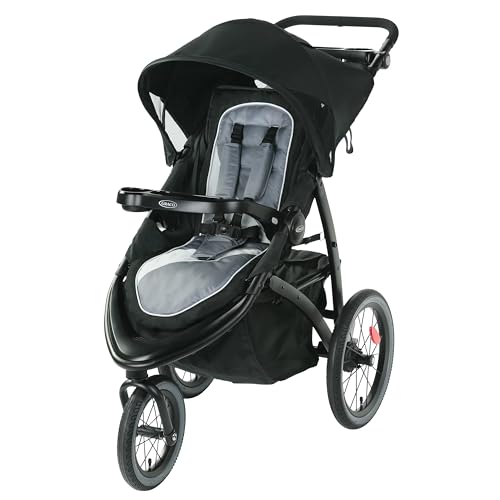 Graco FastAction LX Jogger Stroller Graco FastAction LX Jogger Stroller | Convenient One-Hand Fold: Graco's signature FastAction one-second, one-hand… ICS Compatible: Converts into a lightweight ICS carrier. Child-Friendly Tray: Comes with a tray featuring a… | Check price |
As an Amazon Associate we earn from qualifying purchases at no extra cost to you.
Compare the main picks
| Stroller | Wheel setup | Approx. weight | Best fit | Trade-off |
|---|---|---|---|---|
| Thule Urban Glide 3 | 16-inch rear, 12-inch front; swiveling front wheel locks for running | About 26 lb | Pavement, paved trails, and runners who fold or lift the stroller often | Less suited to very rough, rocky routes than a more trail-focused setup |
| BOB Gear Revolution Flex 3.0 | 16-inch rear, 12.5-inch front; front wheel locks for running | About 28.5 lb | Mixed surfaces and routes with bumps, gravel, or packed dirt | Bulkier and heavier to carry or store |
| Fixed-front-wheel jogging stroller | Typically 16-inch rear and front wheels | Varies by model; often around 25–30 lb | Long, straight, relatively even routes where tracking stability comes first | Harder to steer through tight turns and everyday errands |
Weights and specifications can vary by model year and configuration. Treat these figures as comparison points, then confirm exact dimensions and features on the manufacturer’s current product page. A locked swiveling wheel can be versatile, but it is not identical to a permanently fixed wheel.
Choose by your route and routine
| Your situation | What to prioritize | Good direction |
|---|---|---|
| Mostly smooth sidewalks or paved paths | Lower carry weight, easy fold, lockable front wheel | Thule Urban Glide 3 or a comparable lightweight, air-filled-tire jogger |
| Cracked pavement, packed dirt, or park trails | Large pneumatic tires, adjustable suspension, secure tracking | BOB Gear Revolution Flex 3.0 or a similar trail-capable jogger |
| Long straight runs with few turns | Strong directional stability and a front wheel that stays aligned | Fixed-wheel design, if its limited maneuverability suits your routine |
| Apartment, stairs, or frequent car loading | Folded dimensions, lift weight, wheel removal, storage footprint | Compare folded size and lifting points before choosing; the lightest model is not always the easiest to carry |
How wheel size, suspension, and weight change the ride
Wheel size and tire type
Large wheels help a stroller roll over small obstacles rather than drop sharply into them. A common jogging-stroller setup uses rear wheels around 16 inches and a front wheel around 12 inches. That combination balances rolling comfort with turning ability. Larger wheels are especially useful on broken pavement and packed trails, but they increase the folded footprint and can make storage harder.
Air-filled tires cushion the ride and suit uneven surfaces, but they can lose pressure or puncture. Check tire pressure regularly and keep a repair plan in mind. Foam-filled or other non-pneumatic tires reduce flat-tire concerns, though ride feel and availability depend on the particular stroller.
Suspension and stability
Suspension absorbs some vibration before it reaches the seat. It helps on bumpy routes, but does not make a jogging stroller appropriate for every trail: deep sand, loose stones, and steep or narrow terrain can still compromise control. An adjustable suspension can help accommodate different loads, but the stroller’s recommended child-weight range and setup instructions take priority.
For running, front-wheel behavior is crucial. A swivel wheel makes daily steering easier; it should be locked for running if the manufacturer directs. Some strollers let you adjust tracking so the stroller rolls straight without constant correction. Test that adjustment at walking speed in a safe, open area before running.
Weight, folding, and the daily lift
A difference of two or three pounds may feel minor on a run but noticeable when lifting a stroller into a trunk, carrying it up stairs, or folding it one-handed. Measure the car’s cargo opening and the stroller’s folded length, width, and height—not just the product’s standing dimensions. Check whether wheels detach easily if you need a smaller storage package. In a small entryway, the folded stroller may take more usable floor space than its narrow frame suggests.
Buying checks that prevent a poor fit
- Confirm running eligibility. Some stroller makers set a minimum age or require a particular accessory before running. Do not infer running readiness from a child’s ability to sit upright; follow the model’s age and use guidance.
- Check the total load limit. Compare the child’s current weight and expected growth with the stroller’s stated maximum, and account for any manufacturer limits on cargo-basket or accessory loads.
- Inspect the harness and brake. Look for a secure five-point harness, an accessible parking brake, and—if supplied or recommended—a wrist strap. Use each as instructed.
- Consider route width. Measure narrow doorways, gates, and storage spaces. A jogging stroller can be much wider than a standard compact stroller, and its large rear wheels may be the limiting point.
- Plan for upkeep. Air-filled tires need pressure checks; all designs benefit from cleaning grit from moving parts and checking brakes, fasteners, and wheel attachment points periodically.
Bottom line
For a mix of sidewalks and paved paths, start with a lighter swivel-front model such as the Thule Urban Glide 3. For rougher everyday routes, favor the larger-tire, suspension-focused feel of the BOB Gear Revolution Flex 3.0. Choose a fixed-front-wheel stroller only when its straight-line control matters more than quick turns and errands. Before buying, verify current specifications, child-use guidance, folded dimensions, and whether the stroller is manageable in your car and home.