Key takeaways
- Bi-metal wood-and-metal blade: the most versatile option for nails, screws, wood, and thin metal.
- Fine-tooth wood blade: better for clean cuts in door casing, baseboard, and cabinet panels.
- Carbide-grit blade: useful for grout, cement board, and abrasive materials.
- Rigid scraper: removes adhesive, caulk, paint, and vinyl flooring, but can gouge soft substrates.
- Sanding pad and paper: reaches inside corners and around balusters where a rectangular sander cannot.
- Depth guide: helpful when undercutting a jamb or making repeated cuts at the same depth.
The best oscillating multi tools for home projects are the DEWALT DCS356 for most cordless users, the Milwaukee M18 FUEL 2836-20 for demanding renovation work, and the corded FEIN MultiMaster MM 500 Plus when sustained cutting matters more than portability.
An oscillating multi-tool can undercut door casings, trim flooring, remove grout, scrape adhesive, sand corners, and make plunge cuts where a circular saw or reciprocating saw is too large. The right choice depends less on maximum oscillation speed than on how well the tool controls vibration, changes blades, manages heat, and fits the batteries and accessories you already own.
Our top picks
 JORGENSEN Corded Oscillating Multi Tool
- 5° Oscillating Angle: 5° oscillating angle makes working…
- 16-piece Electric Multitool Accessories: Includes 1-5/16" Flush-Cut Wood…
- Quick Change: JORGENSEN vibrating saw achieve quick change…
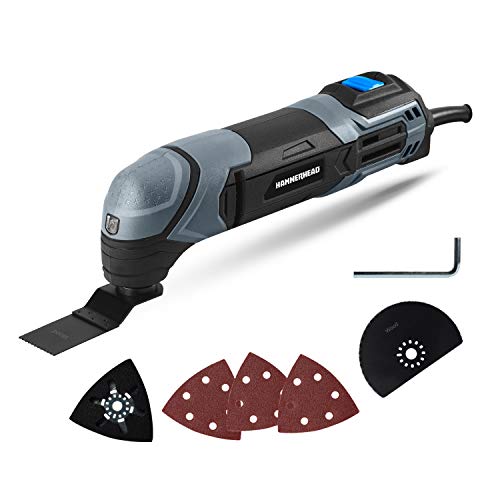 Hammerhead 2.2-Amp Oscillating Multi-Tool with 1pc Flush
- Powerful Motor - The 2
- Ergonomic Design - Compact size and ergonomic soft…
- Variable Speed Dial
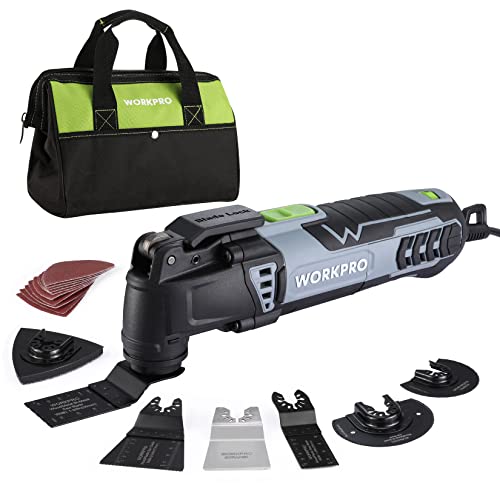 WORKPRO 3.0 Amp Corded Oscillating Multi-Tool Kit
- Powerful Oscillating Saw: The 3.0 Amp motor of…
- Multi-Speed Adjustment: With 7 speed settings ranging from…
- Tool-Less and Universal Fit: Replacing accessories is quick…
| Product | Key specs | |
|---|---|---|
| JORGENSEN Corded Oscillating Multi Tool | 5° Oscillating Angle: 5° oscillating angle makes working… 16-piece Electric Multitool Accessories: Includes 1-5/16" Flush-Cut Wood… Quick Change: JORGENSEN vibrating saw achieve quick change… | Check price |
| Hammerhead 2.2-Amp Oscillating Multi-Tool with 1pc Flush | Powerful Motor - The 2 Ergonomic Design - Compact size and ergonomic soft… Variable Speed Dial | Check price |
| WORKPRO 3.0 Amp Corded Oscillating Multi-Tool Kit | Powerful Oscillating Saw: The 3.0 Amp motor of… Multi-Speed Adjustment: With 7 speed settings ranging from… Tool-Less and Universal Fit: Replacing accessories is quick… | Check price |
 DEWALT 20V MAX XR Oscillating Multi-Tool Cordless DEWALT 20V MAX XR Oscillating Multi-Tool Cordless | The 3-speed selector of DEWALT 20V tools allows… Brushless motor of DEWALT oscillating tool delivers up… Dual-Grip variable speed trigger of DEWALT cordless tools… | Check price |
As an Amazon Associate we earn from qualifying purchases at no extra cost to you.
Quick comparison: corded versus cordless
| Tool | Power type | Speed range | Vibration control and handling | Best fit |
|---|---|---|---|---|
| DEWALT DCS356 | 20V cordless | 0–20,000 OPM | Variable-speed trigger, compact head, tool-free accessory change | General repairs, trim, flooring, and occasional remodeling |
| Milwaukee M18 FUEL 2836-20 | 18V cordless | 0–18,000 OPM | Brushless motor, speed control, designed for reduced vibration | Frequent cutting, demolition, and thick materials |
| Makita XMT04 | 18V cordless | 0–20,000 OPM | Soft-start behavior, electronic speed control, Star Protection electronics | Controlled plunge cuts and longer remodeling sessions |
| FEIN MultiMaster MM 500 Plus | Corded | Up to about 19,500 OPM | Low-vibration design and steady mains power | Grout removal, restoration, and continuous use |
| RYOBI 18V ONE+ HP PBLMT51 | 18V cordless | Variable-speed operation | Brushless motor, tool-free clamp, broad battery ecosystem | DIY homeowners building an affordable tool system |
OPM means oscillations per minute, not revolutions per minute. More OPM can make a clean cut in soft wood or plastic, but a lower setting is usually easier to control in metal, grout, painted trim, and delicate finish work.
Best picks by project and household
| Your situation | Best choice | Why | What to watch |
|---|---|---|---|
| Small apartment or condo | Compact cordless model such as the DEWALT DCS356 | No extension cord across a narrow room; useful for baseboard, cabinet, and flooring repairs | Noise and dust are still significant indoors; use extraction and work during permitted hours |
| Kids and pets | Cordless brushless model with a variable-speed control | Fewer trip hazards and better control around occupied rooms | Remove the battery before setting the tool down and keep blades locked away |
| Renter making reversible repairs | Compact cordless tool with fine-tooth wood blades and scraper accessories | Suitable for small trim adjustments, adhesive removal, and shelving modifications | Obtain permission before cutting cabinets, doors, or flooring |
| Back, wrist, or hand fatigue | Low-vibration corded FEIN or a well-balanced cordless tool with a small battery | Balance and vibration matter more than peak power during overhead or detail work | A large high-capacity battery can make a compact tool noticeably tiring |
| Whole-room renovation | Milwaukee M18 FUEL or Makita XMT04 | Brushless motors, strong cutting performance, and batteries suited to repeated use | Budget for several batteries if you cannot charge between tasks |
| Maximum continuous cutting | FEIN MultiMaster MM 500 Plus | No battery swaps, no declining output as the pack discharges | You need a safe outlet, a suitable extension cord, and careful cord management |
How the important differences affect real work
Cutting speed
A high top speed helps with thin wood, drywall, plastic, and finish carpentry, but it does not automatically make a tool faster. Blade sharpness, tooth design, pressure, and the tool’s ability to maintain speed under load matter just as much. Brushless cordless models generally hold their speed better than basic brushed tools when cutting door jambs or dense hardwood.
For a clean plunge cut in a cabinet side or baseboard, start slowly and let the teeth establish the cut. For grout, use a diamond or carbide-grit accessory at a controlled speed. Pushing harder to compensate for a dull blade creates heat, vibration, and ragged edges.
Vibration control and balance
Oscillating tools naturally transmit rapid movement into the handle. A tool that feels acceptable for a two-minute cut may become uncomfortable during 30 minutes of grout removal. Look for a slim grip, balanced battery position, soft-start behavior, and a housing designed to isolate the motor from the handle.
Hold the tool with two hands when accuracy permits, but do not clamp it tightly. A relaxed grip reduces fatigue and allows the accessory to do the cutting. Hearing protection, eye protection, and a dust mask or respirator appropriate to the material are sensible for nearly every indoor project.
Blade-change systems
Tool-free clamps are a major convenience when switching from a wood blade to a scraper or sanding pad. DEWALT, Milwaukee, Makita, FEIN, and RYOBI offer models with fast accessory-change mechanisms, although the exact clamp design differs. A lever that is easy to operate while wearing gloves is valuable during demolition.
Check compatibility before buying accessories. Many current tools accept OIS-style accessories, while some systems also use Starlock or Starlock Plus fittings. Starlock accessories can provide a secure connection and efficient power transfer, but they may cost more and are not interchangeable with every open-mount blade.
Battery runtime
Runtime varies widely with blade type and material. A compact 2.0Ah battery may be enough for several door-jamb cuts or short trim repairs, while grout removal and repeated plunge cuts can drain it quickly. A 4.0Ah or 5.0Ah pack lasts longer but adds weight at the back of the tool.
| Task | Typical battery demand | Practical battery choice |
|---|---|---|
| Three to six trim or door-jamb cuts | Low | 2.0Ah compact pack |
| Several feet of flooring undercutting | Moderate | 3.0Ah–5.0Ah pack |
| One bathroom of grout removal | Moderate to high | At least two charged packs or a corded tool |
| Repeated hardwood or metal cuts | High | 5.0Ah pack and a spare, with breaks for blade cooling |
These are planning estimates rather than guaranteed cut counts. A clogged accessory, dense material, or aggressive pressure can reduce runtime substantially.
Accessories that are worth buying
- Bi-metal wood-and-metal blade: the most versatile option for nails, screws, wood, and thin metal.
- Fine-tooth wood blade: better for clean cuts in door casing, baseboard, and cabinet panels.
- Carbide-grit blade: useful for grout, cement board, and abrasive materials.
- Rigid scraper: removes adhesive, caulk, paint, and vinyl flooring, but can gouge soft substrates.
- Sanding pad and paper: reaches inside corners and around balusters where a rectangular sander cannot.
- Depth guide: helpful when undercutting a jamb or making repeated cuts at the same depth.
Included accessory kits vary. A kit with many low-quality blades may be less useful than a bare tool paired with two or three durable accessories matched to your project. Blades are consumables: teeth dull first, then cutting slows and vibration rises.
Buying and setup details homeowners often miss
Measure the working clearance around the job before choosing a tool. For undercutting a door casing, you typically need only a few inches of side access, but the tool body and battery still need room to sit flat. In a tight cabinet opening or between a wall and vanity, a compact battery and short accessory can make the difference between a straight cut and a damaged finish.
Plan for dust. Oscillating tools create fine particles when sanding drywall, removing grout, or cutting cement board. A universal dust-extraction attachment can help where available, but it will not eliminate airborne dust. Seal nearby drawers and vents, protect finished flooring, and vacuum rather than sweeping.
For durability, the accessory clamp and gear head usually experience more abuse than the motor. Avoid twisting the blade sideways, do not use a wood blade as a pry bar, and let the accessory cut at its own pace. If a cordless tool becomes hot, remove the battery and allow both tool and pack to cool before continuing.
Bottom line
Choose the DEWALT DCS356 if you want a versatile, widely supported cordless tool for normal home repairs. Choose the Milwaukee M18 FUEL 2836-20 or Makita XMT04 for heavier remodeling and frequent cutting within those battery systems. Choose the FEIN MultiMaster MM 500 Plus when low vibration and uninterrupted corded power justify giving up cordless convenience. Whichever model you select, spend as much attention on the correct blade, battery size, and dust control as on the tool itself.