Key takeaways
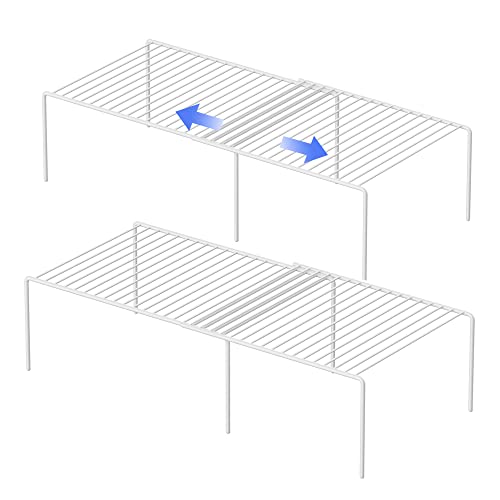
- Use an expandable metal rack, such as the Redrubbit 4-piece set or the Tomorotec stainless shelf, to create stepped levels so back-row items are visible instead of buried.
- Store lids vertically in a divided holder rather than nesting them inside pots.
- Keep like-with-like in clear bins so a single pull brings the whole group forward.
- Reserve the very back of deep shelves for seasonal or rarely used gear.
Most kitchens do not have a storage shortage; they have a wasted-space problem. The gap of dead air above a stack of plates, the deep cabinet where pans disappear into the back, the cupboard under the sink swallowed by pipes and half-empty bottles, all of it adds up to cabinets that feel full while holding surprisingly little. Reclaiming that vertical and hidden space is what real organization is about.
This guide walks through a practical, room-by-room method for turning cluttered cabinets into a system you can actually maintain, using shelf risers, expandable racks, and pull-out organizers that do the heavy lifting. No renovation required, just a weekend and a plan.
Our top picks





As an Amazon Associate we earn from qualifying purchases at no extra cost to you.
⚡ Save on Your Next PC — Amazon Prime
Prime members get fast free shipping on the systems above, plus early access to Prime Day & Black Friday PC deals. New members get a 30-day free trial.
Watch: How to Organize Your Kitchen Cabinets for Maximum Space Efficiency — Video Review
Start by Emptying and Grouping
Pull everything out of one cabinet at a time. Group items by how often you use them, not by category. Daily plates and glasses belong at eye level and arm’s reach; the waffle iron you use twice a year goes up high or in a back corner. Be honest about duplicates and chipped pieces, and set aside anything you have not touched in a year to donate.
Add Vertical Layers with Shelf Risers
The single biggest gain in most cabinets comes from stacking upward. A shelf riser doubles the usable height above a stack of plates or bowls, letting you store two groups where one sat before. Stackable metal shelves like the Amazon Basics organizer or a Greenbrier wire rack set turn that empty headroom into a second tier without tools.
Tame Deep Cabinets with Expandable Racks
- Use an expandable metal rack, such as the Redrubbit 4-piece set or the Tomorotec stainless shelf, to create stepped levels so back-row items are visible instead of buried.
- Store lids vertically in a divided holder rather than nesting them inside pots.
- Keep like-with-like in clear bins so a single pull brings the whole group forward.
- Reserve the very back of deep shelves for seasonal or rarely used gear.
Conquer the Under-Sink Cabinet
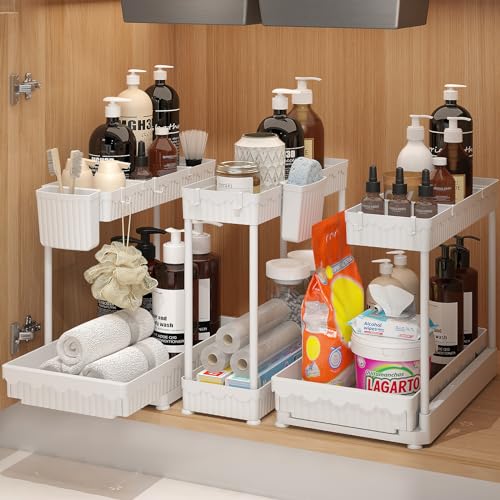
The under-sink cabinet is the hardest space in the kitchen because of the plumbing. Two-tier pull-out organizers that slide around the pipes, like the mesh pull-out shelf or the Sevenblue L-shaped sliding drawers, turn that awkward cave into accessible storage. Keep cleaning supplies here in a caddy you can lift out whole when you need to scrub.
Organize Pantry Cabinets by Zone
Treat pantry cabinets like a small store. Decant staples into uniform containers, group snacks, baking, and canned goods into labeled zones, and use a set of stackable ClearSpace-style bins so nothing gets lost behind a taller box. Front-load what you reach for daily.
Tips
- Store heavy items low and light items high to keep the cabinet stable and safe.
- Leave a little breathing room; a cabinet packed to 100% capacity becomes disorganized within a week.
- Use the inside of cabinet doors for measuring spoons, foil, or a lid rack.
- Label bins and shelves so everyone in the house returns things to the right spot.
Frequently Asked Questions
How do I organize a small kitchen with few cabinets?
Go vertical and go hidden. Shelf risers double usable height, under-sink pull-outs recover dead space, and door-mounted racks add storage that costs no shelf space at all. Ruthless editing of duplicates also frees more room than any gadget.
What is the best way to store pots and pans?
Store lids separately in a vertical holder and nest pots by size, or use an expandable rack so each pan sits on its own level. This stops the endless clang of digging through a stacked pile.
How often should I reorganize my cabinets?
A full reset once or twice a year is plenty if you maintain the system. The key is putting items back in their assigned zone daily, which prevents the slow drift back into chaos.
Are cabinet organizers worth buying?
Yes, when they target wasted space. Risers, expandable racks, and pull-out shelves pay for themselves by making a cabinet hold noticeably more while keeping everything visible and reachable.
Conclusion
Efficient cabinets come from a simple sequence: empty, group by frequency, then add vertical layers and pull-outs to reclaim the dead space you already own. Start with one cabinet, prove the system works, and repeat. With a few well-chosen risers and organizers, even a modest kitchen can store far more while staying tidy enough to keep.