A small kitchen is not organized when every cabinet is full. It is organized when common tasks require fewer steps, essential items are visible, and doors can open without conflict. Adding containers before deciding what belongs in the room often creates another layer of clutter. A zone-by-zone plan begins with cooking behavior and assigns each item to the safest, most useful location.
The zones below can overlap in a compact room. The goal is not a perfect showroom layout but a repeatable system that keeps counters usable and storage easy to reset.
Our top picks


As an Amazon Associate we earn from qualifying purchases at no extra cost to you.
Use pull-out pantry shelves only where their opening and load requirements support the zone plan. For authoritative food-storage boundaries, consult the USDA food-safety basics, especially when reorganizing ingredients near heat, moisture, or cleaning products.
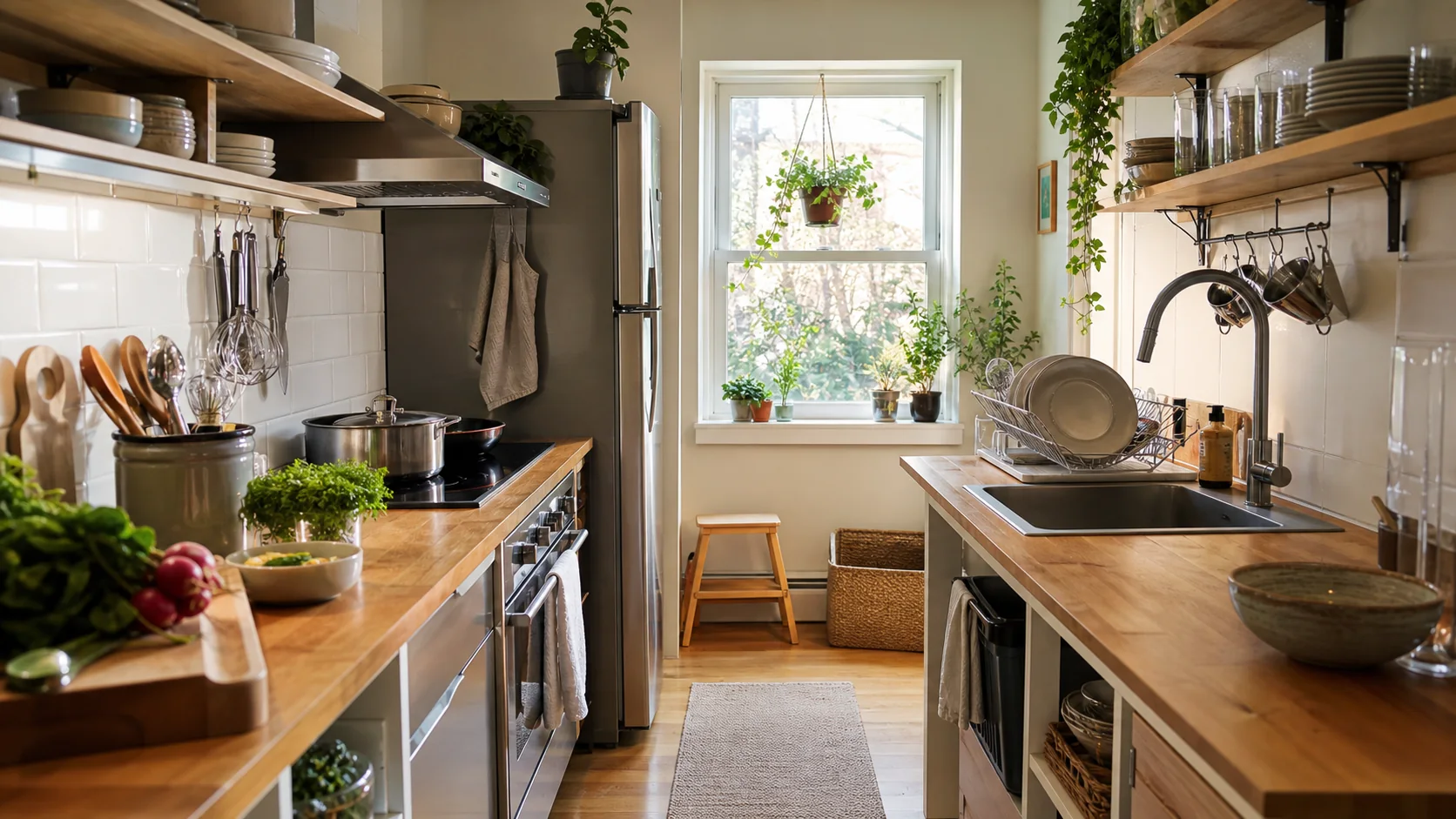
Begin with an Honest Inventory
Empty one category at a time and group duplicates. Keep the best version of tools that perform the same job unless the household truly uses several at once. Move seasonal serving pieces, bulk food, and rarely used appliances outside the kitchen if dry, safe storage is available.
Discard expired food and damaged utensils appropriately. Review appliance cords, cracked containers, and chipped cookware for safety. Do not donate unsafe items. Measure large keepers before purchasing shelf risers or bins.
Classify items as daily, weekly, occasional, or backup. Daily items deserve the easiest locations. Occasional tools can occupy high shelves. Backups should not displace active ingredients from the main food zone.
Build the Food Storage Zone
Keep everyday dry goods near the primary prep surface when possible. Group by use—breakfast, baking, snacks, grains, canned goods—rather than container shape. Clear or labeled bins prevent small packages from disappearing, but decant only when it improves identification and preserves required cooking and allergen information.
Use shelf risers for short cans and jars, and shallow pull-outs for deep cabinets. Heavy bottles belong low. Keep food away from heat and moisture sources, and follow label storage instructions. A narrow rolling cart can help only if it does not reduce the required passage or block ventilation.
Set a maximum back-stock quantity based on actual space. A “use first” bin reduces duplicate purchases and food waste.
Create a Clear Prep Zone
The main prep area needs an uninterrupted counter, cutting boards, knives, mixing tools, and access to waste. Store boards vertically in a divider and utensils in one drawer or rail that does not crowd the work surface. Keep knives in a secure block, drawer insert, or magnetic holder installed away from children’s reach.
Only daily appliances should remain on the counter. Check ventilation requirements before placing an appliance under a cabinet or inside an appliance garage. Pulling a hot appliance forward for use may still expose cabinets or cords to heat.
If the prep counter is short, a sink cover or approved over-sink board may add temporary space, but it must be stable and leave safe access to water. A movable cart can supplement prep if its wheels lock and it does not obstruct exits.
Organize the Cooking Zone
Keep frequently used pots, pans, cooking utensils, oils, and spices near—but not dangerously close to—the range. Deep drawers make cookware visible; dividers can store lids vertically. Place heavy cast iron between knee and waist height when possible to reduce lifting strain.
Do not store oils or spices where persistent heat degrades them. Keep combustible towels, paper, and plastic away from burners. Avoid open shelves directly above a cooking surface unless the installation and materials are appropriate and easy to clean.
Use a utensil crock only if it does not steal needed landing space. A drawer insert can separate tools more efficiently. Store baking pans upright in a narrow cabinet or divider near the oven.
Make the Cleanup Zone Easy to Reset
The cleanup zone includes sink, dishwasher, dish storage, waste, and cleaning supplies. Dishes and glasses stored near the dishwasher reduce unloading steps. A compact drying rack that drains correctly is preferable to items permanently spread over the counter.
Under-sink storage must preserve access to shutoff valves and the trap. Use removable bins and inspect for leaks. Keep incompatible chemicals separate, retain labels, and use child-resistant storage where needed. Never mix cleaners.
Trash and recycling pull-outs save floor space but need regular cleaning and adequate cabinet ventilation. Confirm that the pull-out does not collide with the dishwasher door.
Plan Serving and Beverage Storage
Store mugs, tea, coffee, and related tools together near water and outlets, but outside the main prep zone if possible. A beverage station prevents multiple users from crossing the cooking path. Verify appliance electrical and ventilation requirements.
Everyday dishes should be reachable without a step stool. Serving platters can go higher, stored vertically when safe. Keep children’s dishes in a lower drawer if independent access is appropriate, away from knives and chemicals.
Use Doors and Walls Without Crowding Them
Cabinet-door racks can hold light wraps, lids, or cleaning tools if they clear shelves and hinges. Check hinge capacity and screw length. Wall rails and hooks keep selected tools visible, but install them into suitable backing and away from heat, splash, and head paths.
Use high wall space for light, occasional items—not heavy appliances. Freestanding tall storage needs anti-tip anchoring. Preserve access to electrical panels, outlets, ventilation, and plumbing.
Maintain the System
Label broad categories, not individual products, so the system can adapt. Leave some empty space in each zone; tightly packed storage is difficult to maintain. Reset counters nightly and review one zone monthly for duplicates or expired goods.
When a category repeatedly lands in the wrong place, move its storage closer to where it is used. Organization should adapt to behavior rather than demand unnecessary steps.
Plan for Accessibility and Changing Needs
A compact kitchen should not require frequent bending, overhead lifting, or reaching across a hot surface. Put the heaviest everyday tools between knee and shoulder height. Use D-shaped pulls or other hardware that is comfortable to grip, and make sure pull-outs do not trap a user against an opposing cabinet. If a household member cooks while seated, evaluate knee clearance, reachable controls, and a continuous work route with a qualified accessibility professional.
Temporary organizers should remain removable. A bin-based system can adapt when children grow, dietary needs change, or a new appliance arrives. Fixed dividers and specialty inserts may be worthwhile for stable routines, but measure the actual objects first. Leave one flexible shelf or drawer rather than assigning every inch permanently.
Lighting also affects organization. Contents cannot be returned consistently when deep cabinets are dark. Battery or hardwired cabinet lighting must be suitable for the location and installed without exposed cords or interference with shelves. Electrical work should meet local requirements. Good visibility, comfortable reach, and a small amount of spare capacity make the system easier to maintain than a tightly optimized arrangement.
Frequently Asked Questions
What should stay on a small kitchen counter?
Keep only items used nearly every day and required hand soap. Everything else should have a nearby home so the prep surface remains available.
How do I organize deep cabinets?
Use pull-out trays, handled bins, or large grouped items. Avoid multiple rows of small packages that hide one another.
Where should pots and pans go?
Place them close to the cooking zone, preferably in deep drawers or a lower cabinet with lids divided vertically.
Is vertical storage always better?
No. It improves visibility for trays and boards, but wall and high storage can create hazards or visual clutter. Use it selectively.
How often should kitchen organization be reviewed?
Reset daily, check food monthly, and reassess the full layout when routines, appliances, or household needs change.