A kitchen sink should be cleaned according to what its surface is, not according to the stain’s photograph. Stainless steel, glazed fireclay, porcelain enamel, granite or quartz composite, cast iron enamel, and copper react differently to acids, alkalis, abrasives, bleach, heat, and metal tools. The wrong “deep clean” can turn removable residue into permanent dullness or scratches.
Editorial method: This protocol is based on current manufacturer care resources reviewed on August 26, 2026, not on invented cleaning tests. Product formulas and finish instructions can change. Locate the sink brand, exact model, color, and care sheet before using anything stronger than mild dish soap and a soft cloth.
Our top picks


As an Amazon Associate we earn from qualifying purchases at no extra cost to you.
Set Three Cleaning Cadences
Daily rinse and dry
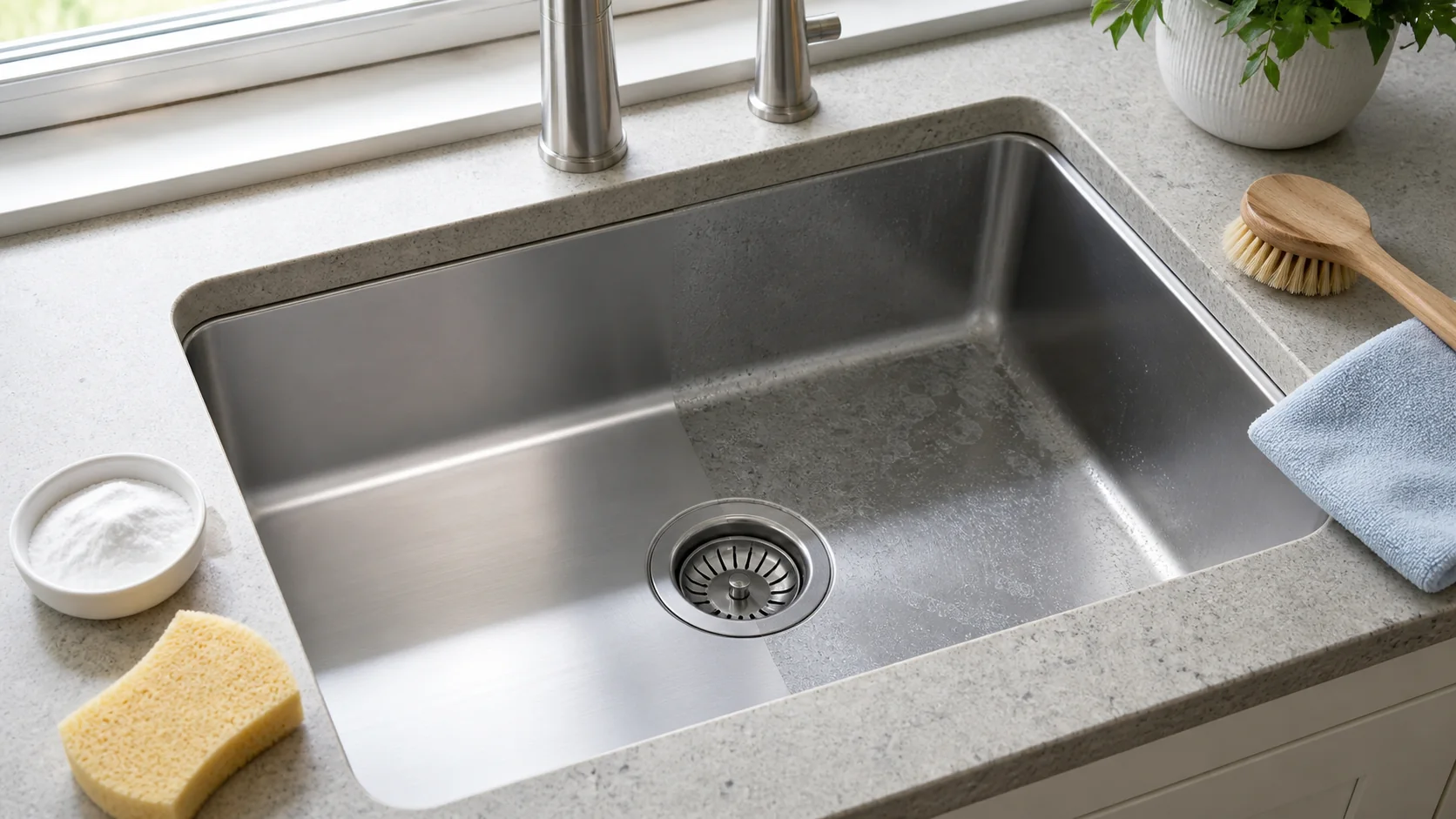
Remove scraps, rinse food acids and salt, wash with mild soap and a nonabrasive sponge, then rinse again. Drying reduces water spots and makes new damage visible. Lift the grid or mat rather than wiping only around it. Do not leave wet steel wool, cast-iron cookware, cans, dye, coffee, or tomato residue overnight.
Weekly reset
Remove strainers, grids, colanders, boards, and drain covers. Clean each accessory according to its own material. Wash beneath rubber feet and along the rim, faucet base, divider, drain flange, and caulk. Inspect the cabinet below while a full basin drains.
Targeted deep clean
Deep cleaning is stain-specific, not calendar-driven. Identify mineral film, grease, food pigment, transferred metal, rust, biological residue, or physical damage. Select one manufacturer-approved treatment, observe its dwell time, rinse completely, and reassess before escalating.
Stainless Steel: Follow the Grain
Elkay advises regular cleaning with mild detergent and water, followed by rinsing and drying. When the finish has a visible grain, move the cloth or approved pad in that direction. Circular scrubbing across brushed lines can create a conspicuous patch even when the steel remains structurally sound.
Rust-colored marks on stainless may be transferred iron from wet cans, steel wool, tools, or cookware. Do not reach for ordinary carbon-steel wool, which can embed more iron. Use only the sink maker’s approved stainless cleaner and tool. Persistent pitting, a deep gouge, or discoloration that returns without contact deserves manufacturer assessment.
Fireclay, Porcelain, and Enameled Cast Iron
These surfaces rely on a hard glazed or enamel layer. KOHLER’s care guidance emphasizes nonabrasive methods appropriate to the finish. Use a soft sponge for routine soil and protect the basin from impacts by heavy pots. An abrasive powder may remove a mark quickly while slowly reducing gloss.
Metal cookware can leave gray transfer lines that look like scratches. Diagnose them with an approved cleaner rather than a metal scraper. If a mark catches a fingernail, exposes a dark substrate, or shows rust at its center, it may be a chip. Cleaning cannot rebuild missing enamel.
Fireclay and enameled cast iron are not identical. Cast iron is heavy and can rust where enamel is breached; fireclay has a ceramic body and can chip at an impact. Follow the exact brand repair advice. Do not apply an automotive touch-up coating or improvised epoxy to a food-preparation sink without manufacturer approval.
Granite and Quartz Composite: Brand Formula Controls
Composite sink names describe mixtures of mineral filler and binder, not one universal recipe. BLANCO’s SILGRANIT guidance and Elkay’s Quartz Classic care information should be read for the exact product. A method approved for one composite color or formulation should not be silently transferred to another.
Dark composite often reveals pale mineral film; light colors can show coffee, tea, or food pigment. Begin with soap, water, and the specified sponge. For deposits, use only the brand-approved descaling procedure and time. Rinse all residue because dried cleaner can become the next apparent stain.
Avoid severe thermal shock. Do not set red-hot cookware in the basin or pour boiling liquid onto a very cold surface unless the manufacturer explicitly permits the condition. Oils or “revitalizers” can temporarily darken some surfaces but may create uneven sheen or collect soil; use only identified care products.
Copper: Decide Whether Patina Is the Finish
Copper naturally changes color through oxidation and use. Native Trails explains that living finishes develop patina, so uniform brightness may not be the intended outcome. Before cleaning, determine whether the sink is raw copper, waxed, sealed, plated, or otherwise finished.
Mild soap, water, rinsing, and drying are the conservative starting point. Acidic foods, harsh chemicals, and abrasive polishing can remove patina unevenly. A bright patch is not necessarily cleaner; it may be stripped finish that will age differently from the surrounding bowl.
Green or blue deposits, flaking coating, sharp corrosion, or an unknown sealant require maker guidance. Do not mix copper cleaners with drain products or food-preparation surfaces. Restoration of a specialty finish belongs to a qualified refinisher when the desired appearance cannot be reached through documented maintenance.
Chemical and Tool Compatibility Table
| Cleaner or tool | Potential risk | Decision rule |
|---|---|---|
| Chlorine bleach | Stainless corrosion, finish damage, dangerous reactions | Use only at stated dilution where the exact maker permits; never mix |
| Vinegar or acid descaler | Etching, binder or seal damage, stripped patina | Limit to approved material, concentration, and dwell time |
| Baking soda or abrasive powder | Changed sheen and fine scratches | Do not assume “natural” means nonabrasive |
| Steel wool or metal brush | Scratches and transferred iron | Avoid unless the manufacturer specifies an exact specialty tool |
| Melamine foam | Micro-abrasion on coatings and gloss | Test only when expressly approved |
| Drain opener | Chemical burns, fumes, sink and plumbing damage | Follow drain-product and plumbing instructions; never combine products |
Keep products in original labeled containers and ventilate the room. Never mix bleach with ammonia, acids, vinegar, or another cleaner. If an unexpected reaction, fumes, skin exposure, or eye contact occurs, leave the area and follow the product label and appropriate local poison-control or emergency guidance.
Mineral Deposits and Stain Triage
- Photograph the dry mark and note its location.
- Wet it with plain water and observe whether color or contrast changes.
- Feel gently with a cloth; do not scrape.
- Identify likely source: evaporated droplets, food, transferred metal, rust, dye, or damage.
- Consult the exact care guide.
- Apply the mildest listed method to a small inconspicuous zone.
- Stop when gloss, texture, or color changes.
Hard-water scale usually forms at repeated wet-dry edges around drains, faucets, racks, and standing droplets. Drying slows accumulation. When deposits cover several fixtures, test the water and evaluate treatment separately. A stronger sink cleaner does not change incoming hardness.
A stain has material on or near the surface; a scratch, chip, etch, burn, delamination, or worn coating is altered material. Repeated scrubbing cannot clean away missing glaze. Correct diagnosis prevents escalating from a cosmetic mark to a larger damaged patch.
Drain, Disposal, Overflow, and Seal Hygiene
Clean the basket strainer, stopper, grid feet, and removable drain cover with methods safe for their separate finishes. Food residue collects underneath accessories. If the sink has an overflow, use only its manufacturer-approved access procedure; blindly pushing tools into a hidden channel can damage connections.
Switch disposal power off before cleaning removable splash-guard surfaces, and follow the disposal maker’s instructions. Never put a hand into the grinding chamber. Persistent odor may come from trapped food, a leaking trap, an overflow, or a plumbing defect; fragrance does not diagnose the source.
Inspect caulk and undermount joints while the area is clean and dry. Separation, recurring dark growth, or moisture below can indicate a failed seal or leak. Surface cleaning is temporary until the moisture source is corrected and the joint is properly repaired.
Restoration, Repair, or Replacement?
Professional restoration may be reasonable for controlled stainless refinishing, solid-surface sanding, copper patina work, or repair systems approved for a specific enamel or composite sink. Request a sample area and understand whether color, sheen, texture, food-contact suitability, and warranty will change.
Repair is more urgent when a chip exposes cast iron, a crack travels through fireclay or composite, an undermount rim separates, corrosion perforates metal, or a drain flange will not seal. Stop using a sink when leakage damages cabinetry or when a sharp edge creates an injury risk.
Replacement becomes well-supported when structural cracks grow, repairs repeatedly fail, the bowl cannot be hygienically maintained, mounting support is compromised, or refinishing cost and downtime exceed a compatible new installation. Confirm the countertop cutout before assuming a different sink will fit.
Coordinate the next decision with the identify the sink material and its tradeoffs.
Frequently Asked Questions
Can baking soda clean every kitchen sink?
No. It is mildly abrasive and can change sheen or affect coatings. Use it only where the exact sink manufacturer approves the method.
Why does my stainless sink look rusty?
Transferred iron is common, but true corrosion can occur. Remove nearby metal objects, follow the maker’s stain method, and seek support if pitting or unexplained rust returns.
Should a black composite sink be oiled?
Only if its manufacturer lists a specific approved product and procedure. Generic oil can create uneven appearance, residue, or soil attraction.
How often should the sink grid be removed?
Lift and clean under it at least weekly, more often after raw food, heavy soil, or standing water. Wash the grid according to its own material.
Can bleach and vinegar be used one after another?
Never mix them or apply them without fully rinsing and following labels; their reaction can release dangerous chlorine gas. Prefer one approved product and good ventilation.
Use the Mildest Method That Solves the Identified Soil
Daily rinsing, gentle soap, and drying prevent more damage than occasional aggressive scrubbing. Identify the material, isolate the stain, follow the manufacturer, and stop when the surface itself begins to change. A clean sink should retain its intended finish, sound mounting, dry cabinet, and serviceable drain.
Sources
- Elkay official product page
- Kohler support guidance
- BLANCO cleaning and care guidance
- native-trails.com official product page