Kitchen cabinet maintenance begins with identification. Painted wood, stained wood, laminate, and thermofoil use different coatings, adhesives, and repair methods. A cleaner safe for one can haze, soften, or delaminate another. Record the brand, material, finish, and hardware series before cleaning or touch-up.
A practical cabinet calendar
| When | Cabinet boxes and fronts | Hardware and risk zones |
|---|---|---|
| After cooking | Blot water, oil, sauce, and steam condensate | Dry sink-base edges and dishwasher or oven neighbors |
| Weekly | Remove fingerprints and new grease with the approved method | Wipe pulls; listen for scraping or loose movement |
| Monthly | Inspect seams, lower edges, toe kicks, and finish wear | Check hinges, slides, mounting screws, plumbing, and appliance seals |
| Seasonally | Clean cabinet tops and ventilation grilles; compare door gaps | Review sink leaks, range-hood performance, heat shields, and drawer loads |
| Immediately | Investigate swelling, peeling, bubbling, cracking, or musty odor | Unload a failing drawer and stop active water or heat exposure |
Frequency follows exposure. Range, sink, dishwasher, kettle, and oven neighbors need shorter cycles than a dry pantry. Act immediately when water reaches an edge or thermofoil lifts.
Our top picks



As an Amazon Associate we earn from qualifying purchases at no extra cost to you.
Use a finish-specific cleaning method
Painted wood or painted engineered panels
Start with a soft cotton cloth dampened—not saturated—with warm water. For grime, MasterBrand specifies a mild mixture of 5 percent dishwashing liquid and 95 percent clean warm water in its cabinet care instructions. It then directs owners to wipe painted or stained cabinetry with a clean damp cloth and dry it with another soft cloth. That ratio belongs to MasterBrand’s documented products; use another brand’s manual when available.
Paint can polish where rubbed aggressively. Avoid abrasive pads and powders. KraftMaid notes that wood expansion may reveal finish lines at joints without weakening them. Moisture-softened substrate or spreading paint loss needs investigation.
Stained wood
Clean with the grain and minimize liquid at joints. Natural wood changes color with age, and end grain absorbs stain differently. Compare questionable areas with protected surfaces before applying solvent or stain.
Wax and polish are not universally beneficial. MasterBrand says its cabinets do not require either and warns that buildup may become hazy, streaked, or yellowed. Some other finish makers publish their own polish recommendation. Never combine contradictory care systems; follow the maker of the finish actually installed.
Laminate and high-gloss fronts
MasterBrand requires microfiber for drying its laminate and high-gloss cabinetry. Keep moisture from seams and exposed substrate. A resistant face does not make edge adhesive or surrounding paint solvent-safe.
Thermofoil
Thermofoil is a PVC film bonded with heat and pressure to a shaped medium-density fiberboard component, as MasterBrand describes. Clean the film gently and dry edges promptly. Heat and steam can challenge the bond, especially beside ovens, dishwashers, coffee makers, and countertop appliances. Do not aim a heat gun or household iron at lifting foil; uncontrolled heat can distort film, damage adhesive, or create a fire risk.
Remove grease before it becomes a finish repair
Fresh grease is easier to remove than a polymerized film. Blot a splatter rather than spreading it, then use the finish maker’s diluted cleaner on a cloth. Work a small area, rinse if directed, and dry. MasterBrand warns that prolonged contact with food, water, grease, and oil can permanently damage or discolor a cabinet finish.
Do not spray cleaner directly toward door seams, glazing, glass-door mullions, hinges, or the underside of a counter. Apply it to the cloth. Increase dwell time or chemical strength only when the manufacturer allows it. The dedicated kitchen cabinet cleaning guide can support a room-wide cleaning sequence without mixing finish categories.
Control water, steam, and appliance heat
At the sink base, place dry paper beneath supply valves, hose connections, disposal, dishwasher branch, trap, and drain. Test the faucet, filled sink, drain, disposal, and dishwasher separately. A dark bottom panel or musty odor requires source diagnosis before cosmetic repair. Swollen particleboard does not regain its original thickness when dry, and weakened material may no longer hold a hinge or fastener safely.
Inspect the dishwasher gasket and confirm steam is not repeatedly venting against a door edge. Keep kettles, multicookers, and coffee makers from discharging vapor beneath wall cabinets. During an oven self-clean cycle, cabinet heat exposure can rise sharply. KraftMaid advises removing adjacent or overhead cabinet doors and drawers during that cycle because an appliance seal may be compromised, and it offers a heat shield for oven side panels. Follow the cabinet and appliance instructions for the actual installation.
Adjust hinges only after checking the cabinet
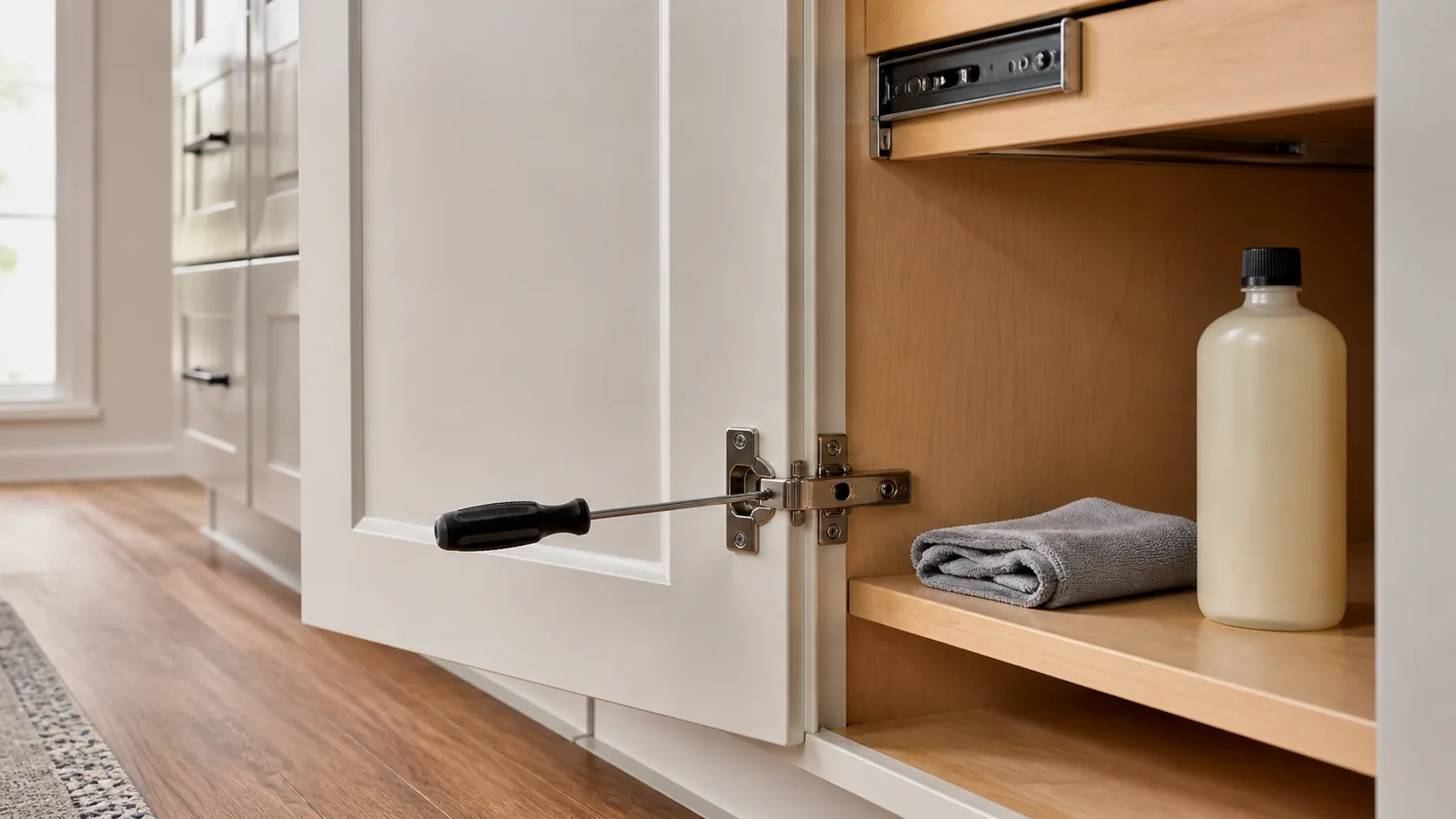
A rubbing door may result from a loose mounting plate, overloaded shelf, cabinet racking, moisture swelling, or hinge adjustment. Empty the cabinet, verify the box is stable, and identify the hinge by logo and number. Tighten loose mounting screws carefully; stop if they spin in damaged material.
Blum’s COMPACT BLUMOTION resources show distinct side, height, and depth controls. Other concealed hinges place those controls differently. Mark the starting position, support the door, and turn one adjustment in small increments. Maintain even reveals without forcing the door against its neighbor. A broken hinge cup, cracked door stile, bent arm, or stripped mounting location calls for compatible replacement or cabinet repair rather than further adjustment.
Diagnose drawer slides before changing alignment
Unload the drawer and remove crumbs or objects obstructing the runners. Confirm the cabinet is square and both runners are secure, parallel, and level. Blum’s MOVENTO instructions direct installers to check runner level, perpendicularity to the cabinet face, and parallel alignment; its systems can include side, height, depth, and tilt adjustments.
Use only the controls documented for the installed slide. Adjust both sides where the manual requires it, then test the empty drawer before reloading gradually. A sagging bottom, cracked locking device, bent runner, missing fastener, or drawer that contacts plumbing is not solved by chasing the front gap. Reducing clutter with the guide to organize a deep kitchen cabinet may also prevent recurring overload.
Know the limits of finish touch-up
Touch-up disguises small cosmetic defects; it does not rebuild substrate, rebond broad thermofoil, or stop moisture. Match the original brand, finish code, and sheen, then test discreetly.
KraftMaid describes its painted-cabinet touch-up pens as suitable for minor worn spots, scuffs, and scratches. It recommends evaluating whether the damage is repairable and seeking repainting or professional help for larger areas. Its process includes blending sheen with the specified pad, applying light strokes, and allowing the touch-up to dry before an optional compatible clear coat. Do not copy that sanding or coating sequence onto foil, laminate, or an unidentified finish.
For stained wood, a matching marker can restore color in a tiny scratch while a compatible fill stick can address a small nick. A mismatched stain, excessive clear coat, or repair across a large sun-faded panel may become more visible than the original defect. Preserve natural grain differences rather than painting every variation.
Seasonal checks reveal slow failures
At each season change, compare door gaps and drawer alignment with earlier photos; inspect toe kicks, sink-base corners, cabinet tops, crown joints, and exposed sides. Verify wall attachments remain firm, appliance ventilation is clear, the range hood captures cooking vapor, and no supply or drain joint is damp. Clean dust from accessible hardware without flooding lubricant onto wood.
Watch for widening finish cracks, repeated hinge drift, rusty hardware, foil bubbles, edge-band separation, softened shelves, insect evidence, or odor. Seasonal movement in sound wood can be normal, but progressive distortion, dampness, and lost fastener grip are not.
Repair or replacement triggers
Cleaning suits intact finishes; adjustment suits sound hardware mounted in solid material; touch-up suits small stable blemishes. Seek professional refinishing when a large painted or stained area must match adjacent aged doors. Ask the original supplier about replacement doors when thermofoil delamination is broad or heat-distorted.
Replace structural parts when swelling, rot, or splitting compromises load paths; a cabinet detaches from the wall; shelves or drawer bottoms fail; mold or contaminated water reaches porous materials; or plumbing cannot remain accessible and dry. When repair expands into layout, appliances, counters, and several cabinet boxes, use the kitchen upgrade budget guide to compare scope instead of paying repeatedly for isolated cosmetic patches.
Frequently asked questions
Can dishwashing liquid clean every cabinet finish?
No. A documented dilute mixture is suitable for some brands, but concentration, coating, and edge construction matter. Confirm the installed cabinet’s care instructions first.
Should cabinet doors be disinfected with bleach?
Only if the finish manufacturer approves the product and concentration. Routine soil removal and disinfection are different tasks, and bleach can discolor finishes or attack hardware.
Can peeling thermofoil be glued back with household adhesive?
Not reliably without knowing the film and substrate system. Heat damage, degraded adhesive, or swollen MDF can make a local bond unsafe or conspicuous. Ask the cabinet supplier about an approved repair or replacement front.
Why do adjusted doors become uneven again?
Recurring drift suggests loose mounting plates, stripped screw holes, cabinet movement, hinge wear, overload, or moisture distortion. Find that cause before readjusting.
Is a finish crack at a wood-door joint always damage?
No. Seasonal wood movement can reveal joint lines without weakening a sound joint. A widening crack accompanied by looseness, moisture, or separation deserves inspection.
Preserve evidence, not just appearance
Good maintenance leaves a traceable record: finish identity, approved cleaner, dated leak checks, hardware model, and before-and-after photos of adjustments or touch-up. Dry spills quickly, keep heat and steam within the cabinet maker’s limits, and treat repeated misalignment as a symptom. The goal is not merely glossy doors; it is stable boxes, secure hardware, intact finishes, and dry interiors.
Primary manufacturer references
- MasterBrand cabinet care and cleaning instructions
- MasterBrand laminate and thermofoil material overview
- KraftMaid cabinet touch-up guidance
- KraftMaid wood characteristics and seasonal behavior
- KraftMaid cabinet care and adjustment resources
- Blum COMPACT BLUMOTION hinge resources
- Blum MOVENTO drawer adjustment instructions