Key takeaways
- Compare the best pressure reducing valves for water lines, with adjustable ranges, factory settings, body materials and connection types for each pick.
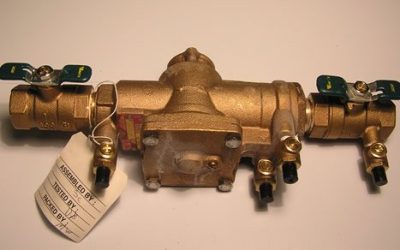
High incoming water pressure is hard on a house. It makes faucets drip sooner, shortens the life of washing machine hoses and water heater tanks, and makes toilet fill valves run on. Many municipal lines deliver 80 psi or more, while most home fixtures are built to work best between 40 and 60 psi. A pressure reducing valve, often shortened to PRV, sits on the main line where water enters the home and holds the whole house at a steady, safer level.
The five valves below are the models plumbers reach for most often: lead free bodies from Watts, Zurn Wilkins, Cash Acme and Honeywell, in the 3/4 inch and 1 inch sizes that cover nearly every house. Each is adjustable, ASSE 1003 listed, and serviceable without cutting the line apart. The right pick comes down to pipe size, inlet pressure and how you want to make adjustments.
Disclosure: As an Amazon Associate, we earn from qualifying purchases made through links on this page, at no extra cost to you.
How to Choose a Pressure Reducing Valve
Measure your pressure first. Screw a simple gauge onto a hose bib or laundry tap and read it with nothing running, then again with a shower and a faucet open. The first number is static pressure, the second is working pressure under flow. If static pressure sits above 80 psi, most codes require a reducing valve; plan on an expansion tank at the water heater too, because a PRV makes the house a closed system.
Match the valve to the pipe. Size the valve to the main line, not to the fixture branches. Most homes have a 3/4 inch main; larger homes and many newer builds use 1 inch. An undersized valve chokes flow when several fixtures run at once, so if your main is 1 inch, buy a 1 inch valve.
Check the range and the factory setting. Homes on very strong municipal supply should confirm the valve handles their inlet pressure with margin; most cast bronze valves here are built for 300 to 400 psi at the inlet. A wider outlet range, like the 25 to 90 psi span on the Honeywell below, gives more room to tune.
Pick a connection you can service. Union and double union bodies are the friendly option: the valve unthreads from the line for cleaning or replacement, with no torch and no cutting. Sweat tailpieces suit new work where the line is open anyway. Threaded female connections need unions added if you want that same service access later.
Look at the internals. A built-in strainer screen keeps grit from scoring the seat, and it should come out for rinsing without removing the valve. A thermal expansion bypass lets heated water push back toward the street instead of spiking house pressure; you still pair the valve with an expansion tank in a closed system. Stainless screens and springs hold up best in hard water areas.
Confirm lead free compliance. For drinking water lines in the US, wetted parts must meet the low lead rules, shown as NSF/ANSI 372 compliance or a lead free mark on the body. Every valve here is a lead free model.
The 5 Best Pressure Reducing Valves
1. Watts LFN45BM1-U Water Pressure Reducing Valve, 3/4 Inch
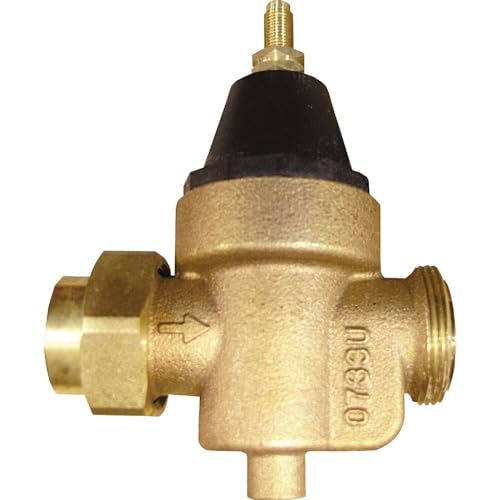
The LFN45B series is the valve many plumbers install by default on 3/4 inch mains, and the M1-U version adds a union inlet so the body drops out of the line for service. The body is a lead free cast copper silicon alloy, with a thermoplastic seat module and spring cage that resist corrosion in damp locations. Inside, a reinforced EPDM diaphragm and EPDM disc handle the sealing, and an integral stainless steel strainer catches grit before it reaches the seat.
A built-in thermal expansion bypass relieves pressure rise from the water heater in a closed system. The 25 to 75 psi span brackets the usual 50 to 60 psi house setting with room on both sides, and the valve leaves the factory set at 50 psi. For a straightforward replacement on a standard main, this is the safest all-round pick.
Specs
- Size and connection: 3/4 in, NPT union inlet x FPT outlet
- Body: lead free cast copper silicon alloy
- Reduced pressure range: 25 to 75 psi, factory set at 50 psi
- Maximum inlet pressure: 400 psi
- Temperature range: 33 to 180°F
- Seat and cage: thermoplastic; diaphragm and disc: reinforced EPDM
- Strainer: integral stainless steel, removable
- Listings: ASSE 1003, CSA B356, IAPMO
2. Zurn Wilkins 34-NR3XLDU Pressure Reducing Valve, 3/4 Inch

The NR3XL is Zurn Wilkins’ current lead free workhorse, built around a sealed cartridge that carries the seat and moving parts as one unit, so a worn valve is refreshed by swapping the cartridge while the bronze body stays in the line. Both ends of this double union version unthread, so the whole valve lifts out cleanly.
Zurn uses stainless steel for the internals that see the most wear: a 300 series stainless strainer screen and stem parts, a 302 stainless spring, and a Delrin cartridge. The reduced range runs wider at the low end than most, 15 to 75 psi, preset at 50 psi, and the body handles inlet pressure up to 400 psi in this size. An integral bypass check valve handles expansion relief, and at just over two pounds the valve is easy to handle in tight meter boxes.
Specs
- Size and connection: 3/4 in, double union FNPT
- Model: 34-NR3XLDU
- Body: low lead cast bronze, ASTM B584
- Reduced pressure range: 15 to 75 psi, factory preset 50 psi
- Maximum working pressure: 400 psi
- Maximum working temperature: 140°F
- Internals: 300 series stainless steel, Delrin cartridge, 302 stainless spring
- Listings: ASSE 1003, NSF/ANSI 372
3. Cash Acme EB45 Double Union Pressure Reducing Valve, 3/4 Inch
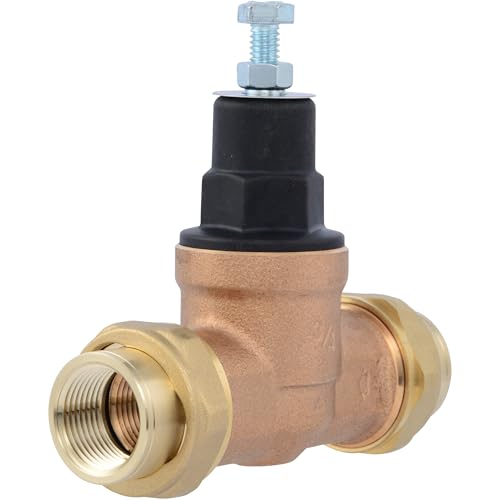
Cash Acme, the SharkBite family company, designed the EB45 around a half cartridge: the working parts sit in the top half of the valve, so a worn valve is refreshed by swapping the cartridge instead of replacing the body. This double union NPT version threads into a 3/4 inch line and unthreads just as easily; the poly top keeps the adjustment hardware light and corrosion free.
The standout detail is the locking setting. Once the outlet pressure is dialed in, a tamper-resistant lock holds it there, so the adjustment cannot drift in a shared utility space. This version leaves the factory set at 60 psi, a touch higher than the 50 psi norm, and adjusts from 10 to 70 psi. The valve is approved for both hot and cold water up to 180°F, which also suits recirculation lines and outbuildings on the same main.
Specs
- Size and connection: 3/4 in, double union NPT
- Model: PVA16P-DUTH-60
- Factory setting: 60 psi
- Adjustable range: 10 to 70 psi
- Maximum inlet pressure: not published for this version
- Service: hot and cold water up to 180°F
- Listings: NSF/ANSI 372, ASSE 1003, CSA B356, IAPMO
4. Zurn Wilkins 1-600XL Pressure Reducing Valve, 1 Inch
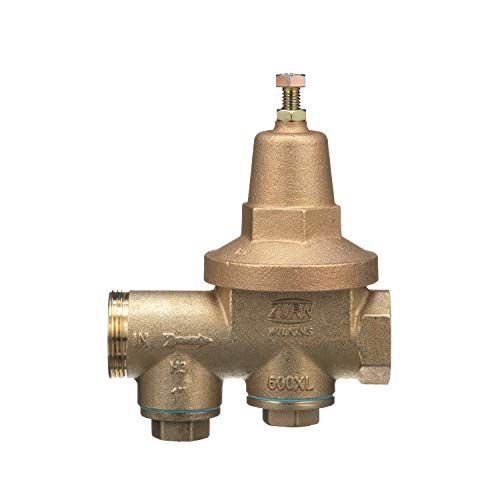
Homes with a 1 inch main need a valve that keeps up when the irrigation, a shower and the laundry all draw at once, and the 600XL is the larger Zurn series built for that duty. It uses a balanced piston design, which holds the outlet setting steady as street pressure swings between night and the morning peak. The body is low lead cast bronze, with an integral bypass check valve and a built-in strainer.
The 600XL is the heavier, contractor-grade pattern: about five pounds of bronze in the 1 inch single union version, built for a 300 psi maximum working pressure and a 25 to 75 psi reduced range with a 50 psi factory preset. Choose this one when the main is a full inch and flow capacity matters more than compact size.
Specs
- Size and connection: 1 in, single union FNPT
- Body: low lead cast bronze, ASTM B584
- Design: balanced piston, integral bypass check valve, built-in strainer
- Reduced pressure range: 25 to 75 psi, factory preset 50 psi
- Maximum working pressure: 300 psi
- Maximum working temperature: 140°F
- Listings: ASSE 1003, NSF/ANSI 61
5. Honeywell Braukmann DS06-102-SUT-LF DialSet Pressure Reducing Valve, 1 Inch

The Braukmann DS06, sold under the Honeywell and Resideo names, takes a different approach to adjustment. Its DialSet dial shows the set point directly on the valve, so you can dial in 55 or 60 psi by sight instead of turning a bolt, checking a gauge, and turning again. A balanced single seat design keeps the setting accurate as street pressure moves.
The outlet range is the widest here, 25 to 90 psi, with a factory setting of 60 psi, which suits homes wanting a firmer shower or a long run to an upper floor. The bronze lead free body handles inlet pressure up to 250 psi and water up to 140°F, and a 1/4 inch NPT gauge tap is built in for checking the setting. This 1 inch version solders into copper lines with a single union sweat tailpiece.
Specs
- Size and connection: 1 in, single union sweat tailpiece
- Body: bronze, lead free
- Adjustment: DialSet dial with visible set point scale
- Reduced pressure range: 25 to 90 psi, factory set at 60 psi
- Maximum inlet pressure: 250 psi
- Maximum temperature: 140°F
- Design: balanced single seat, fabric reinforced diaphragm
Quick Comparison
| Valve | Size | Outlet range | Factory setting | Max inlet pressure |
|---|---|---|---|---|
| Watts LFN45BM1-U | 3/4 in union x FPT | 25–75 psi | 50 psi | 400 psi |
| Zurn Wilkins 34-NR3XLDU | 3/4 in double union | 15–75 psi | 50 psi | 400 psi |
| Cash Acme EB45 DUTH | 3/4 in double union | 10–70 psi | 60 psi | not published |
| Zurn Wilkins 1-600XL | 1 in single union | 25–75 psi | 50 psi | 300 psi |
| Honeywell DS06-102-SUT-LF | 1 in single union sweat | 25–90 psi | 60 psi | 250 psi |
FAQ
What pressure should a home pressure reducing valve be set to?
Most homes do well between 50 and 60 psi. That is firm enough for a good shower on an upper floor, yet gentle on hoses, fill valves and appliance solenoids. Above 80 psi, most plumbing codes require a reducing valve.
How do I know which size valve my house needs?
Match the valve to the main line where it enters the house, which is 3/4 inch in most homes and 1 inch in larger or newer ones. Check the size printed on the old valve body. Fitting a smaller valve than the line can choke flow when several fixtures run together.
Where in the plumbing does the valve get installed?
On the main line, after the meter and the main shutoff, and before the line branches to fixtures, so the whole house sits downstream of it. Leave room around the body to reach the adjustment and to pull the strainer for cleaning.
What are the signs a pressure reducing valve is failing?
Pressure that creeps up overnight on a gauge, banging pipes when taps close, a water heater relief valve that weeps, and faucets that drip again soon after new washers are classic signs. A valve that can no longer hold its setting, or one that howls under flow, is due for a cartridge swap or replacement.
Can a homeowner replace a reducing valve, or is this a plumber job?
A union or double union valve of the same size and layout is one of the more approachable plumbing swaps, since it unthreads without cutting pipe. Sweat connections, odd layouts, or a valve buried in a wall call for a plumber. Either way, shut the water off at the meter first and confirm the new setting with a gauge afterward.
Conclusion
For most 3/4 inch mains, the Watts LFN45BM1-U is the default choice: lead free, union service, a built-in strainer and a thermal expansion bypass in one body. The Zurn Wilkins NR3XLDU matches it closely and adds a replaceable cartridge for cheaper upkeep. The Cash Acme EB45 suits anyone who wants a locking setting that stays put. On 1 inch mains, the Zurn Wilkins 600XL brings balanced piston control and flow capacity, while the Honeywell DS06 wins on adjustment, with a dial set by sight and the widest range here. Measure your street pressure, match the pipe size, and any of these five will keep the house calm for years.
More from Amazon
Programs that pair well with the guide above. Offers and eligibility are set by Amazon and may change.
Set up recurring deliveries of everyday items on eligible products. Terms and savings are set by Amazon.
Explore Subscribe & SaveCollect the home and kitchen items you want in one registry that guests can shop from.
Create a wedding registryFree shipping on eligible items, Prime Video and more. Eligible new members can start with a free trial.
Start a Prime free trialAudiobooks and podcasts to listen to on the go. Eligible new members can start with a free trial.
Try Audible freeAs an Amazon Associate we earn from qualifying purchases.