An under-sink filter is only “best” when its exact certification covers the contaminant in the home’s water and its flow, capacity, faucet arrangement, and cartridge schedule fit the household. A logo or standard number without a model-specific claim is not enough. NSF/ANSI 42, 53, 401, and 58 address different performance categories; none means that a system removes everything.
Affiliate disclosure: Purchases completed through qualifying product links may provide compensation to this site. Certification scope, installation limits, and replacement requirements remain the basis of this comparison.
Our top picks
 Waterdrop 10UA Under Sink Water Filter System
- Less than $25.99 per replacement filter WD-RF10(Search "…
- [After Sales Assistance] Waterdrop Backs the WD-10UA's high-end…
- [Innovative Design] Only a cold-water source should be…
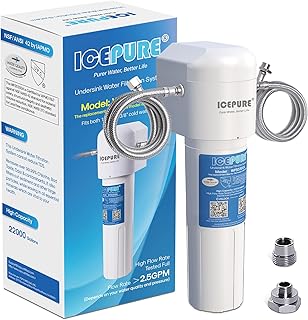


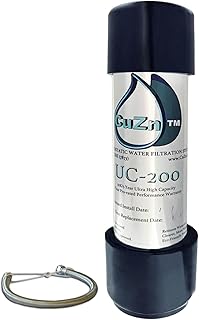


As an Amazon Associate we earn from qualifying purchases at no extra cost to you.
Editorial method: No water samples or filters were laboratory-tested for this article. Manufacturer performance data and NSF consumer guidance were reviewed on August 26, 2026. The shortlist includes two dedicated-faucet adsorption systems and one full-flow system. Before purchase, search the certifier’s current database for the complete model and each desired reduction claim.
Three Exact Systems With Different Architectures
| Exact system | Published configuration | Claim and ownership checkpoint |
|---|---|---|
| Aquasana Claryum 3-Stage Max Flow AQ-5300+ | Three-stage dedicated-faucet system; manufacturer publishes 0.72-gpm flow and 800-gallon capacity | Verify exact NSF/ANSI 42, 53 and 401 claims and replacement set AQ-5300+R |
| Culligan US-EZ-4 | Dedicated-faucet quick-change cartridge system; manufacturer publishes 0.5-gpm service flow and 500-gallon life | Match model-specific reduction claims and replacement cartridge RC-EZ-4 |
| 3M Aqua-Pure 3MFF100 | Full-flow system connected to the existing cold faucet; manufacturer publishes 1.5-gpm flow and 6,000-gallon capacity | Confirm exact certification listing, cold-water conditions, and replacement cartridge 3MFF101 |
Capacity figures are rated values under specified test conditions, not promises that every home will reach the same gallon count. Sediment load, contaminant concentration, pressure, temperature, water chemistry, usage pattern, and required replacement interval can shorten practical service. Replace a cartridge at the first applicable limit: gallons, time, flow decline, or manufacturer instruction.
Start With a Contaminant, Not a Product Category
Obtain the utility’s current consumer confidence report when using public water. A private well needs appropriate laboratory testing because the owner is responsible for monitoring. Taste, odor, color, or clear appearance cannot establish microbiological safety or identify dissolved contaminants.
Write a target list with measured results and units. Chlorine taste, lead, cysts, volatile organic compounds, PFAS, pharmaceuticals, nitrate, arsenic, fluoride, hardness, and bacteria are separate treatment questions. A carbon-based under-sink system may have excellent certified claims for some substances and no claim for another.
NSF explains that Standard 42 generally covers aesthetic effects such as chlorine taste and odor, while Standard 53 covers specified health-effect reductions. Standard 401 addresses certain emerging contaminants, and Standard 58 applies to reverse-osmosis systems. The standard number is not a ranking. Read the performance data sheet for the exact reduction, test concentration, capacity, and operating conditions.
Audit the Certification Trail
Begin on the manufacturer’s exact model page, download its performance data sheet, and note the certifying organization. Then locate the model in that organization’s public listing. Match every letter, number, suffix, alternate trade name, and replacement cartridge. A brand family page can describe technology without proving that every variant carries the same claims.
Look for certification language such as “certified to reduce” rather than ambiguous phrases like “tested to,” “meets,” or “designed for.” Manufacturer testing can provide useful information, but it should not be silently presented as independent certification. If a desired contaminant is missing from the exact listing, treat the reduction as unverified for the buying decision.
Certification remains tied to correct installation, pressure, temperature, flow, and cartridge replacement. Bypassing a dedicated faucet, substituting an aftermarket cartridge, operating on hot water, or extending service beyond the stated limit can invalidate the basis of the performance claim.
Model-by-Model Claim Fit
Aquasana AQ-5300+
Aquasana’s Max Flow three-stage system is suited to a household seeking a broad dedicated drinking-water treatment profile with published NSF/ANSI 42, 53, and 401 certifications. Confirm each target contaminant in the current performance sheet rather than inferring from the three standards. The 0.72-gpm rating and 800-gallon capacity should be compared with daily drinking and cooking demand.
Culligan US-EZ-4
Culligan’s EZ-Change format prioritizes a compact dedicated faucet and quick cartridge exchange. Its published 0.5-gpm flow is lower than the other examples, so simulate filling the household’s largest kettle or bottle. Verify the current RC-EZ-4 reduction sheet, cartridge life, included faucet, tubing, and connection requirements.
3M Aqua-Pure 3MFF100
The 3MFF100 feeds the existing cold-water faucet rather than adding a small drinking-water tap. Its published 1.5-gpm flow and 6,000-gallon capacity reflect that full-flow architecture. It treats every cold draw at the sink, consuming capacity faster when cold water is used for washing. Confirm exact NSF claims and available space for the 3MFF101 cartridge swing.
Capacity, Flow, and Cartridge Economics
Estimate annual treated gallons from household behavior. A dedicated faucet limits treatment to drinking and cooking; a full-flow system also treats cold rinsing and cleaning. Divide rated capacity by estimated daily use, then compare that result with the maximum time interval. Use the shorter replacement horizon for budgeting.
Do not publish or rely on a static cartridge price. Record the current direct-from-manufacturer price, authorized-seller price, multipack availability, shipping, tax, and disposal needs on the purchase date. Calculate cost per rated gallon and cost per expected household year. Include a reasonable allowance for early replacement when sediment or flow decline is likely.
Proprietary cartridges can simplify correct fit and certified performance, but they create supply dependence. Check stock history, model support, counterfeit risk, and whether the replacement identifier appears in the certification listing. A cheap system with scarce consumables is an expensive cabinet ornament.
Cabinet, Faucet, and Plumbing Decision Table
| Condition | Prefer | Verify before ordering |
|---|---|---|
| No spare sink or counter hole | Full-flow 3MFF100 architecture | Main-faucet flow, cartridge clearance, and claim match |
| Only drinking water needs treatment | AQ-5300+ or US-EZ-4 dedicated faucet | Approved drilling location and separate tap reach |
| Very shallow cabinet | Measured compact housing | Actual depth with tubing bend radius and door closed |
| Drawer or disposal below sink | Wall-mounted heads with service access | Cartridge removal path and moving components |
| Low existing faucet flow | Diagnose supply first | Available pressure versus system operating range |
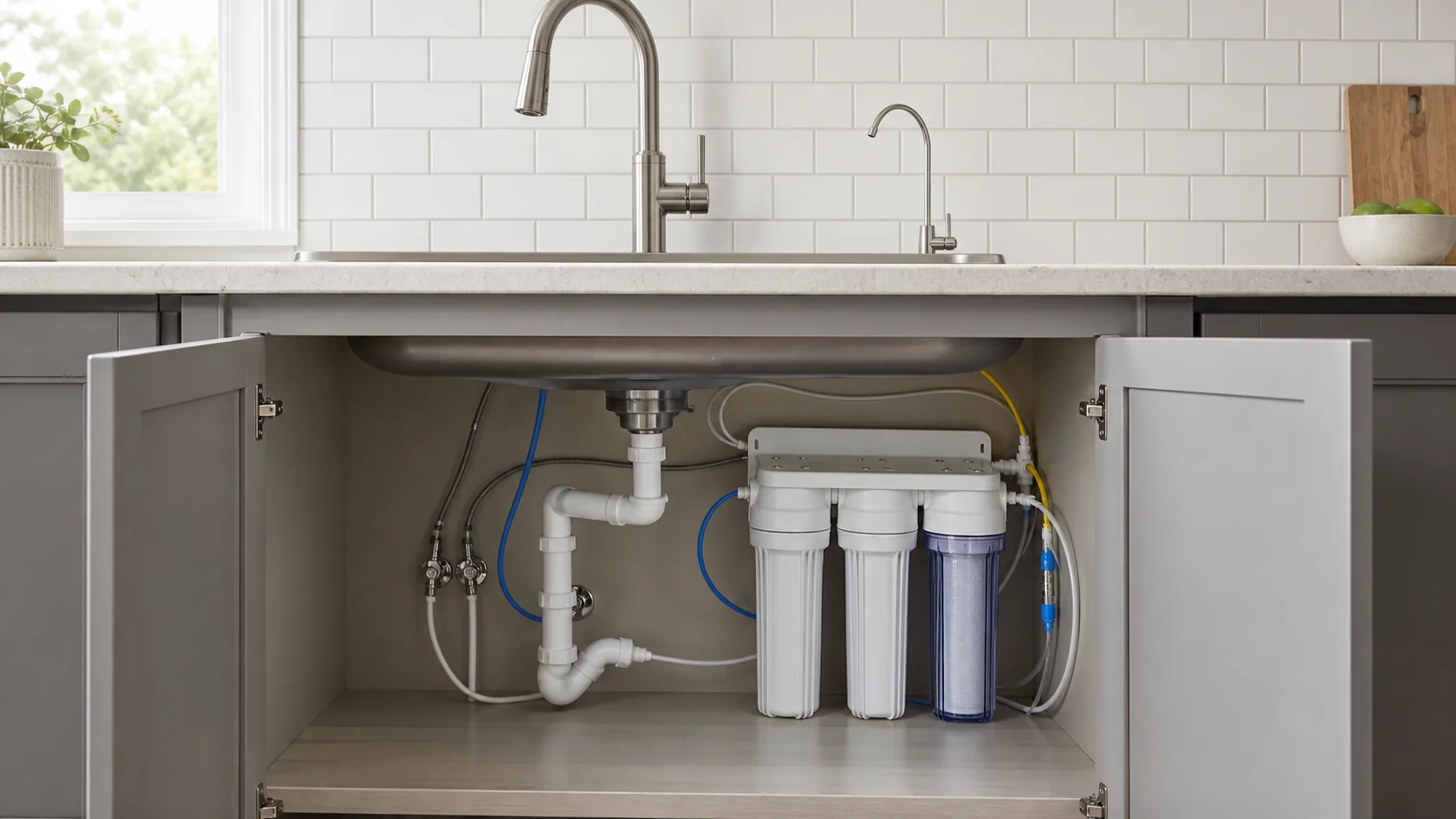
Measure each housing and the space needed to remove its cartridge. Leave tubing in smooth curves without kinks or abrasion. Keep equipment away from a disposal, pull-down faucet weight, hot pipe, sharp cabinet edge, and stored chemicals. Mount where a leak is visible and shutoffs remain reachable.
Installation and Leak-Control Plan
Use cold potable water only unless the exact system states otherwise. Close the fixture stop and verify flow has stopped. If the valve leaks, piping is corroded, or the cabinet shows mold or swelling, repair those conditions before adding filtration. Follow the supplied fittings and tubing preparation procedure; a poorly cut tube can leak after appearing secure.
A dedicated faucet hole in stainless steel, composite, solid surface, quartz, granite, tile, or porcelain requires material-specific tools and permission. Coordinate with the sink or countertop fabricator. Do not drill near an edge, seam, reinforcement, or hidden service from a generic spacing rule.
After assembly, flush the cartridge for the stated volume or time. Dry every connection and inspect while water flows, while the faucet closes, and several hours later. A leak detector or tray may limit discovery time but does not replace correct fittings. Record installation date, meter estimate, cartridge lot, and scheduled review.
Coordinate the next decision with the test water before selecting treatment.
Frequently Asked Questions
Does NSF certification mean the filtered water is free of contaminants?
No. Certification covers specific claims and test conditions for an exact model. Substances outside the listing may remain, and certified reduction is not necessarily complete removal.
Is a higher gallon capacity always better?
No. Capacity must be considered with certified claims, flow, time limit, household use, water quality, cartridge availability, and cabinet fit.
Can an under-sink carbon filter soften hard water?
Not unless it has a specifically documented hardness-treatment mechanism. Conventional adsorption filters generally do not remove the calcium and magnesium responsible for scale.
Can I use a compatible third-party cartridge?
Only if the system maker and certification listing support it. A physically fitting cartridge may not preserve the original contaminant claims or sealing performance.
When should I retest the water?
Retest when the source changes, a health concern emerges, a private-well schedule requires it, treatment performance is questioned, or a qualified authority recommends verification.
Recommendation: Buy the Verified Reduction
Choose Aquasana AQ-5300+ when its exact broad claim sheet matches tested concerns and 0.72-gpm dedicated flow is acceptable. Choose Culligan US-EZ-4 when compact quick-change operation and its narrower capacity fit the household. Choose 3MFF100 when full-flow cold-water treatment, cabinet space, and the precise certified claims align. The correct system is the one whose model listing, cartridge, installation, and replacement budget remain valid together.
Sources
- NSF support guidance
- Aquasana official product page
- Culligan US-EZ-4 official manual and support page
- 3M official product page