Key takeaways
- It develops character. The color becomes more individual with age instead of looking like a uniform coating that eventually chips or flakes.
- You can change the appearance. Leave the brass alone for a deeper patina, or polish it to bring back more of its original brightness. You are not locked into one look.
- It works across design styles. Unlacquered brass can suit traditional kitchens, English-inspired spaces, warm modern rooms, laundry areas, bathrooms, and furniture pieces.
- It is visually forgiving in the long term. Small scratches or handling marks can blend into an evolving patina more easily than they might on a perfectly uniform polished finish.
- It adds warmth. Brass can soften white, gray, navy, green, and wood cabinetry without the cooler appearance of chrome or stainless steel.
- Solid brass can feel substantial. When you select solid-brass hardware, you are buying a metal component rather than relying only on a thin surface coating. Construction still varies by product, so inspect the listing and included screws carefully.
- Replacement is straightforward. Standard center-to-center measurements such as 3 inches and 5 inches make it easier to find compatible pulls when updating a kitchen without drilling new holes.
The Short Answer
Yes—unlacquered brass cabinet pulls are worth the upkeep if you want hardware that develops a genuine patina and you are willing to clean or polish it occasionally. If you want every pull to look identical, bright, and maintenance-free, choose lacquered brass, stainless steel, or a plated finish instead.
That single condition matters more than price, style, or brand. Unlacquered brass is a living finish: it reacts with air, moisture, skin oils, cleaning products, and everyday handling. It may begin bright gold, then gradually become warmer, duller, or brownish in frequently touched areas. Some homeowners consider that the main appeal. Others feel they are watching attractive hardware slowly lose its intended finish.
Our top picks


As an Amazon Associate we earn from qualifying purchases at no extra cost to you. Ratings are shown as listed on Amazon.
What You Actually Get
Unlacquered brass pulls are made with brass exposed to the air rather than sealed beneath a protective clear coat. The finish is not designed to remain visually frozen. Over time, it can show fingerprints, water spots, darkened edges, and variations between pulls. Two handles installed on the same day may not age at exactly the same rate, especially if one is near a sink or range.
That changing appearance is different from a painted or plated finish wearing away. With solid brass, the underlying metal remains brass, so you can generally clean, buff, or polish the surface when you want to restore more brightness. The finish can then begin to patinate again. Always confirm whether a product is solid brass, brass-plated, or simply described as having a brass finish; those terms are not interchangeable.
Size is another practical consideration. Cabinet pulls are commonly specified by center-to-center measurement—the distance between the two screw holes—not by their total outside length. A 3-inch pull has holes 3 inches apart, while a 5-inch pull has holes 5 inches apart. Before buying, measure the existing holes and account for the pull’s overall length and projection from the cabinet door.
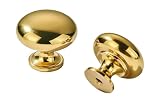
For example, the khtumeware five-pack is listed as 100% solid brass with a 5-inch center-to-center measurement and a price of $79.99, or about $16 per pull. The QOGRISUN five-pack is listed at 3 inches center-to-center for $34.99, or about $7 per pull. Those prices make the decision partly about scale: a larger pull can look more substantial on wide drawers, while a 3-inch cup pull may suit smaller drawers or traditional cabinetry.
Pros
- It develops character. The color becomes more individual with age instead of looking like a uniform coating that eventually chips or flakes.
- You can change the appearance. Leave the brass alone for a deeper patina, or polish it to bring back more of its original brightness. You are not locked into one look.
- It works across design styles. Unlacquered brass can suit traditional kitchens, English-inspired spaces, warm modern rooms, laundry areas, bathrooms, and furniture pieces.
- It is visually forgiving in the long term. Small scratches or handling marks can blend into an evolving patina more easily than they might on a perfectly uniform polished finish.
- It adds warmth. Brass can soften white, gray, navy, green, and wood cabinetry without the cooler appearance of chrome or stainless steel.
- Solid brass can feel substantial. When you select solid-brass hardware, you are buying a metal component rather than relying only on a thin surface coating. Construction still varies by product, so inspect the listing and included screws carefully.
- Replacement is straightforward. Standard center-to-center measurements such as 3 inches and 5 inches make it easier to find compatible pulls when updating a kitchen without drilling new holes.
Cons
- It needs occasional attention. A quick wipe may be enough for routine care, but removing dark spots or restoring shine takes more effort than wiping down lacquered hardware.
- Patina is uneven. Pulls near a sink, dishwasher, or frequently used drawer may change faster than hardware on a rarely opened cabinet. That variation is normal but not to everyone’s taste.
- Water and chemicals can accelerate changes. Standing water, acidic cleaners, bleach, ammonia, and abrasive powders may discolor or damage the surface. Even some multipurpose sprays can leave a film.
- Fingerprints can be visible. High-touch areas may look darker or oilier between cleanings, particularly during the first months when you are still deciding whether you like the developing finish.
- It can clash with a fixed metal scheme. If your faucet, hinges, lighting, and appliances are all expected to stay bright and perfectly matched, natural brass may introduce more variation than you want.
- It is not a “buy and forget” finish. The labor is usually measured in minutes, not hours, but a whole kitchen with 20 or 30 pulls takes longer to polish than a five-piece sample set.
- Product descriptions can be confusing. “Unlacquered brass finish” does not always mean the entire pull is solid brass. Verify the material, dimensions, screw length, and return policy before ordering.
Who Should Buy It
Buy unlacquered brass pulls if you like materials that age naturally and can accept some visual variation. They are especially suitable for homeowners who prefer a relaxed, collected kitchen rather than a showroom-perfect one. They also make sense when you are renovating around existing brass accents and want the hardware to become more distinctive over time.
They are a good choice for a smaller project, too. A five-pack lets you test the finish on a bathroom vanity, dresser, pantry, or island before committing to every cabinet. A $34.99 five-pack is a relatively low-cost way to see whether you enjoy the patina process; the $79.99 five-pack offers a larger 5-inch format at a higher per-pull cost. Consider ordering one set first, installing it in the room, and observing it for several weeks before placing a larger order.
Who Should Skip It
Skip unlacquered brass if your priority is consistent color with nearly zero maintenance. It is also a poor fit for anyone who dislikes fingerprints, cannot keep cleaners away from the hardware, or expects all metal finishes in the room to match indefinitely.
Families with heavy daily kitchen use should think carefully about placement. Pulls beside a wet sink or on a frequently opened trash cabinet may patinate quickly. That is not a defect, but it can make the kitchen look less uniform. If you want brass warmth without this upkeep, consider a lacquered brass option or another durable finish with a sealed surface.
Cheaper Alternatives
| Option | Cost | Trade-off |
|---|---|---|
| QOGRISUN five-pack, 3-inch center-to-center cup pulls | $34.99 total, about $7 each | Lower entry price, but the cup-pull shape and 3-inch spacing may not fit every cabinet or existing hole pattern. |
| Basic lacquered brass pulls | About $3–$12 each | More consistent color and less polishing, but the coating can scratch, dull, or eventually wear through. |
| Brushed stainless-steel pulls | About $2–$10 each | Usually easy to maintain and widely available, but cooler in tone and less patina-friendly than brass. |
| Black metal bar pulls | About $2–$8 each | Affordable and versatile, but painted or coated surfaces can reveal wear at edges and may feel less warm. |
| Solid-brass knobs | About $4–$15 each | Can cost less for a small cabinet update, but knobs provide less leverage on wide or heavy drawers. |
The most economical alternative is not necessarily the lowest price per piece. If your existing cabinets already have holes, matching the center-to-center measurement prevents filler, patching, and new drilling. A slightly more expensive pull that fits properly can cost less overall than a bargain option that requires cabinet repairs.
FAQ
How often do unlacquered brass pulls need polishing?
There is no fixed schedule. Some homeowners polish twice a year, while others let the brass darken naturally and only clean it when spots become distracting. For routine care, use a soft, damp cloth and dry the hardware promptly. If you polish, follow the metal polish manufacturer’s instructions and test an inconspicuous area first. Avoid steel wool, abrasive sponges, bleach, ammonia, and harsh acidic cleaners.
Will unlacquered brass turn green?
It can develop darker brown tones and, under prolonged exposure to moisture or certain chemicals, may show greenish corrosion. Normal indoor cabinet use is more likely to produce a warm, muted patina than dramatic green oxidation. Keeping the pulls dry and removing spills quickly reduces the risk.
Can I seal unlacquered brass myself?
Yes, some people apply a clear metal sealer to slow patination, but doing so changes the maintenance profile and may produce an uneven result if preparation is incomplete. A sealer can also wear differently on high-touch areas. If you want a permanently consistent finish, factory-lacquered hardware is generally the simpler choice.
Are unlacquered brass pulls a good value?
They can be, especially when you value solid material, repairable appearance, and evolving character. The value is weaker if you will continually polish every pull to keep it bright or replace the hardware once patina appears. In 2026, the practical decision remains personal: choose unlacquered brass for the experience of natural aging, not for maintenance-free uniformity.