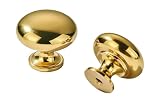
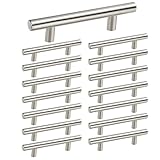
Key takeaways
- Drawers up to 18 inches wide: use a 3-inch pull or a knob.
- Drawers 18 to 30 inches wide: use a 3- to 5-inch pull.
- Drawers 30 to 36 inches wide: use a 5- to 8-inch pull, or two smaller pulls.
- Drawers wider than 36 inches: consider an 8- to 12-inch pull or two pulls, depending on drawer weight and style.
Choosing cabinet hardware for Shaker doors looks simple until the proportions feel wrong, the screws do not fit, or a beautiful pull catches on clothing. The most common mistake is buying by overall length alone. A pull that measures 5 inches from end to end may have a 3-inch center-to-center measurement, while a “1-1/4-inch pull” may describe the hole spacing rather than the total length. Those are not interchangeable specifications.
Other frequent errors include using tiny knobs on wide drawers, installing long pulls on narrow Shaker rails, mixing finishes without a plan, and ordering hardware before checking door thickness. The right choice balances hole spacing, visual scale, grip comfort, installation method, and budget. This guide explains how to choose cabinet hardware size for Shaker cabinets without relying on guesswork.
Our top picks


As an Amazon Associate we earn from qualifying purchases at no extra cost to you. Ratings are shown as listed on Amazon.
Decide These 3 Things First
- Where the hardware will go. Door knobs, door pulls, and drawer pulls do not have to be identical. Decide whether drawers will use one centered pull, two pulls, or a knob-and-pull combination.
- What drilling pattern you want. New cabinets offer flexibility, but replacement hardware must match existing hole centers. Measure from the center of one screw hole to the center of the other, not from the outside edges.
- How much visual weight the room can handle. Matte black, polished brass, and oversized pulls make a stronger statement than small satin nickel knobs. Consider the cabinet color, appliance finishes, faucet, lighting, and room size together.
For a clean Shaker look, many kitchens use knobs on doors and pulls on drawers. A common starting point is a 1-1/4-inch knob for doors and a 3-inch center-to-center pull for drawers up to about 30 inches wide. Larger drawers often look and function better with 5-inch, 6-inch, or 8-inch pulls.
Size: Match the Hardware to the Door or Drawer
Hardware size should relate to the cabinet front, not just the room. Shaker cabinets have a recessed center panel surrounded by a flat frame, so the hardware usually sits on the rail or stile. Leave enough clearance from the inside edge of the frame to avoid crowding.
For cabinet doors, knobs between 1-1/4 and 1-1/2 inches in diameter are versatile. A 1-inch knob can work on a small upper door, but it may feel undersized on a wide or heavy door. For pulls, 3 to 5 inches center-to-center suits many standard doors. On a tall pantry door, a 6- to 8-inch pull can provide better leverage.
Drawer width is the more important sizing guide:
- Drawers up to 18 inches wide: use a 3-inch pull or a knob.
- Drawers 18 to 30 inches wide: use a 3- to 5-inch pull.
- Drawers 30 to 36 inches wide: use a 5- to 8-inch pull, or two smaller pulls.
- Drawers wider than 36 inches: consider an 8- to 12-inch pull or two pulls, depending on drawer weight and style.
These are starting points, not rules. The key is consistency. If you use several pull lengths, create a pattern—for example, 3 inches on doors, 5 inches on medium drawers, and 8 inches on wide drawers. Always verify the pull’s center-to-center spacing before purchasing a jig or drilling.
Material and Finish: Choose for Wear, Not Just Color
Solid brass, stainless steel, zinc alloy, aluminum, and plated steel are common choices. Solid brass generally offers a substantial feel and can develop a natural patina, although lacquered finishes may change differently from unlacquered brass. Stainless steel is a practical option for busy kitchens because it resists corrosion and coordinates with stainless appliances. Aluminum is lightweight and useful for long pulls, but it may feel less dense than brass or steel.
Zinc alloy can deliver intricate shapes and lower prices, but quality varies. Look for a smooth finish, clean edges, and hardware that does not flex when you apply moderate hand pressure. Plated finishes should be even around corners and mounting points.
Finish durability depends on cleaning products, moisture, hand oils, and installation conditions. Avoid abrasive powders and harsh solvents. For a mixed-metal kitchen, repeat each finish at least twice—for example, black hardware with black lighting and a black faucet—rather than introducing a single isolated accent.
Construction: Inspect the Parts You Cannot See
A pull’s visible finish gets attention, but the posts, threads, and screws determine whether it remains secure. Look for mounting posts that sit squarely against the cabinet and threads that accept the screw without wobbling. Hollow pulls can be perfectly serviceable, but a very long hollow piece may feel lighter than expected.
Check the included screw lengths. Typical cabinet doors are about 3/4 inch thick, but drawer fronts may be 3/4 to 1 inch thick, and some custom fronts are thicker. A screw should engage the hardware fully without protruding into the cabinet interior. Many packages include 1-inch screws, while some offer 1-1/2-inch screws or multiple sizes. If the hardware does not include the correct length, replacement screws usually cost about $5 to $12 per pack.
For a new installation, a drilling jig is worthwhile when you have more than a few doors. Entry-level options such as the King&Charles Cabinet Hardware Jig & Automatic Center Punch Set are listed around $11.99, while an aluminum jig and auto center punch version is listed around $55.99. A metal jig and punch set is listed around $29.99. The important comparison is adjustability, guide-bushing accuracy, material thickness, and whether the punch creates a clear starting mark.
Comfort and Performance: Test the Grip Before Committing
Measure the distance between the cabinet face and the inside of the pull. This projection, often called the pull’s depth or projection, commonly falls between 1 and 1-1/2 inches. A projection of about 1 inch is discreet; 1-1/4 inches or more gives larger hands better clearance.
Rounded edges are more comfortable than sharp rectangular corners, especially on frequently used drawers. For a busy kitchen, choose a pull with enough room for at least two fingers—roughly 3/4 inch of usable grip space is a practical minimum. Cup pulls can be comfortable on drawers but may be less convenient on narrow doors.
Weight matters most on wide drawers. A long metal pull weighing roughly 4 to 10 ounces is common, but the exact weight varies significantly by length and construction. Do not choose solely by weight: a balanced pull with sturdy posts can perform better than a heavier piece with weak mounting points. If children or people with limited hand strength use the kitchen, prioritize a rounded, easy-to-grasp profile.
Price Tiers: Spend Where It Changes the Result
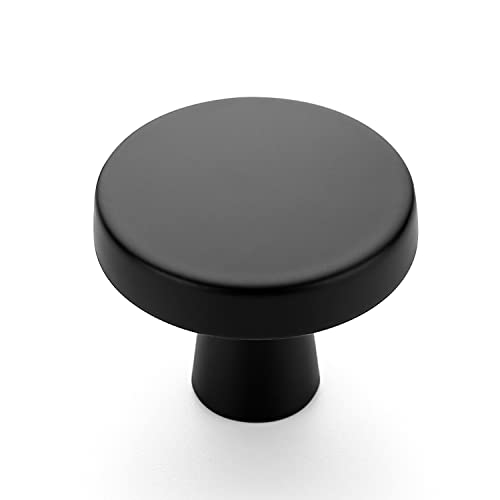
Budget hardware typically costs about $2 to $8 per knob or $3 to $12 per pull. At this level, inspect finish consistency and make sure spare screws are available. A 25-pack of Ravinte matte black 1-1/4-inch cabinet knobs is listed around $32.99, or about $1.32 per knob before tax. Multipacks can reduce the cost substantially, but confirm that the size and finish work throughout the room.
Midrange hardware generally costs $8 to $25 per piece. You may get more consistent plating, better screw options, heavier construction, and a wider selection of center-to-center sizes. Premium hardware often costs $25 to $75 or more per piece, particularly for solid brass, handmade designs, or specialty finishes.
For a kitchen with 20 doors and 10 drawers, hardware quantity adds up quickly. At $5 per piece, a 30-piece set costs about $150. At $20 per piece, it costs about $600, before a jig or replacement screws. Buy one sample first. Hold it against the cabinet, test the grip, and check the finish in daylight before ordering the full set.
Warranty and Replacement Support
Hardware warranties vary from no stated coverage to limited lifetime coverage. A warranty is useful only if the seller clearly identifies what it covers: finish deterioration, structural breakage, missing parts, or manufacturing defects. Cosmetic wear from cleaning chemicals may be excluded.
For a full kitchen, favor sellers that list replacement screws and individual pieces rather than requiring a complete new pack. Keep one or two spare knobs or pulls after installation, especially if the finish is seasonal or the product may be discontinued. Confirm the return window before drilling; installed hardware may not qualify for a return if the packaging is discarded.
Delivery and Assembly: Plan for the Installation Details
Count every door and drawer before ordering, then add 5% to 10% for spares. A 24-piece project should usually include one or two extra pieces. Check package quantities carefully: a listing may show a price for one pull, a pair, or a 25-pack.
Allow at least 1/4 inch of clearance between neighboring hardware pieces, trim, and appliances. For corner cabinets, make sure an open door will not strike an adjacent pull. On drawers below a cooktop or sink, check that the pull does not interfere with knees or nearby handles.
A jig can make repeated installations faster and more consistent. Before drilling, mark the intended center, tape the drill point to reduce surface chipping, and test the jig on scrap wood or an inconspicuous cabinet edge. Use a drill bit slightly larger than the screw shaft but smaller than the screw head, and avoid forcing the bit through the cabinet face.
Spec Checklist
| Spec | Budget | Mid | Premium |
|---|---|---|---|
| Typical cost | $2–$8 per piece | $8–$25 per piece | $25–$75+ per piece |
| Door knob size | 1–1-1/4 inches | 1-1/4–1-1/2 inches | 1-1/4–2 inches |
| Common pull spacing | 3 inches | 3, 5, or 6 inches | 5, 6, 8, or custom spacing |
| Projection | About 3/4–1 inch | About 1–1-1/4 inches | About 1-1/4–1-1/2 inches |
| Materials | Zinc alloy, plated steel | Aluminum, steel, zinc alloy | Solid brass, stainless steel, specialty metals |
| Installation tools | Basic drill and template | Adjustable jig and center punch | Precision jig, punch, and multiple screw lengths |
| Spare quantity | At least 1 extra | 5% extra | 5%–10% extra |
Red Flags
- The listing gives overall pull length but omits center-to-center spacing.
- The product photographs show hardware on cabinets, but the dimensions are missing.
- There is no information about screw length, thread type, or replacement parts.
- Reviews mention peeling, sharp edges, loose posts, stripped threads, or mismatched pieces in the same package.
- A multipack mixes sizes or finishes without clearly stating how many of each are included.
- The seller promises a “lifetime finish” without defining exclusions or the claim process.
- The hardware is so close to a cabinet edge that the pull would sit on the Shaker frame rather than comfortably on the rail.
FAQ
What size hardware looks best on Shaker cabinets?
For many kitchens, 1-1/4-inch knobs on doors and 3-inch center-to-center pulls on smaller drawers create balanced proportions. Use 5- to 8-inch pulls on wider drawers. Measure the cabinet front and keep a consistent pattern rather than using one size everywhere automatically.
Should cabinet pulls be measured by total length or center-to-center spacing?
Use center-to-center spacing when matching existing holes or buying a drilling jig. Total length describes the full pull from end to end and may be several inches longer than the distance between screws. Always confirm both measurements before ordering.
Are knobs or pulls better for Shaker drawers?
Pulls are usually easier to use on drawers because they provide leverage across the front. Knobs can work on narrow drawers or in a traditional design. For drawers wider than about 30 inches, a longer pull or two pulls generally feels more stable than one small knob.
Do I need a cabinet hardware jig?
A jig is helpful when installing more than four or five pieces, especially if several doors use the same hole pattern. It reduces measuring time and helps keep holes aligned. For a single replacement pull, a ruler, square, pencil, and center punch may be sufficient, but test your measurements before drilling the cabinet.