Key takeaways
- Choosing by overall length only: A 5-inch overall pull may have only 3 inches between holes. Compare center-to-center spacing first.
- Using one tiny pull on a wide drawer: A single 3-inch pull can look lost on a 36-inch front and may be uncomfortable to operate.
- Ignoring the loaded weight: Wide drawers used for cookware or appliances often benefit from two pulls or a longer, sturdier handle.
- Forgetting adjacent clearance: An extra-long pull can strike a neighboring cabinet door or appear crowded at a corner.
- Mixing measurements from different listings: Product titles may advertise length, while diagrams show hole spacing. Read the technical dimensions and mounting-bolt length.
- Drilling before making a template: Even a one-inch error is visible on a wide drawer. Mark, tape, and test the layout first.
- Overlooking screw length: Standard drawer fronts may need 1-inch screws, while thicker fronts require longer hardware. The screw must pass through the front without protruding into the drawer.
The Short Answer
For a 36-inch-wide drawer, the best all-purpose cabinet pull is usually 8 to 12 inches long, with a hole-to-hole measurement of 6 to 10 inches. A 10-inch pull with an 8-inch center-to-center measurement is a particularly balanced choice for a wide kitchen drawer: it provides leverage, looks proportional, and is comfortable for two-handed use.
That said, pull size depends on the drawer’s actual front width, its weight, and the style of your cabinets. A 36-inch drawer filled with cookware needs more leverage than a shallow drawer holding utensils. If you prefer two smaller pulls, use a pair of 5- to 8-inch pulls, positioned evenly across the drawer front. For a traditional look, two cup pulls or bin pulls can also work well.
Our top picks

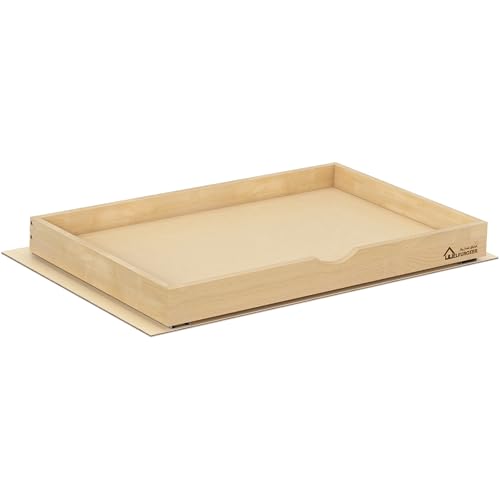

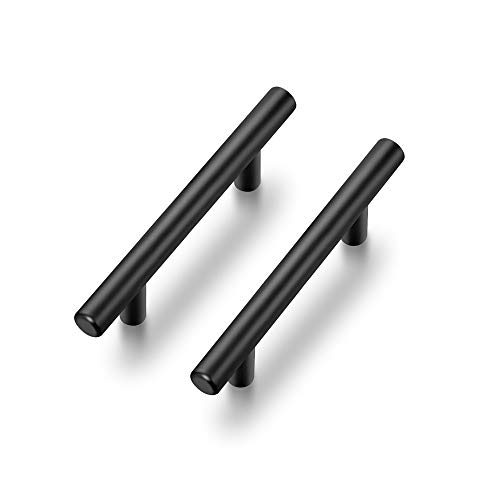
As an Amazon Associate we earn from qualifying purchases at no extra cost to you. Ratings are shown as listed on Amazon.
Do not confuse a pull’s overall length with its hole spacing. A handle advertised as a “5-inch pull” may have a 3-inch center-to-center measurement and measure about 5 inches from end to end. Always confirm both dimensions before drilling.
Standard Sizes
The table below shows common cabinet pull measurements and where they typically work on a 36-inch drawer. Measurements are approximate conversions from inches to centimeters.
| Pull type or size | Center-to-center spacing | Approximate overall length | Centimeters | Best use |
|---|---|---|---|---|
| Small knob or pull | 1 to 2 inches | 1.5 to 3 inches | 2.5 to 5 cm spacing; 3.8 to 7.6 cm overall | Small drawers, furniture, or two-pull layouts |
| Short pull | 3 inches | 5 inches | 7.6 cm spacing; 12.7 cm overall | Bathroom vanities and narrow drawers |
| Medium pull | 4 to 5 inches | 6 to 7 inches | 10.2 to 12.7 cm spacing; 15.2 to 17.8 cm overall | Standard drawers and two-pull installations |
| Large pull | 6 to 8 inches | 8 to 10 inches | 15.2 to 20.3 cm spacing; 20.3 to 25.4 cm overall | Most 30- to 36-inch kitchen drawers |
| Extra-large pull | 10 to 12 inches | 12 to 15 inches | 25.4 to 30.5 cm spacing; 30.5 to 38.1 cm overall | Oversized drawers and contemporary kitchens |
| Two-pull layout | Two pulls, each 3 to 5 inches | Varies by placement | 7.6 to 12.7 cm spacing per pull | Very wide or heavily loaded drawers |
For most 36-inch drawers, a pull with 6- to 8-inch hole spacing is the safest starting point. An 8-inch center-to-center pull often has an overall length of roughly 10 inches, leaving enough visual space at each side without making the hardware look undersized. A 3-inch pull can work if you install two or three handles, but one 3-inch pull centered on a 36-inch drawer may look too small and can be less comfortable to use.
Hardware finish and shape also affect perceived scale. A slim bar pull looks lighter than a thick tubular pull of the same length. Matte black can appear visually stronger, while brushed nickel tends to blend more quietly with stainless appliances. For budget-friendly options, a 15-pack of 3-inch pulls may cost about $10 to $20, while larger multipacks with 3-inch spacing can range from roughly $25 to $45. These prices describe typical retail ranges, not a performance rating.
How to Measure Your Space
- Measure the drawer front, not the drawer box. Measure the visible front from left to right. A nominal 36-inch cabinet may have a drawer front that is slightly narrower because of side gaps, framing, or inset construction.
- Check the drawer height. A wide, shallow drawer often suits a horizontal bar pull. A tall drawer front may accommodate a longer handle or a vertical pair, depending on the cabinet layout.
- Mark the drawer’s centerline. Divide the drawer-front width by two. On a true 36-inch-wide front, the horizontal center is 18 inches from either side. Use this point when installing one centered pull.
- Choose the hole spacing. For one pull, start with 6 to 10 inches between mounting holes. For two pulls, select smaller handles and place their centers at equal distances from the drawer’s centerline.
- Confirm the overall length. Make sure the ends of the pull will not crowd adjacent doors or drawer fronts. Leave at least 2 inches of visual space from each side edge as a general design guideline.
- Check clearance behind the pull. Measure the projection from the drawer front. A pull that extends about 1 to 1.5 inches is usually easy to grip without catching clothing or interfering with nearby cabinets.
- Test before drilling. Use painter’s tape to mark the proposed pull or make a cardboard template. Stand several feet away and check whether the hardware looks balanced with neighboring doors and drawers.
- Account for weight. A wide drawer filled with pots, pans, or small appliances may weigh 50 to 100 pounds when loaded. Two pulls can distribute pulling force and reduce twisting, especially on wide pull-out organizers.
By Room or Use Case
Kitchen cookware drawers
For a 36-inch kitchen drawer holding cookware, choose one sturdy pull with 8- to 10-inch center spacing or two pulls with 3- to 5-inch spacing. Two pulls are often more comfortable when the drawer is deep or heavily loaded. A solid metal bar with a projection of about 1 to 1.5 inches gives enough room for a full-hand grip.
Pull-out organizers can be substantially more expensive than basic hardware. For example, a 32-inch-wide heavy-duty pull-out drawer organizer may cost around $80 to $130, so verify the cabinet opening and weight capacity before ordering. The organizer’s width is not a substitute for measuring the decorative drawer front.
Utensil and pantry drawers
A wide but lightly loaded utensil drawer can use one 6- to 8-inch pull without difficulty. If the drawer front is 36 inches wide but only 6 to 8 inches tall, avoid an oversized 12-inch handle unless your kitchen has a strongly contemporary design. The pull should generally occupy about one-quarter to one-third of the drawer-front width.
Bathroom vanities
Bathroom drawers usually hold less weight, so 3- to 5-inch center-to-center pulls are practical. On a 36-inch vanity drawer, one 5-inch pull may look a little small; two evenly spaced pulls or one 8-inch pull will usually create better proportion. Brushed nickel and matte black are both versatile choices, but confirm that the finish coordinates with faucets and lighting.
Modern slab cabinets
Flat slab fronts can handle longer pulls. An 8- to 12-inch center-to-center handle creates a clean horizontal line and suits minimalist kitchens. For a very streamlined appearance, align the long pulls on wide drawers with the pulls on nearby doors. Keep all hardware on the same horizontal or vertical axis.
Traditional and farmhouse cabinets
Bin pulls and cup pulls work well with Shaker or furniture-style cabinets. On a 36-inch drawer, use two matching cup pulls rather than one small center pull when the drawer is deep or heavy. A set of 3-inch cup pulls may cost approximately $15 to $30 for 10 pieces, depending on the material and finish.
Common Sizing Mistakes
- Choosing by overall length only: A 5-inch overall pull may have only 3 inches between holes. Compare center-to-center spacing first.
- Using one tiny pull on a wide drawer: A single 3-inch pull can look lost on a 36-inch front and may be uncomfortable to operate.
- Ignoring the loaded weight: Wide drawers used for cookware or appliances often benefit from two pulls or a longer, sturdier handle.
- Forgetting adjacent clearance: An extra-long pull can strike a neighboring cabinet door or appear crowded at a corner.
- Mixing measurements from different listings: Product titles may advertise length, while diagrams show hole spacing. Read the technical dimensions and mounting-bolt length.
- Drilling before making a template: Even a one-inch error is visible on a wide drawer. Mark, tape, and test the layout first.
- Overlooking screw length: Standard drawer fronts may need 1-inch screws, while thicker fronts require longer hardware. The screw must pass through the front without protruding into the drawer.
FAQ
What is the most popular pull size for a 36-inch drawer?
An 8- to 10-inch overall pull, with approximately 6 to 8 inches between mounting holes, is a common choice. For a more substantial modern look, use a 12-inch overall pull with about 10 inches of hole spacing. The best option depends on the drawer height and the hardware used elsewhere in the room.
Should a 36-inch drawer have one pull or two?
Use one long, centered pull for a clean contemporary appearance and two smaller pulls for heavier drawers, traditional designs, or easier two-handed opening. Two pulls are especially useful when the drawer is deep and may weigh 50 pounds or more when full.
Can I use 3-inch cabinet pulls on a 36-inch drawer?
Yes, but one 3-inch pull will usually look undersized. Install two 3-inch pulls with their centers evenly spaced on either side of the drawer’s midpoint, or use a longer pull with 6- to 8-inch hole spacing.
What cabinet pull size will look current in 2026?
Longer bar pulls remain a practical, current choice: 8- to 12-inch overall lengths work well on wide drawers, especially in matte black, brushed nickel, or warm metallic finishes. The most timeless result comes from consistent spacing and alignment rather than choosing the largest available handle.