Key takeaways
- Confusing overall length with C-C spacing. A 6-inch-long pull may not have a 6-inch hole spacing. Read the product specifications for “center to center,” “C-C,” or “hole spacing.”
- Measuring from the outside of the screws. This produces a measurement that is too large. Measure between the centers of the holes.
- Assuming inch and metric sizes are interchangeable. A 3-inch pull is 76.2 mm, while a 75 mm pull is slightly different. That small difference can prevent a replacement from fitting properly.
- Choosing hardware only by drawer width. A large drawer may need a longer pull, but the style, nearby hardware, and cabinet layout also affect the best choice.
- Ignoring screw length. Cabinet pulls often include screws for common drawer-front thicknesses, but thicker fronts or added panels may require replacement screws. The screw should pass through the front and engage the pull securely without bottoming out.
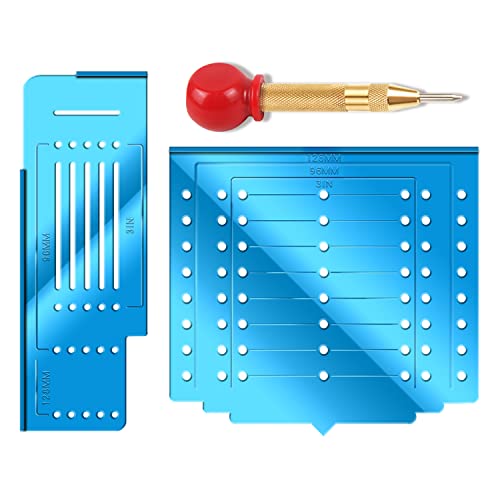
- Drilling without a template. Even a small error can make a pull look crooked. A jig or template is especially helpful when installing multiple pulls. Adjustable models, such as aluminum cabinet hardware jigs, typically cost more than simple plastic templates but offer more size settings.
- Forgetting finger clearance. A sleek pull may look attractive but be uncomfortable if there is not enough space behind it. Compare the pull’s projection, or distance from the cabinet face, as well as its C-C measurement.
The Short Answer
The answer to “what center to center measurement for cabinet drawer pulls” depends on the distance between the existing mounting holes or the size and style of the drawer front. Center to center, often written as C-C, is the measurement from the center of one screw hole to the center of the other. It is not the total length of the pull.
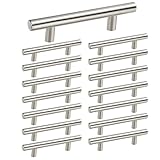
Common cabinet pull sizes include 3 inches (76 mm), 3 3/4 inches (96 mm), 5 inches (128 mm), and 6 1/4 inches (160 mm) center to center. For a new installation, 3-inch and 5-inch pulls suit many standard drawers, while 6 1/4-inch and longer pulls look more proportional on wide drawers, pantry doors, and large appliance panels.
Our top picks



As an Amazon Associate we earn from qualifying purchases at no extra cost to you. Ratings are shown as listed on Amazon.
If you are replacing existing hardware, match the current center-to-center measurement exactly. A pull that is even 1/4 inch off will not line up with both holes. If you are drilling new holes, choose the pull size based on the drawer width, cabinet style, and how much grip you want.
Standard Sizes
The table below lists widely available cabinet pull sizes. Metric measurements are rounded to the nearest millimeter, so a product labeled 96 mm may be described as approximately 3 3/4 inches.
| Center-to-center size | Metric size | Approximate overall pull length | Typical use |
|---|---|---|---|
| 2 1/2 inches | 64 mm | 3 to 3 1/2 inches | Small drawers, narrow doors, compact furniture |
| 3 inches | 76 mm | 3 1/2 to 4 1/4 inches | Standard drawers, bathroom vanities, smaller base cabinets |
| 3 3/4 inches | 96 mm | 4 1/2 to 5 1/4 inches | Medium drawers and traditional cabinet doors |
| 5 inches | 128 mm | 5 3/4 to 6 1/2 inches | Most kitchen drawers and medium-to-wide doors |
| 6 1/4 inches | 160 mm | 7 to 8 inches | Wide drawers, tall pantry doors, contemporary kitchens |
| 7 9/16 inches | 192 mm | 8 1/4 to 9 1/2 inches | Large drawers and oversized cabinet doors |
| 8 13/16 inches | 224 mm | 9 1/2 to 11 inches | Extra-wide drawers and modern slab cabinetry |
These sizes refer only to the mounting-hole spacing. A pull with a 5-inch C-C measurement may be 6 inches long, 6 1/2 inches long, or longer depending on the thickness of its end posts. Always check both the C-C measurement and the overall length before ordering.
How to Measure Your Space
- Remove one existing pull if necessary. Use a screwdriver to remove the mounting screws. If the pull stays in place, you can measure it without removal, but access to the screw heads makes the measurement more reliable.
- Measure from screw center to screw center. Place a ruler or tape measure across the two holes and measure between their centers, not between their outside edges. For the most accurate result, use a ruler marked in 1/16-inch increments.
- Check the metric measurement. Hardware may be listed in millimeters even when the cabinet is sold in the United States. A measurement close to 76 mm is a 3-inch pull; 96 mm is 3 3/4 inches; 128 mm is 5 inches; and 160 mm is 6 1/4 inches.
- Measure the drawer or door width. Record the visible front width, not the width of the cabinet box behind it. This helps you select a pull with a balanced overall length.
- Check clearance around the hardware. Look for nearby cabinet edges, corner posts, hinges, molding, and adjacent drawer fronts. Leave enough room for your fingers to wrap around the pull without hitting neighboring surfaces.
- Mark the centerline. For a single pull on a drawer, find the horizontal center of the drawer front. For a cabinet door, the placement is usually centered vertically, although upper and lower cabinets may use a different layout.
- Use a template for new holes. A cabinet hardware jig helps keep both holes level and evenly spaced. Basic templates and center-punch sets commonly cost about $9 to $12, while adjustable aluminum jigs generally cost about $20 to $30.
- Test with painter’s tape. Place tape on the cabinet face, mark the proposed holes, and hold the pull over the marks. This simple step lets you evaluate proportion before drilling.
By Room or Use Case
Kitchen Drawers
For most kitchen drawers, 5-inch (128 mm) pulls provide a comfortable grip and a balanced appearance. They work particularly well on drawer fronts about 24 to 36 inches wide. On narrow drawers measuring roughly 12 to 18 inches wide, 3-inch (76 mm) or 3 3/4-inch (96 mm) pulls usually look less crowded.
Wide drawers can take larger hardware. A 6 1/4-inch (160 mm) pull suits a 30-inch or wider drawer, while a 7 9/16-inch (192 mm) or 8 13/16-inch (224 mm) pull can look appropriate on oversized drawers. Longer pulls also distribute pulling force across more of the drawer front.
Kitchen Cabinet Doors
Cabinet doors often use smaller pulls than drawers, especially on narrow upper doors. A 3-inch or 3 3/4-inch pull is a versatile choice for standard doors. On tall pantry doors or wide slab doors, 5-inch to 8 13/16-inch pulls create a stronger visual scale.
Place door pulls near the opening edge rather than directly in the center of the door. For an upper cabinet, the pull is commonly installed near the bottom corner. For a lower cabinet, it is commonly installed near the top corner. Keep the location consistent across the room.
Bathroom Vanities
Bathroom vanities generally suit 3-inch and 3 3/4-inch pulls. These sizes work with smaller drawer fronts and do not overwhelm a compact room. A 5-inch pull is useful on a wider vanity drawer or on a vanity with a modern, minimal design.
Furniture and Built-Ins
Dressers, sideboards, media consoles, and built-in storage can use almost any standard C-C size, but proportion matters more than convention. Small furniture drawers may need a 2 1/2-inch or 3-inch pull. Long, horizontal drawers can handle 5-inch or 6 1/4-inch hardware. If the furniture has existing holes, match them rather than drilling a new pattern unless you are prepared to fill and refinish the old holes.
Common Sizing Mistakes
- Confusing overall length with C-C spacing. A 6-inch-long pull may not have a 6-inch hole spacing. Read the product specifications for “center to center,” “C-C,” or “hole spacing.”
- Measuring from the outside of the screws. This produces a measurement that is too large. Measure between the centers of the holes.
- Assuming inch and metric sizes are interchangeable. A 3-inch pull is 76.2 mm, while a 75 mm pull is slightly different. That small difference can prevent a replacement from fitting properly.
- Choosing hardware only by drawer width. A large drawer may need a longer pull, but the style, nearby hardware, and cabinet layout also affect the best choice.
- Ignoring screw length. Cabinet pulls often include screws for common drawer-front thicknesses, but thicker fronts or added panels may require replacement screws. The screw should pass through the front and engage the pull securely without bottoming out.
- Drilling without a template. Even a small error can make a pull look crooked. A jig or template is especially helpful when installing multiple pulls. Adjustable models, such as aluminum cabinet hardware jigs, typically cost more than simple plastic templates but offer more size settings.
- Forgetting finger clearance. A sleek pull may look attractive but be uncomfortable if there is not enough space behind it. Compare the pull’s projection, or distance from the cabinet face, as well as its C-C measurement.
FAQ
What is the most common center-to-center size for cabinet pulls?
Three inches (76 mm), 3 3/4 inches (96 mm), and 5 inches (128 mm) are among the most common sizes. Three-inch pulls are versatile for doors and smaller drawers, while 5-inch pulls are popular for kitchen drawers and larger cabinet fronts.
How do I replace cabinet pulls without drilling new holes?
Measure the existing holes from center to center and buy pulls with the same C-C spacing. Also compare the overall length and screw diameter. If the exact style is unavailable, select another pull with the identical hole spacing rather than relying on a nearly matching measurement.
What size pull should I use on a 30-inch drawer?
A 5-inch (128 mm) pull is a reliable starting point for a 30-inch drawer. A 6 1/4-inch (160 mm) pull can look better on a modern or wide-front design, especially when the surrounding cabinets use larger hardware. Use two smaller pulls only if the drawer is exceptionally wide or the design calls for symmetrical placement.
Should all cabinet pulls be the same size?
Not necessarily. Many kitchens use one size for doors and a larger size for drawers, such as 3-inch pulls on doors and 5-inch pulls on drawers. For a coordinated look, keep the finish and shape consistent, and limit the installation to two or three related C-C sizes. In a 2026 hardware update, consistent spacing and proportion will usually matter more than using one identical pull size everywhere.