Key takeaways
- The meter moves during a verified no-use period and the source is not found.
- The main valve or an essential fixture stop is seized, broken, or leaking.
- Multiple drains back up, sewage appears, or sewer gas persists.
- Pressure changes sharply, pipes hammer, or a relief device discharges.
- Water stains spread inside a wall, ceiling, floor, or foundation area.
- A pipe freezes in a concealed area or has split.
- A water heater shows fuel odor, soot, vent damage, scorching, tank corrosion, or leakage.
- Work requires moving supply, drain, vent, gas, or regulated backflow components.
A plumbing maintenance checklist should verify emergency shutoffs, establish a pressure baseline, expose silent leaks, distinguish local drain trouble from sewer trouble, and prepare vulnerable pipes for weather. These are low-risk observations and tests, not a replacement for appliance instructions, local rules, or licensed diagnosis.
Build the plumbing map once
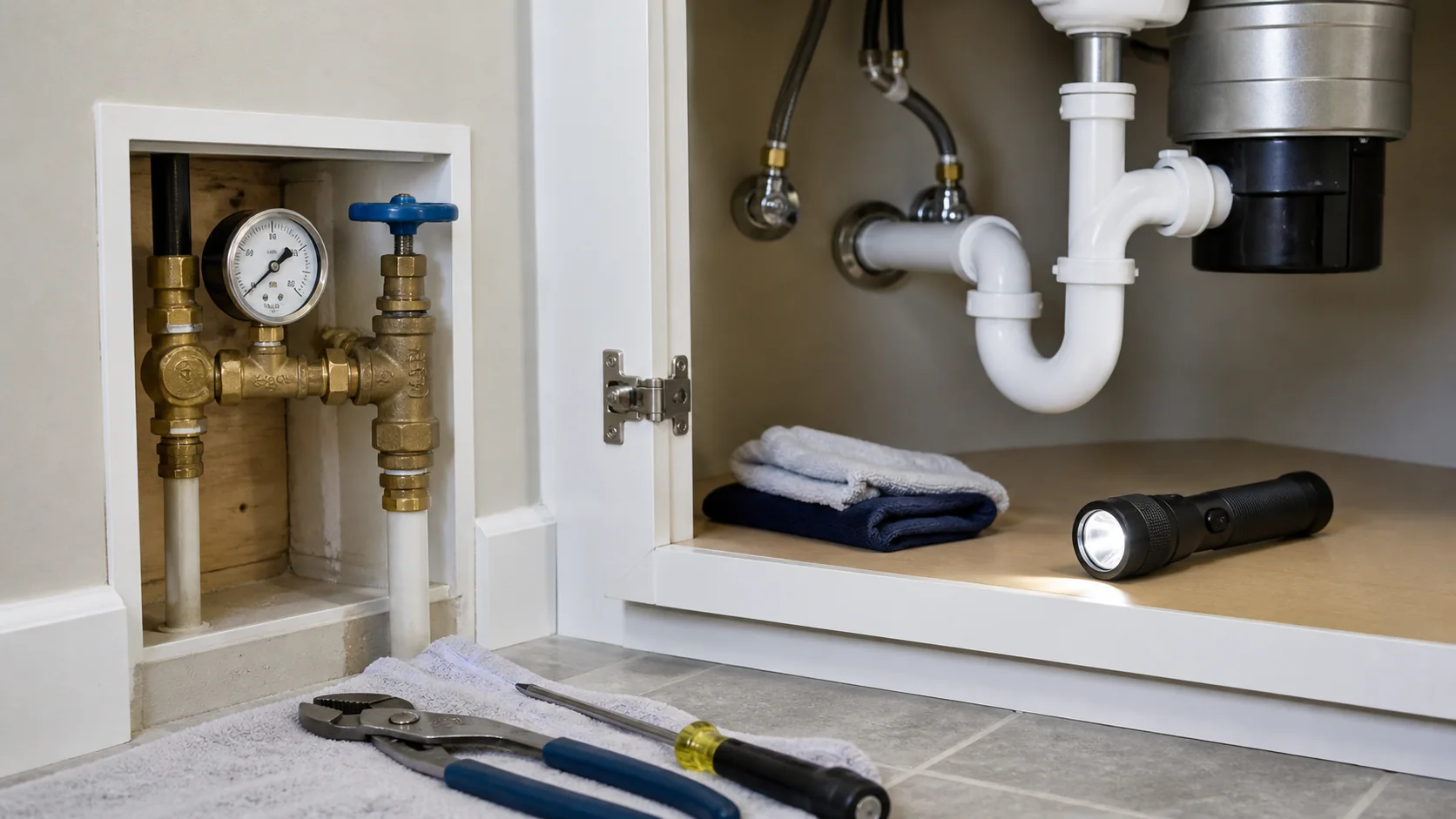
Before scheduling maintenance, draw a plan showing the main water shutoff, water meter, fixture stops, water heater shutoff and energy isolation, sewer cleanouts, sump pump, well equipment, irrigation backflow assembly, exterior hose bibbs, and concealed access panels. Photograph labels and note which tool—if any—is needed. Do not operate a buried utility valve or a valve owned by the water provider without permission.
Our top picks


As an Amazon Associate we earn from qualifying purchases at no extra cost to you.
Every adult who can safely respond should know how to close the home’s main shutoff. The valve must remain visible and reachable; storage should not block it. If it is corroded, leaking, lacks a handle, or will not move with normal hand force, arrange service rather than applying a wrench extension. A failed valve can turn a manageable fixture leak into major damage.
Monthly: run a repeatable leak circuit
Use the same route each month so no area is skipped. Begin at the meter and utility bill. The U.S. EPA recommends reading the water meter during a period of zero planned use and checking it again two hours later; movement probably indicates a leak. Make sure ice makers, irrigation, humidifiers, softeners, and automatic appliances will not run during the test. Compare monthly consumption with the same season in prior years rather than treating one generic number as normal for every household.
Continue through bathrooms, kitchen, laundry, mechanical room, basement or crawl space, garage, and exterior. Use a flashlight and dry tissue around supply connections, valves, faucet bases, traps, disposal joints, refrigerator line, dishwasher connection, washing-machine hoses, water-treatment equipment, and the water heater. Look beyond drops: cabinet swelling, mineral trails, corrosion, peeling paint, soft flooring, musty odor, or an unusually warm patch can reveal a hidden problem.
Test one fixture at a time to identify when moisture appears. A basin leak only during draining differs from a hose wet while idle. Use the guides to inspect under-sink plumbing and maintain a shower filter, but do not open walls or disturb suspect asbestos, mold, or energized equipment.
Quarterly: exercise accessible fixture stops carefully
Inspect each labeled shutoff for corrosion, staining, stem leakage, and physical damage. If its manufacturer or plumber has confirmed that periodic operation is appropriate, close and reopen it gently while the fixture is available for testing. Never force a seized valve. Afterward, dry the body and recheck under pressure. Multi-turn and quarter-turn valves behave differently, and an old packing seal may begin leaking after movement.
Twice yearly: establish a pressure record
Pressure that is too high can stress valves, hoses, and appliances; pressure that suddenly falls may indicate supply, regulator, filter, or leak problems. Ask a plumber where the house pressure can be measured safely and what range applies under local code and equipment specifications. Use a suitable gauge at the documented test point, note static pressure with fixtures off, and capture dynamic pressure while a known fixture runs.
Record time of day because municipal pressure can vary. A single reading is not a diagnosis. Large swings, repeated regulator noise, relief discharge, water hammer, or a material change from the established baseline warrants professional assessment. Never adjust a pressure-reducing valve solely to improve shower feel without checking the full system.
Seasonally: inspect drains by behavior
Run water at little-used sinks, tubs, showers, and floor drains to maintain trap seals where appropriate. Note slow drainage, gurgling, odor, recurring backups, or water movement in a nearby fixture. Clean accessible strainers and stoppers according to the fixture instructions. Avoid routine use of corrosive chemical drain openers; they can create exposure hazards and complicate later mechanical work.
One slow sink often suggests a local restriction. Several slow fixtures, toilet bubbling, or wastewater at the lowest drain can indicate a main-line or vent problem. Stop using water and call a professional; sewage is a contamination hazard.
Spring: review outdoor water systems
After freezing risk passes, inspect hose bibbs before attaching hoses. With someone watching inside, open each bibb and check the wall penetration, basement ceiling, or crawl space for leakage. A freeze-damaged tube may leak only when the valve is open. Confirm vacuum breakers and backflow devices are intact, but leave testing and repair of regulated assemblies to qualified personnel.
Walk irrigation zones while operating. Look for broken heads, soggy ground, overspray, buried-box flooding, and zones that fail to stop. EPA WaterSense recommends annual inspection for breaks, leaks, and signs of overwatering or underwatering. Pools, outdoor kitchens, fountains, and well systems require their own manufacturer and local health-department schedules.
Fall: prepare exposed pipes for freezing
Identify piping in exterior walls, attics, garages, basements, crawl spaces, cabinets, and outdoor runs. The American Red Cross recommends draining pool and sprinkler lines by manufacturer or installer directions, removing and draining garden hoses, closing interior valves serving outdoor bibbs, and leaving the exterior bibb open so residual water can expand. It warns not to add antifreeze unless directed because antifreeze can harm people, animals, wildlife, and landscaping.
Insulate exposed hot and cold lines with products intended for pipes. Heat cable must be listed and installed according to its instructions. During severe cold, the Red Cross advises keeping garage doors closed where water lines are present, opening sink-cabinet doors so room heat can circulate, and keeping the home heated; it gives 55°F as the minimum setting when away. Move chemicals out of children’s reach before opening cabinets.
If a faucet produces only a trickle in freezing weather, suspect ice. Keep the faucet open and use safe gentle heat such as an electric heating pad, hair dryer, or hot-water towels. Never use a torch or open flame. Call a licensed plumber when the frozen location is concealed, inaccessible, or will not thaw, and inspect other vulnerable lines.
Annual: test toilets and review supply hoses
EPA WaterSense recommends a yearly silent-leak test: place a few drops of food coloring or a dye tablet in the toilet tank, wait ten minutes, and check whether color reaches the bowl; flush afterward to avoid staining. Also inspect for water flowing into the overflow tube, a loose base, rocking, cracked porcelain, valve leakage, and damaged floor. Never tighten porcelain hardware aggressively.
Inspect flexible connectors at toilets, faucets, washing machines, dishwashers, refrigerators, and water treatment devices. Look for bulges, kinks, abrasion, corrosion at ferrules, cracked jackets, and expired manufacturer replacement dates. Replace only with a connector approved for the appliance, temperature, pressure, and connection. Do not reuse a single-use hose or hide a connection where it cannot be inspected.
Annual: water-heater observation, not improvisation
Read the exact water-heater manual and note fuel type, model, age, warranty, service history, drain-pan route, shutoff, and energy disconnect. Inspect from outside for corrosion, soot, scorching, water in the pan, a blocked combustion-air path, damaged venting, unusual sound, or discharge from a relief line. Keep combustibles away according to the manufacturer.
Flushing, anode inspection, burner service, electrical testing, and temperature-pressure relief-valve testing are model-specific. Sediment, scalding water, gas, electricity, combustion products, and pressurized hot discharge create serious hazards. Do not cap or plug a relief pipe. Hire a qualified technician when the manual requires service, the procedure exceeds your skills, or any fuel, vent, wiring, relief, corrosion, or leakage concern exists.
Red flags for a licensed plumber
- The meter moves during a verified no-use period and the source is not found.
- The main valve or an essential fixture stop is seized, broken, or leaking.
- Multiple drains back up, sewage appears, or sewer gas persists.
- Pressure changes sharply, pipes hammer, or a relief device discharges.
- Water stains spread inside a wall, ceiling, floor, or foundation area.
- A pipe freezes in a concealed area or has split.
- A water heater shows fuel odor, soot, vent damage, scorching, tank corrosion, or leakage.
- Work requires moving supply, drain, vent, gas, or regulated backflow components.
For urgent uncontrolled water, close the verified safe shutoff, avoid electrical hazards, and contact emergency help. If remediation includes multiple fixtures or damaged finishes, use the guide to estimate fixture replacement costs, but let a local licensed professional define the actual repair scope.
Frequently asked questions
Does a steady water meter always prove a leak-free house?
No. Intermittent leaks may not occur during the test, and a small leak can be below meter resolution. Combine meter checks with bills, visual inspection, moisture evidence, and monitoring.
Should every shutoff valve be turned on a schedule?
Not blindly. Confirm the valve type and system consequences first. Do not force corrosion or disturb valves serving shared, fire-protection, boiler, or critical equipment systems.
Can high pressure be fixed by adjusting the regulator?
Diagnosis comes first. Measurement method, municipal variation, thermal expansion, regulator condition, and local requirements all matter. A plumber should assess abnormal or unstable pressure.
When should appliance hoses be replaced?
Follow the appliance and connector manufacturers’ date or condition limits. Replace earlier for bulging, abrasion, leakage, corrosion, heat damage, or incompatible connections.
Is annual water-heater flushing always required?
No universal schedule applies. Tank design, water conditions, warranty, and the manual govern. Improper draining can cause burns, flooding, dry firing, or valve failure, so use qualified service when uncertain.
Turn inspections into a usable history
Keep one log with meter readings, pressure readings, toilet dye results, hose dates, photographs, observed drain behavior, freeze preparation, and professional repairs. Record “no issue found” as well as defects. Trends make a new sound, rising bill, changing pressure, or recurring damp spot meaningful—and help a plumber diagnose the system without starting from zero.
Authoritative references
- U.S. EPA WaterSense home maintenance guidance
- U.S. EPA WaterSense leak detection guidance
- U.S. EPA WaterSense annual home checklist
- U.S. EPA free-of-leaks technical sheet
- American Red Cross frozen-pipe prevention and response